Where do these two actually overlap?
On catalogue creation, and not much else. QuickSell is a broader commerce layer — hosted catalogues, order capture, buyer tracking, a link customers open in a browser. StitchMagic builds the catalogue file and stops there.
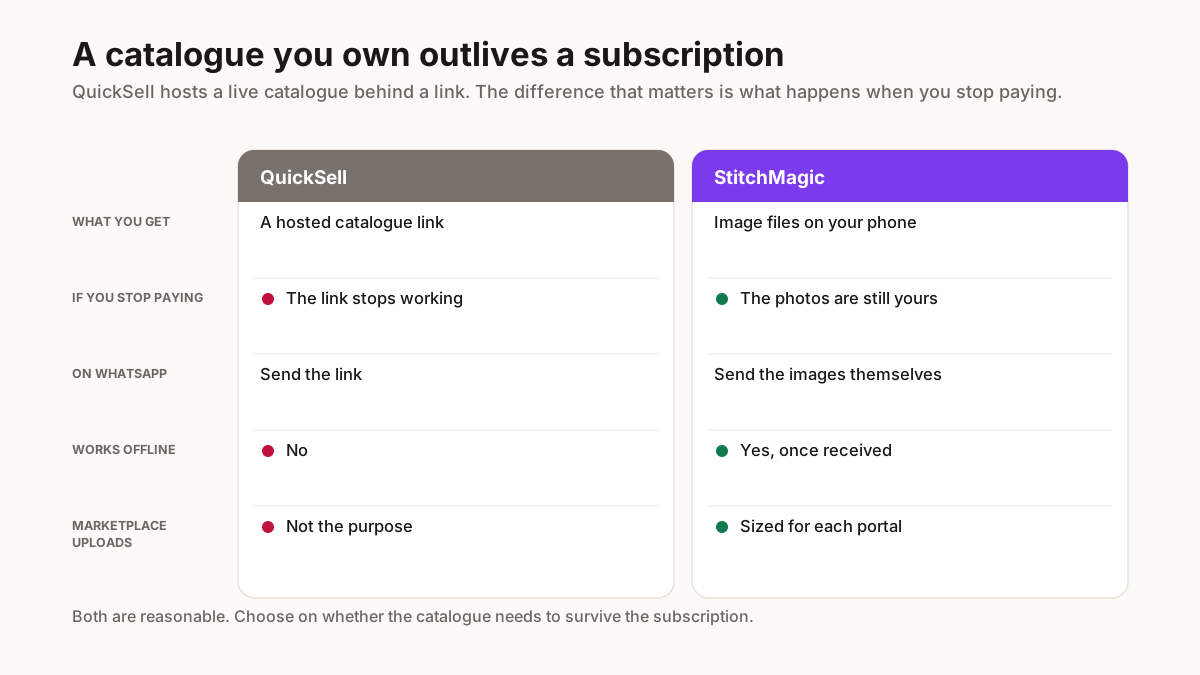
That difference matters more than it sounds. A hosted catalogue lives on someone else's platform and stops working if you stop paying; a PDF sits on your phone and forwards forever.
Which is right depends on whether you want a system or an artefact. Sellers who take orders over chat and want no dependency generally prefer the file.
What does a free PDF catalogue miss?
Order capture, buyer analytics and live stock. A PDF cannot tell you who opened it, cannot take a payment and cannot grey out a sold piece. If you need those, a platform is the right answer and this is not it.
What it does instead is forward. A catalogue PDF gets sent from one customer to her sister and to a group of twelve, and every one of those forwards carries your shop name and number on the cover.
At 20 to 60 orders a month over WhatsApp, that reach beats the tracking a platform would add.
What does each cost you?
The catalogue maker is free — no signup, no cap. Bulk processing is a one-off ₹99 for 200 photos, about 50 paise each, when you want a whole drop done at once.
Subscription platforms charge monthly whether or not you sell that month, which is a genuinely different risk for a seasonal business. Festive months carry the year for many Indian sellers, and a subscription runs through the quiet ones too.
If your order volume is steady and high, that maths flips and a platform earns its fee. Below that, it usually does not.
What happens to a hosted catalogue when you stop paying?
The link stops resolving, and every place you sent it becomes a dead end. That includes the WhatsApp messages you sent last month, the link in your Instagram bio, and the one a reseller forwarded to their own buyers without telling you. None of those come back when you resubscribe under a different plan.
This is the genuine difference between the two approaches, and it is worth understanding before choosing rather than after. A hosted catalogue is a service you rent; a folder of prepared image files is an asset you hold. Both are legitimate, and the second one has an obvious advantage the day money is tight.
It cuts the other way too. A hosted catalogue updates everywhere at once when you change a price, which files emphatically do not — updating a price in a file means resending it to everyone who has the old one. If your prices move weekly, that is a real cost of the file-based approach.
So the question is not which is better but which failure you would rather have: a catalogue that goes dark when a payment fails, or one that goes stale when a price changes.
How does each behave on a weak connection?
A link has to load. That means the buyer needs signal at the moment they open it, and a catalogue that fails to load is usually a catalogue that never gets opened a second time. In parts of the country where coverage is uneven, this is not a hypothetical.
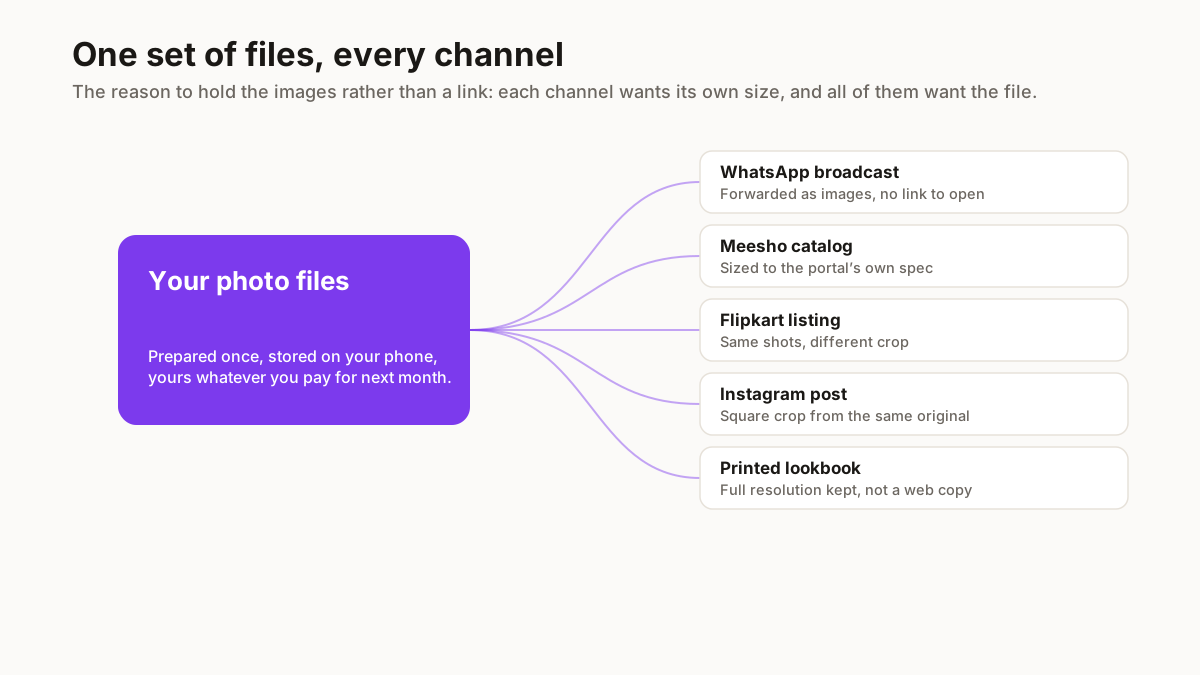
Images behave differently. Once they have arrived on a phone they are on that phone, viewable on a train, in a basement, and three weeks later when the buyer finally decides. That persistence is most of why WhatsApp selling works the way it does in India rather than the way catalogue software vendors expect.
It also changes what a reseller can do with your catalogue. Forwarding a link means the recipient still has to load your catalogue; forwarding images means they already have it. For anyone selling through resellers, that difference compounds at every step down the chain.
File size is the thing to get right if you take the file-based route. A catalogue of forty images at a sensible compression sends over patchy data; the same catalogue straight off the camera does not, and a send that fails halfway is worse than a link.
Related free seller tools
Frequently Asked Questions
What is QuickSell?
A WhatsApp-oriented commerce platform offering hosted catalogues, order capture and buyer tracking on a subscription. It is broader than catalogue creation alone.
Is there a free alternative to QuickSell?
For the catalogue itself, yes — StitchMagic builds a PDF catalogue free with no signup. It does not replace order capture or buyer analytics, which is what the subscription is buying.
What is the difference between a PDF catalogue and a hosted one?
A hosted catalogue lives on a platform and stops working if you stop paying. A PDF sits on your phone, forwards through WhatsApp indefinitely, and carries your shop name on every forward.
Does a PDF catalogue track who opened it?
No. It cannot show buyer analytics, take payment or mark a piece sold. If you need those, a platform is the right choice and this is not it.
Which suits a seasonal business better?
A one-off cost, usually. Subscriptions charge through the quiet months too, and for Indian sellers whose year is carried by the festive season that is a real difference in risk.
What happens to a hosted catalogue if I stop paying?
The link stops resolving, and every place you sent it becomes a dead end — old WhatsApp messages, your Instagram bio, and anything a reseller forwarded onward. Image files you hold keep working regardless.
Is a link or an image catalogue better for WhatsApp?
Images, on an uneven connection: once they have arrived on a phone they stay viewable offline and forward without the recipient needing signal. A link updates everywhere at once when a price changes, which files do not.
We make one of these tools, so read the concessions above as the honest part. Where QuickSell is the better fit, this page says so.