Who is Unicommerce genuinely built for?
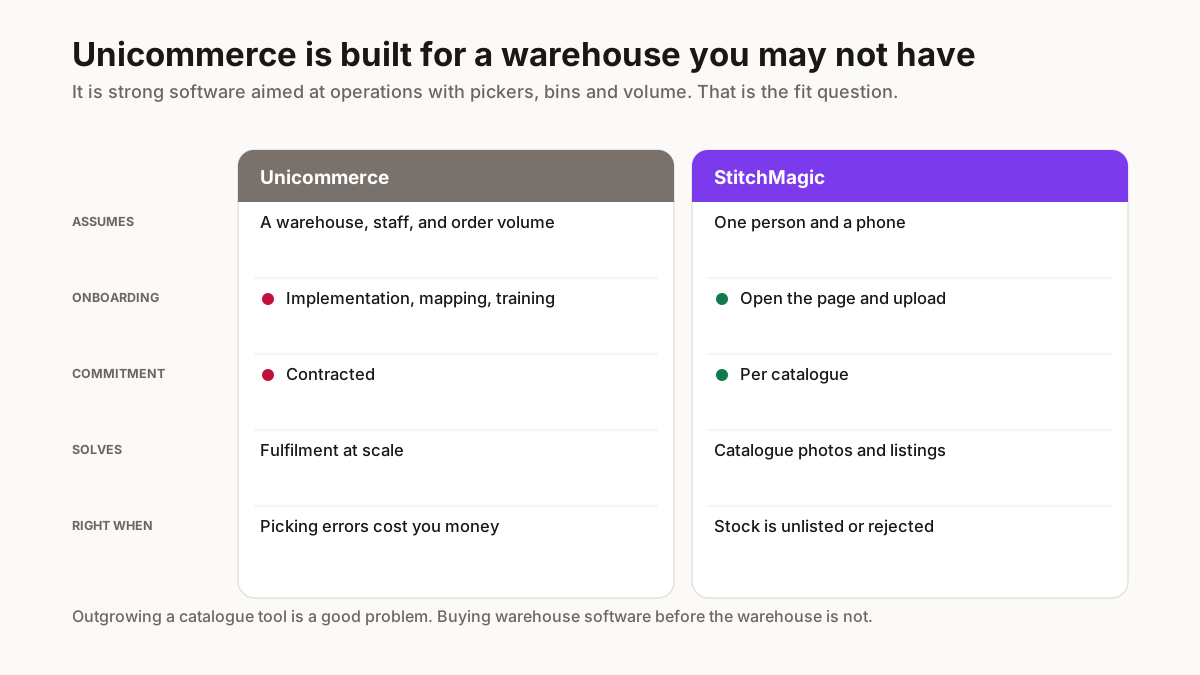
Brands and retailers with real warehouse operations — 2 or more storage locations, staff picking orders, and integrations across 4 or 5 marketplaces plus their own website. At that scale it does serious work and the price reflects it.
The mismatch happens when a small seller reads a feature list and assumes more capability is better. Enterprise software brings implementation time, configuration and training, and those costs land whether or not you use the depth.
If one person is picking every order off one shelf, that overhead is pure cost.
What does a small Indian seller actually need?
Usually 3 things: photos that pass marketplace QC at 1000x1000, a catalogue she can send on WhatsApp, and a clear view of what a product costs once a 20% return rate and shipping are counted. None of those are warehouse management.
StitchMagic covers the first two — free for single photos, ₹99 for 200. The third is arithmetic, and the free calculators do it in 30 seconds.
When volume genuinely outgrows a spreadsheet — call it 500 orders a month across 3 channels — the honest next step is a mid-market tool, not an enterprise suite. For most sellers reading this that is 1 to 2 years away.
How do you know when to upgrade?
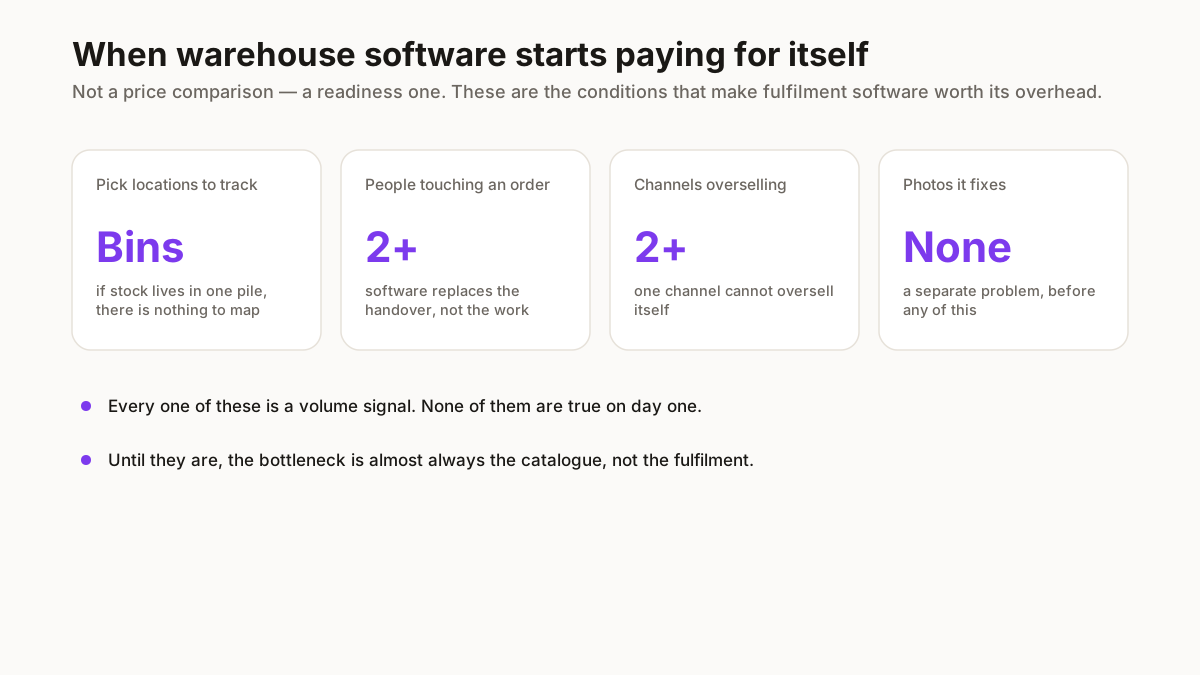
Two signals. Stock counts drift across 3 or more channels and you oversell, and you lose over 1 hour a day reconciling orders that should reconcile themselves.
Until both are true, software spend is better directed at the thing actually limiting sales, which for most Indian fashion sellers is listing quality and volume rather than back-office throughput.
Being told you do not need something yet is a more useful answer than a feature comparison you cannot act on.
What does enterprise software assume about you?
That there is a warehouse, and that more than one person touches an order. Almost every feature in a fulfilment system exists to coordinate handovers — between the person who picks and the person who packs, between the packing bench and the dispatch desk, between yesterday’s stock count and today’s. A seller who does all of it themselves has no handovers to coordinate.
Stock with locations is the next assumption. Bin management, pick paths and cycle counting are all answers to the question of where in a large space a particular item is sitting. If your stock is in a room and you know where everything is, the software is solving a problem you do not have and charging you for the capability.
Then there is the implementation itself. Enterprise tools arrive with channel mapping, SKU reconciliation and training, which is time before any value at all. That cost is entirely reasonable when it is amortised across thousands of orders a month, and unreasonable when it is not.
Which is not a criticism of the software. It does what it was built for well, and the mismatch here is one of stage, not quality.
What actually breaks first as you grow?
Not the fulfilment, usually. The first thing to break for most Indian apparel sellers is the catalogue: more products than there are evenings to photograph, listings sitting half-finished, stock in the room that has never appeared online. That constraint binds long before picking efficiency does.
The second is pricing discipline. A seller with forty products priced individually against forty different mental models eventually finds that some of them lose money on every order, and nobody notices because the total is still positive. That is a spreadsheet and a calculator problem rather than a software one.
Fulfilment breaks third, and when it does it is unmistakable. Orders shipped to the wrong address, the same unit sold twice, returns received and never processed. If none of those have happened to you yet, the bottleneck is still upstream.
Which gives a simple test. List what went wrong in the last 30 days and count how many were fulfilment errors. At zero, you are not buying fulfilment software this quarter.
Related free seller tools
Frequently Asked Questions
What is Unicommerce used for?
Enterprise warehouse and order management for brands and retailers with multiple storage locations, staff picking orders and integrations across marketplaces and their own website.
Is Unicommerce suitable for a small seller?
Usually not. Enterprise software brings implementation, configuration and training costs that land whether or not you use the depth, and a seller picking orders off one shelf does not.
What is a good Unicommerce alternative for small sellers?
For most Indian sellers the honest answer is that no order-management platform is needed yet. Marketplace panels plus a spreadsheet cover it, and software spend is better directed at listing quality.
When should I move to order management software?
When two things are both true: stock counts drift between channels and you are overselling, and you are spending more than an hour a day reconciling orders. Until then it is cost without return.
Does StitchMagic replace Unicommerce?
No. It handles product photos, marketplace sizing and catalogues over warehouse or order management. Different problem entirely.
Is Unicommerce too big for a small seller?
It is built around assumptions a small seller does not meet — a warehouse, more than one person touching an order, stock with bin locations, and an implementation period before any value. That is a mismatch of stage, not of quality.
How do I know when to upgrade to fulfilment software?
List what went wrong in the last 30 days and count the fulfilment errors — wrong address, same unit sold twice, a return received and never processed. At zero, the bottleneck is still upstream of fulfilment.
We make one of these tools, so read the concessions above as the honest part. Where Unicommerce is the better fit, this page says so.