How much does a size chart cut returns?
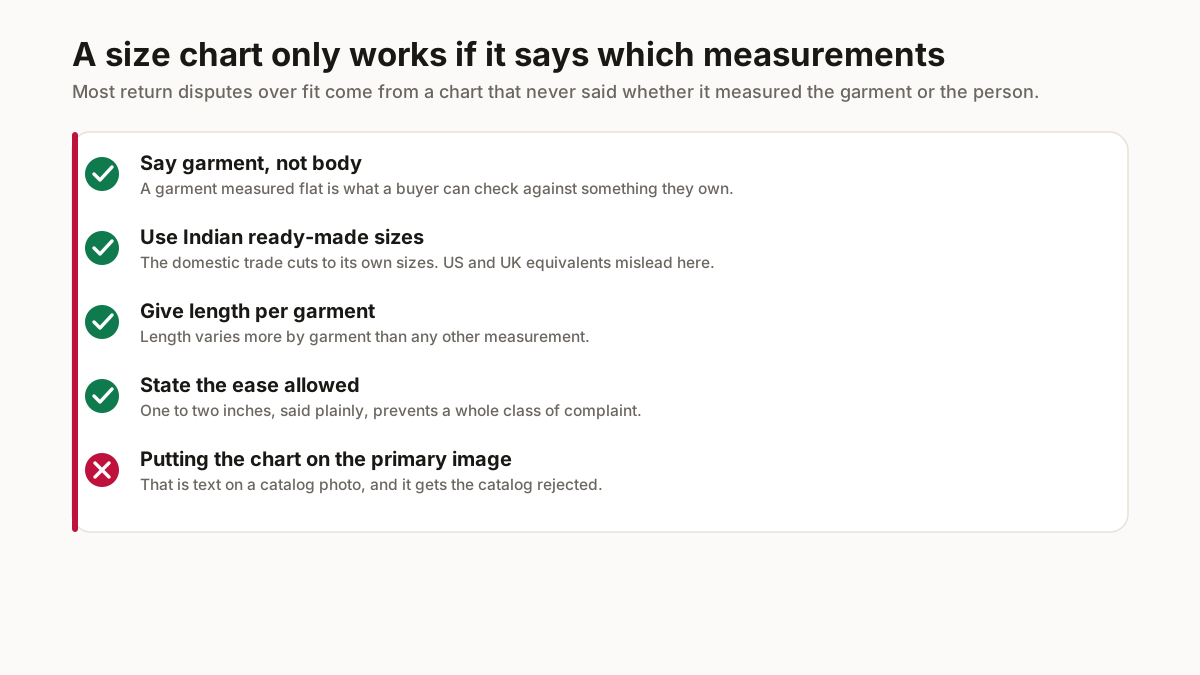
Size is the single largest cause of returns in Indian online fashion, and almost all of it comes from one gap: the buyer measures her body, the seller lists the garment, and nobody says which is which. Every chart here is garment measurement — laid flat, seam to seam — which is what the trade actually cuts to.
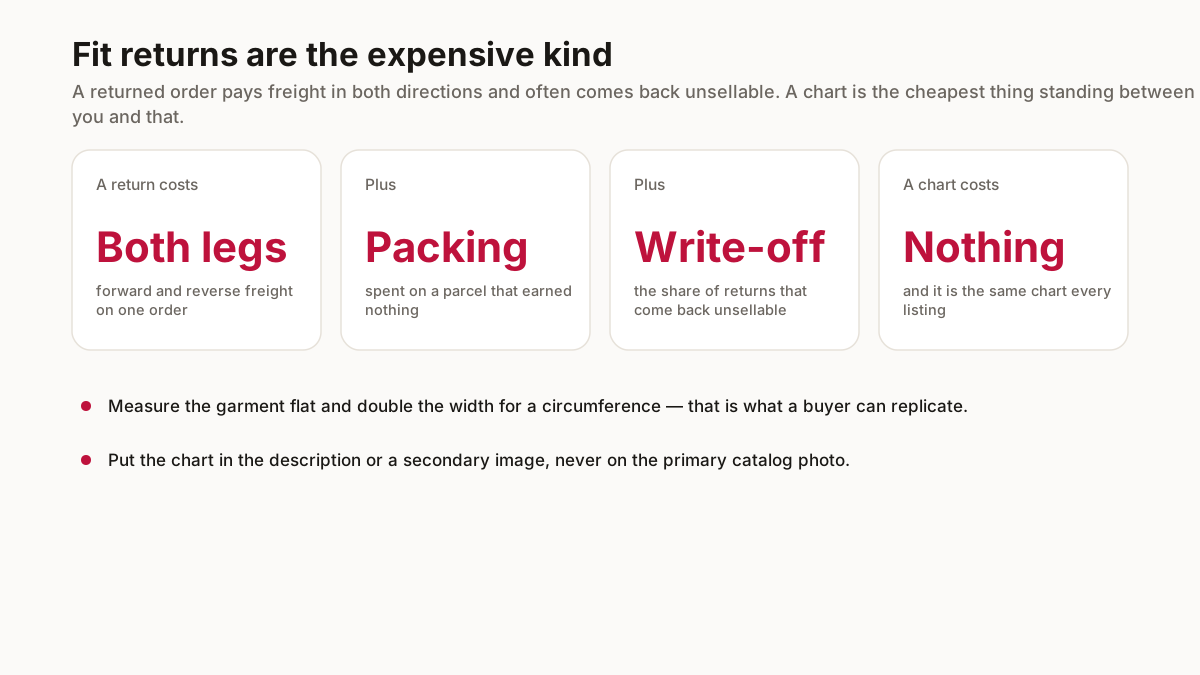
A return costs you the forward freight, the return freight and the handling, and on a ₹500 kurti that is most of the margin. A chart on the listing is the cheapest return-reduction you can buy, and it takes a minute.
Add one line under the chart telling the buyer to compare against a garment she already owns rather than her own body. That single sentence removes most of the remaining confusion.
Should a size chart be in inches or centimetres?
Indian ready-made sizing is quoted in inches, and bust size is what the S/M/L label refers to: a size 38 kurti fits a 38-inch bust. Meesho and Flipkart buyers are used to that. Myntra and export-facing listings more often use centimetres.
The safest listing carries both, which is why this tool switches units without you re-typing the table. Generate one in inches for your marketplace listing, one in centimetres for anywhere that asks, and keep the numbers identical between them.
Allow one to two inches of ease over the body measurement in your own tailoring. A chart that reports the exact body measurement produces garments that technically fit and feel tight, and those come back as returns just as often as the ones that are plainly wrong.
What measurements should each garment carry?
A kurti chart needs 4 numbers per size — bust, waist, hip and length. A blouse needs bust, waist, shoulder and sleeve. A lehenga needs waist, hip, length and the blouse bust separately, because the two pieces are sized independently and buyers ask about both.
Give every number in inches for Meesho and Flipkart, and add centimetres if you also list on Myntra or sell abroad. A 38 inch bust is 96.5 cm, and quoting both removes a conversion the buyer would otherwise get wrong.
Allow 1 to 2 inches of ease over the body measurement in your own tailoring. A garment cut to the exact body number fits technically and feels tight, and those come back as returns as often as the ones that are plainly wrong.
Where should the chart live on a listing?
In the description and in a secondary image, never on the primary one. A size chart written across the main catalog photo is text on a primary image, which is one of the most common reasons a Meesho or Flipkart catalog gets rejected — and the rejection arrives after you have done all the work, not before.
A secondary image is the right place because buyers look for it there. Put it as the second or third slot rather than the last, since a buyer deciding on fit is doing so early and will not swipe through six angles to find the numbers.
Repeat the key measurements in the description as plain text. Image text is invisible to search and to anyone using a screen reader, and the same numbers written out cost you nothing and reach people the image does not.
Keep one chart per garment type rather than one for the whole shop. A kurti chart and a blouse chart measure different things, and a combined table asks the buyer to work out which row applies to them.
How do you read your own returns for size problems?
Look at which size comes back, not how many. A style returning across every size usually has a quality or description problem; one returning heavily in a single size has a grading problem in that size specifically, and that is fixable with one row of the chart.
Then look at the reason given. “Too small” concentrated in the larger sizes is the classic signature of a chart that stops describing the garment accurately once the pattern is scaled up, which happens more often than sellers expect above XXL.
Compare a returned garment against your own chart before assuming the buyer was wrong. Measuring the actual returned piece is the fastest way to find out whether the chart or the cutting drifted, and it is a ten-minute job that can end a recurring return.
Update the chart when you find a gap and say so on the listing. A buyer who sees measurements that match what arrives becomes a repeat buyer, which is worth considerably more than the single sale the correction might cost you.
Related free seller tools
Frequently Asked Questions
Can I put the size chart on my main product photo?
No. Text on a primary catalog image is one of the most common reasons a Meesho or Flipkart catalog is rejected. Put the chart in a secondary image — second or third slot, not last — and repeat the key numbers as plain text in the description.
How do I tell whether my size chart is wrong?
Look at which size comes back rather than how many. Returns spread across every size point at quality or description; returns concentrated in one size point at a grading problem in that size, which one row of the chart usually fixes. "Too small" clustered in the larger sizes is the classic signature.
What is the standard kurti size chart in India?
Indian kurti sizes are quoted by bust in inches: S is 36, M is 38, L is 40, XL is 42, XXL is 44, and it continues in twos up to 5XL at 50. Length varies by style, usually 42 to 46 inches for a straight kurti.
Should my size chart be in inches or cm?
Inches for Meesho and Flipkart, since that is what Indian buyers are used to and what the ready-made trade cuts to. Centimetres are more common on Myntra and export listings. Carrying both is safest, and this tool switches without you re-typing anything.
Is the size chart body measurement or garment measurement?
Garment measurement, laid flat and doubled where relevant. That is the trade standard, and it is why buyers should compare against a garment they already own rather than measuring themselves.
How does a size chart reduce returns?
Size is the biggest single cause of fashion returns in India, and most of it is a mismatch between what the buyer measured and what the seller listed. Publishing the garment measurements removes the guess, and on a low-margin product one avoided return pays for a lot of listings.
Can I put my shop name on the chart?
Yes — type it in and it appears above the table, so the chart works as a branded image you can reuse across every listing and share on WhatsApp.
Free, no signup. Everything runs in your browser — nothing is uploaded.