What actually happens when you compress to 150KB
Compression and resizing are not the same job, and confusing them is why so many uploads still fail. Resizing changes the pixel dimensions — 3000×4000 becomes 1000×1333. Compressing keeps the dimensions and throws away detail the eye is least likely to miss, until the file fits the number you asked for.
This tool compresses first and only shrinks dimensions if 150KB cannot be reached at full size. That order matters: a photo that stays large but compresses a little looks better than one scaled down hard, and portals check the file size rather than the pixel count.
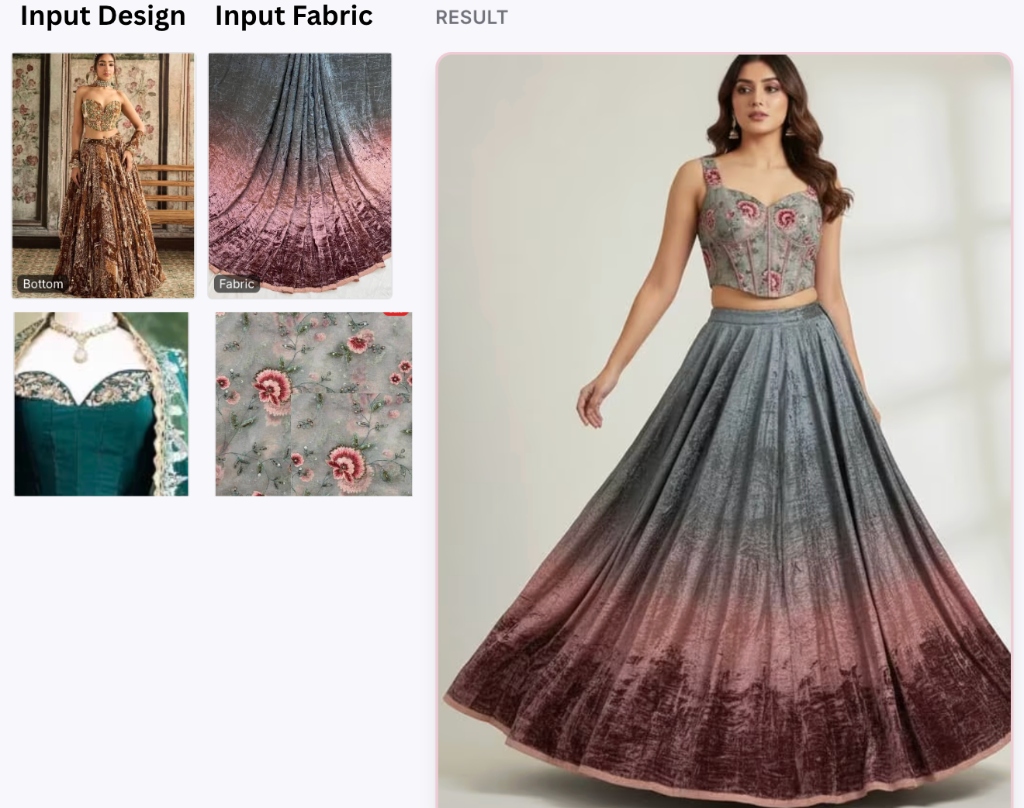
At 150KB a full product photograph keeps its texture, which matters if the buyer is judging fabric from the image.
Where 150KB is asked for
150KB is the limit on state board portals and university admissions. Forms rarely explain it, and the upload simply fails or silently truncates, which is why the same question gets typed into a search box thousands of times a month.
Check whether your form gives a range rather than a ceiling. Many exam portals ask for a minimum as well as a maximum — a file that is too small gets rejected just as fast as one that is too large, because a tiny file usually means an unusably blurry photo. If yours does, use the range resizer linked below instead of a single target.
Keep the original. Compression is one-way: once the detail is gone it cannot be recovered, so always compress a copy and keep the full-size photo for anything you might need to print or re-crop later.
Related free seller tools
Frequently Asked Questions
How do I compress an image to 150KB?
Upload the photo above and the tool compresses it to 150KB in your browser, adjusting quality first and dimensions only if it has to. There is no signup and nothing is uploaded to a server.
Will compressing to 150KB ruin the quality?
At 150KB a full product photograph keeps its texture, which matters if the buyer is judging fabric from the image.
What is the difference between compressing and resizing?
Resizing changes the pixel dimensions of the image. Compressing keeps the dimensions and reduces file size by discarding detail the eye is least likely to notice. Portals that specify KB want compression; portals that specify pixels or centimetres want resizing.
Is my photo uploaded anywhere?
No. The compression runs entirely in your browser using the Canvas API. The file never reaches our server, never gets logged, and never leaves your device — which also means it works offline once the page has loaded.
Does it work with PNG and WebP as well as JPG?
Yes. JPG, PNG, WebP and HEIC all work as inputs. The output is always JPG, because that is the smallest format every Indian portal and marketplace accepts.
Can I compress several photos at once?
Yes — select multiple files and they are processed in a batch. The first few are free on every device with no signup.
Free, no watermark, no signup. Need the dimensions changed rather than the file size? Use the photo resizer instead.