Who qualifies for Amazon Karigar?
Artisans, weavers, craft clusters and organisations working with them. The programme is aimed at genuinely handmade and traditional Indian craft — handloom textiles, pottery, metalwork, traditional jewellery — instead of at machine-made goods styled to look artisanal.
Many participants join through an aggregator, a craft NGO or a state emporium and not individually, because the onboarding assumes support that an individual weaver may not have.
If you are reselling factory-made stock, this is not your programme. Karigar's value depends on the authenticity it certifies, and Amazon protects that.
What does the programme actually provide?
Onboarding assistance, cataloguing help and visibility within a dedicated storefront that Amazon markets separately. For an artisan with no ecommerce experience, the cataloguing support is often the decisive part.
Products carry the association with handmade Indian craft, which reaches a buyer specifically looking for it — including international buyers through Amazon Global Selling in some cases.
Standard Amazon seller obligations still apply underneath: dispatch timelines, quality, and returns are handled through the usual seller infrastructure.
How should an artisan prepare before applying?
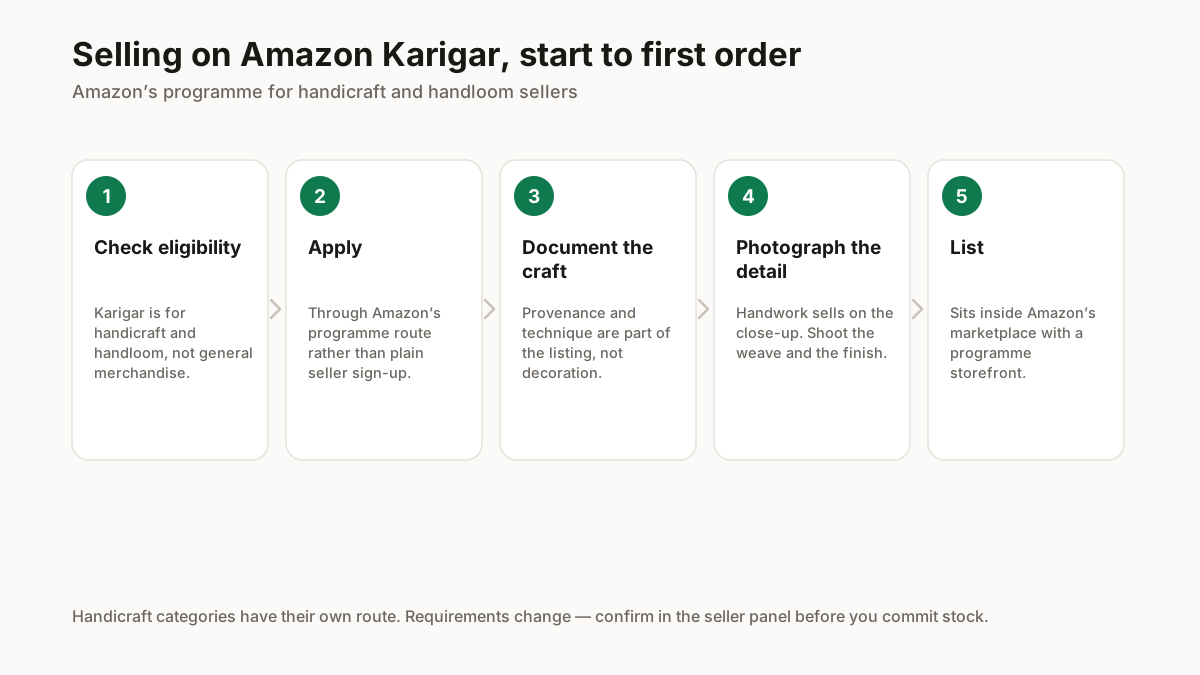
Photograph the work properly, at 1000x1000 pixels minimum. Handmade sells on visible craft detail, and the gap between a craft product that sells and one that does not is usually the image rather than the piece.
Document the process and origin. Buyers paying a premium for handmade want to know who made it and how, and that story is part of the product on this storefront in a way it is not on a general marketplace.
Work out realistic capacity before listing — how many pieces in 7 days, not in a good month. A seller who wins visibility and cannot dispatch within the 2-day window damages the account and the relationship at once.
What makes a craft listing different?
The provenance is part of the product. A buyer choosing handloom over a machine-made equivalent is paying for the technique, the region and the person, and a listing that omits all three is selling the same garment without the reason to prefer it. That information belongs in the description, not in a footnote.
Photography has to carry the handwork. The value sits in detail a casual shot flattens — the irregularity of a handwoven edge, the depth of hand embroidery, the way a natural dye sits differently across a piece. A close, well-lit detail shot does more commercial work here than on any mass-produced category.
Variation between pieces needs saying out loud. Handmade items differ from one another, and a buyer who expected identical goods will treat natural variation as a defect. Stating it plainly converts a return into an understood characteristic.
Lead times are usually longer and worth stating too. A buyer told to expect a wait generally accepts it; a buyer who discovers it after ordering does not.
How does the programme route differ from ordinary registration?
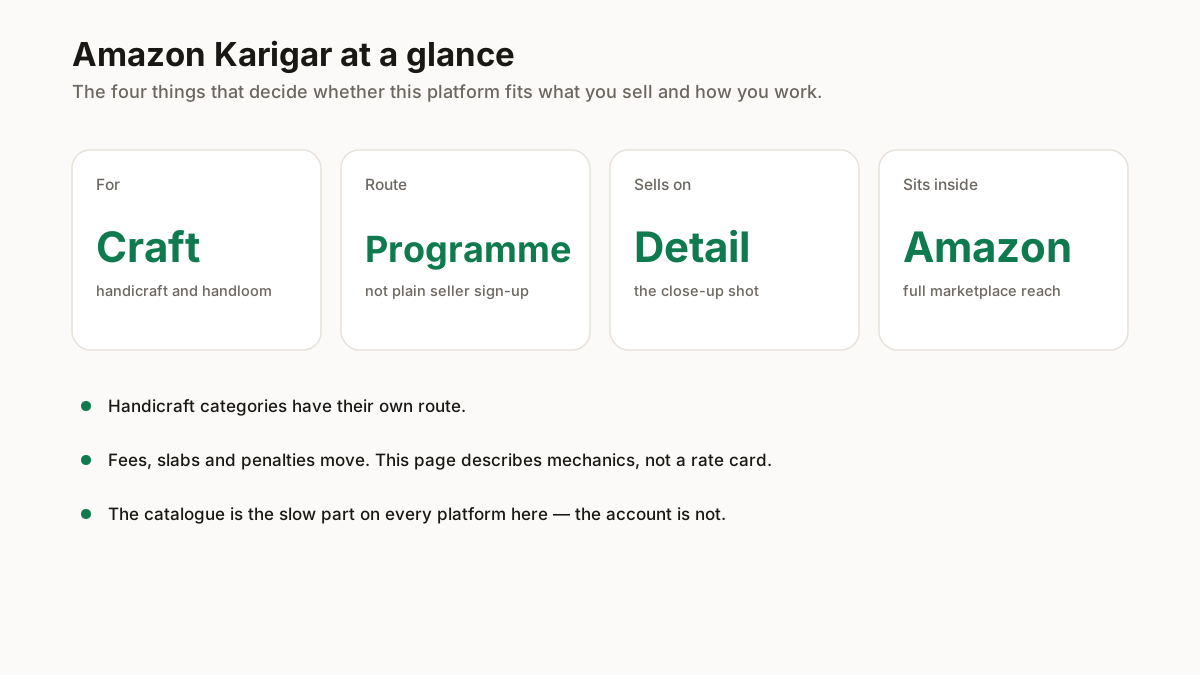
It is an eligibility question first. Karigar is aimed at handicraft and handloom sellers rather than general merchandise, so the application is about whether what you make fits the programme, which is a different conversation from filling in a seller form.
What you get in exchange is placement alongside other craft sellers and access to buyers looking specifically for that, inside a marketplace with reach far beyond what a craft-only platform could offer. That combination is the actual proposition.
The operational side is Amazon’s. Listing mechanics, fulfilment options and dispatch expectations follow the wider marketplace, so the discipline required is the same as any Amazon seller faces regardless of what they make.
Documenting the craft properly is worth doing once and reusing. The same description of technique and origin serves the listing, your own channels and any conversation with a buyer who wants to know what they are getting.
Related free seller tools
Frequently Asked Questions
What is Amazon Karigar?
A curated Amazon programme for Indian artisans and handicrafts, providing onboarding help, cataloguing support and a dedicated storefront for genuinely handmade and traditional craft products.
Who can join Amazon Karigar?
Artisans, weavers, craft clusters and the organisations working with them. Many join through an aggregator, craft NGO or state emporium in place of individually.
Can I sell machine-made products on Karigar?
No. The programme depends on the authenticity it certifies, so factory-made goods styled to look artisanal are not what it is for.
What support does Karigar give artisans?
Onboarding assistance, cataloguing help and visibility in a separately marketed storefront. For an artisan with no ecommerce background, the cataloguing support is usually the decisive part.
Do standard Amazon seller rules still apply?
Yes. Dispatch timelines, quality standards and returns run through the usual Amazon seller infrastructure underneath the programme.
What should an artisan do before applying?
Photograph the work properly, document the process and origin, and work out realistic production capacity. Craft sells on visible detail and provenance, and winning visibility you cannot fulfil damages the account.
Who is Amazon Karigar for?
Handicraft and handloom sellers rather than general merchandise. It runs through a programme application rather than plain seller sign-up, and the first question is whether what you make fits the programme.
How should I photograph handmade products?
Close and well lit on the detail, because the value sits in exactly what a casual shot flattens — a handwoven edge, the depth of hand embroidery, how a natural dye sits across a piece. Also state that pieces vary, or a buyer will read natural variation as a defect.
Rates and policies change. Check the current rate card in your seller panel before pricing — the structure above stays stable, the numbers do not.