What do you need to register as a Meesho seller?
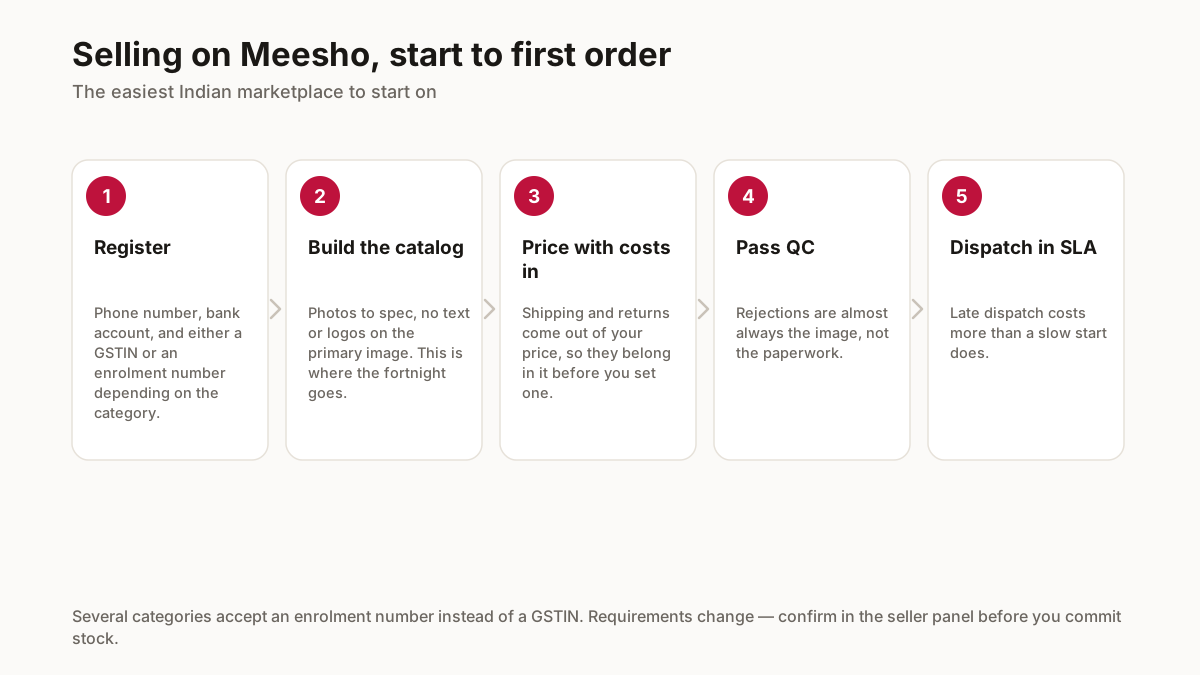
A bank account in the name you are registering, an address proof, and either a GSTIN or — for the categories that allow it — a GST enrolment ID. That last option is what makes Meesho the usual first marketplace for a home seller, because it removes the registration most people stall on.
Photographs matter more than paperwork here. Meesho's catalog QC rejects images with logos, watermarks, promotional text or price tags on the primary shot, and a rejected catalog is the most common reason a new seller never makes a first sale.
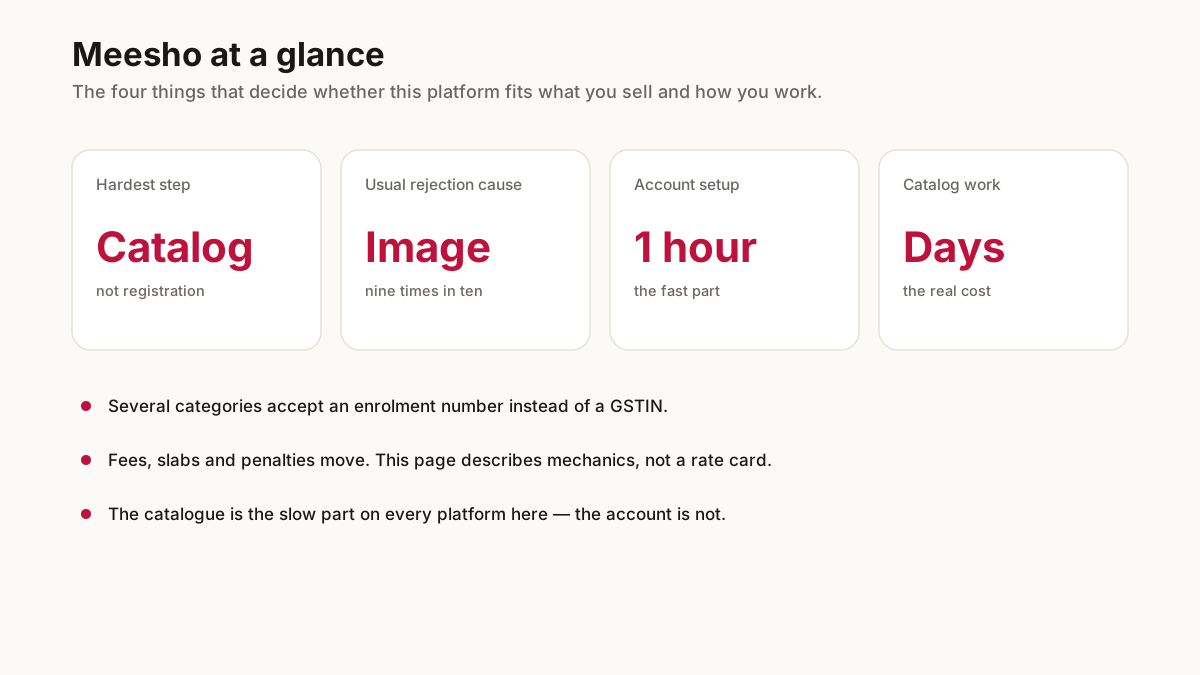
Set aside an afternoon rather than a week. The account itself takes under an hour; the time goes into shooting and sizing photos that pass QC on the first attempt.
How does the Meesho commission model work?
Meesho markets a 0% commission structure, and for many categories that is literally true — the platform takes nothing from the sale price. What it does charge is shipping, and shipping is calculated on chargeable weight not what your product weighs.
That single mechanic decides most Meesho margins. A 400g kurti in a box can be billed at 1.5kg because volumetric weight is length × width × height divided by 5000. Packing the same kurti flat in a polybag drops it to the 0.5kg slab.
Check the current rate card in your supplier panel before pricing anything. Slabs and zone rates change, and a price set against last year's numbers quietly loses money on every order.
What sells on Meesho and what does not?
Meesho's buyer is price-led and largely tier-2 and tier-3. Cotton kurtis around ₹350 to ₹650, daily-wear sarees, and unstitched suit material move steadily. Premium pieces above ₹1,500 struggle against the same buyer's expectations.
Return rates run high on apparel — plan for 15 to 25% depending on category — so a price that only works at zero returns is not a price that works. Build the return into the margin before you list.
Size charts cut returns more than any other single change. Publishing garment measurements instead of body measurements removes the mismatch that causes most apparel returns in India.
Who actually buys on Meesho?
Buyers browsing on price, largely on a phone, and often outside the metros where the other platforms concentrate. That shapes what sells: value-led apparel in the sizes Indian ready-made actually cuts to, in colours that photograph well on a mid-range screen, at price points people decide on without thinking hard.
It also shapes what does not. Premium positioning is difficult here, because the buyer arrived comparing and the listing beside yours is cheaper. Sellers who try to hold a premium price on Meesho generally end up either discounting or leaving, and both are expensive ways to learn the platform.
Reselling is a large part of the traffic, which is a genuine difference from every other marketplace here. A share of your buyers are buying to sell onward, and they judge a listing partly on whether the images will work when they forward them. Clean, well-lit photographs serve both audiences at once.
The upside of all this is volume and a low barrier. Meesho is where most Indian apparel sellers find out whether they can sell at all, and finding that out cheaply is worth a great deal.
What does Meesho cost a seller who is a poor fit?
Time, mostly, and it is spent on the catalog. A seller whose products need explaining — complex sizing, unusual materials, a story that justifies the price — will find the format works against them, because the buyer is scrolling and comparing rather than reading.
Returns are the other cost, and they are structural rather than a failure. A low-friction, price-led marketplace produces more returns than a curated one, and a seller pricing on delivered orders alone will find the settlement consistently below the spreadsheet. Build the return rate into the price before listing, not after.
Dispatch discipline is non-negotiable in a way that surprises people coming from social selling. The SLA clock runs whether or not you have seen the order, and rating damage takes far longer to repair than it takes to cause.
None of which is a reason not to start here. It is a reason to know what you are pricing for before you commit to stock.
Related free seller tools
Frequently Asked Questions
Can I sell on Meesho without GST?
For several categories, yes — Meesho accepts a GST enrolment ID instead of a full GSTIN for sellers below the threshold. This is the main reason Meesho is usually the first marketplace a home seller joins.
What documents do I need for Meesho seller registration?
A bank account in the registering name, an address proof, and either a GSTIN or an enrolment ID depending on your category. The account itself takes under an hour to set up.
Is Meesho really 0% commission?
For many categories the platform takes nothing from the sale price. Shipping is the real cost, and it is charged on chargeable weight — the higher of actual weight and volumetric weight — so packaging decides your margin more than commission does.
Why does Meesho reject my catalog?
Most often the image. Meesho rejects primary catalog photos carrying logos, watermarks, promotional text or price tags, and requires 1000x1000 pixels. Fixing the image is usually the entire fix.
What is the return rate on Meesho?
Apparel typically runs 15 to 25% depending on category and price point. Price with that built in, and publish garment measurements rather than body measurements — size mismatch causes most Indian fashion returns.
How long does Meesho seller approval take?
Account approval is usually quick once documents are in order. The delay most new sellers hit is catalog QC over account verification, which is why getting the photos right first time matters.
Is Meesho good for premium products?
Rarely. Buyers arrive comparing on price, largely on a phone, so a listing holding a premium sits beside a cheaper one. Sellers who try generally end up discounting or leaving.
Why are Meesho returns higher than I expected?
A low-friction, price-led marketplace produces more returns than a curated one — that is structural rather than a failure. Build your own return rate into the price before you list, not after the settlement disappoints.
Rates and policies change. Check the current rate card in your seller panel before pricing — the structure above stays stable, the numbers do not.