Who is Snapdeal actually for?
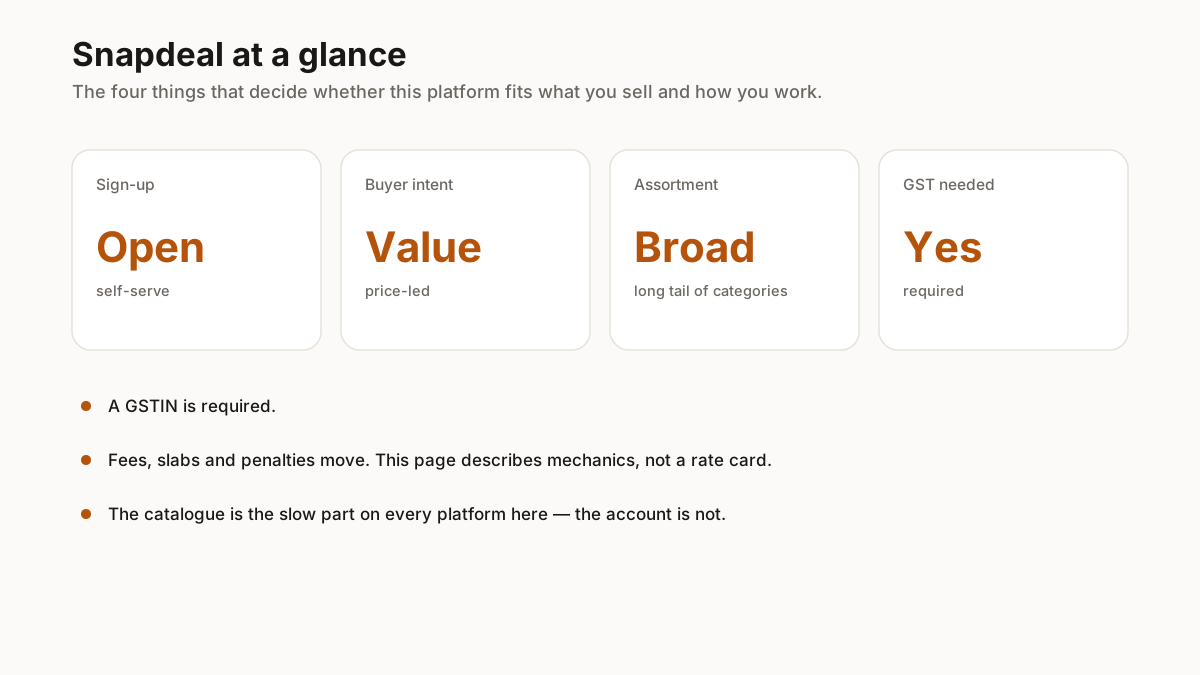
Sellers of unbranded goods under roughly ₹800, aimed at non-metro buyers. Snapdeal repositioned itself around that segment and stopped competing head-on with Amazon and Flipkart for premium categories.
That makes it a reasonable additional channel for the same catalogue that works on Meesho, over a step up in price positioning.
Competition is lower than on the larger platforms, which cuts both ways — less crowding on a listing, but also less traffic reaching it.
What does Snapdeal registration involve?
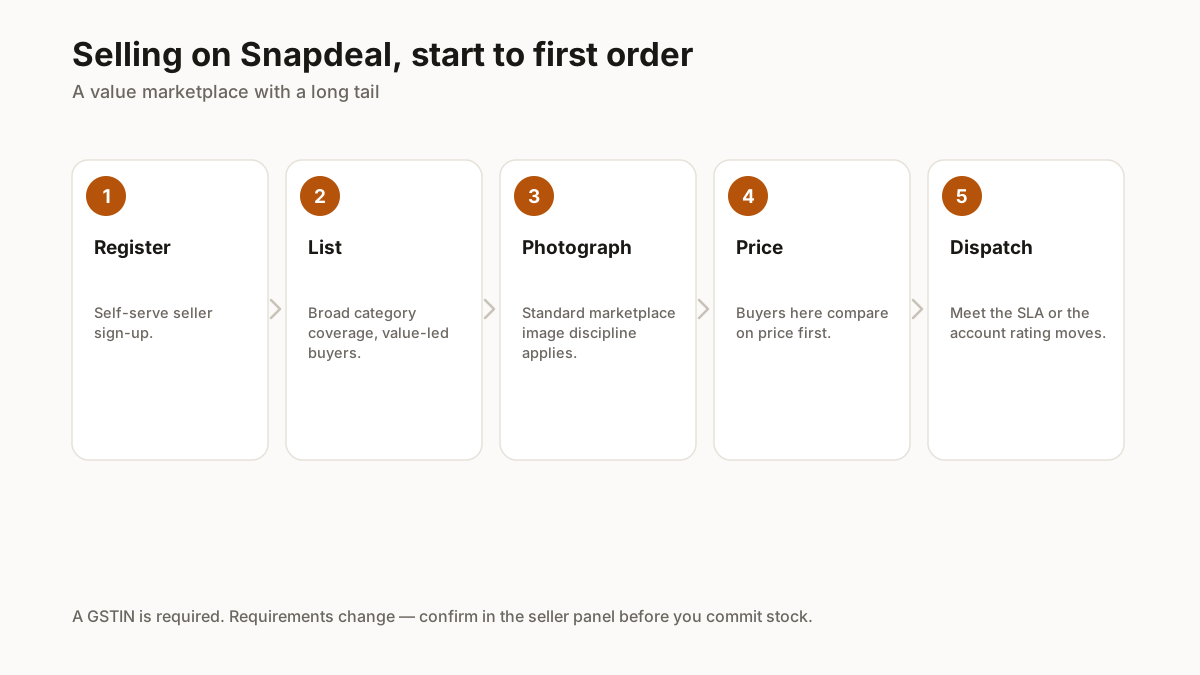
A GSTIN, a bank account and business documentation, submitted through the seller portal. There is no enrolment-ID route, so this is a platform for sellers who have already registered for GST.
Category approval applies to some verticals, so check whether yours needs it before building a catalogue against the assumption you can list.
Listing quality requirements are less strict than Flipkart's, which speeds up onboarding but means your images have to do more competitive work rather than less.
Is Snapdeal worth adding as a channel?
As a third or fourth channel for an existing catalogue, often yes. The incremental work is 2 to 3 hours of listing time not new photography, and the orders are additive.
As a primary channel for a new seller, rarely. Traffic volumes are well below Meesho and Flipkart, so a seller starting out will learn more, faster, elsewhere.
Run the numbers before committing stock. Value positioning means margins near 15 to 20%, and a category returning 25% of orders turns negative fast.
What does a long-tail marketplace mean in practice?
That breadth is the platform’s proposition rather than curation. Categories run wide and shallow, which means there is room for products that a fashion-focused platform would not place — and it means your listing is competing in a large, loosely-defined pool rather than a merchandised one.
Discovery therefore leans on search rather than on browsing. Titles and attributes do more work here than photography alone, because a buyer who cannot find you will never see the photograph you spent the afternoon on.
Price-led buying is the norm, so the same discipline that applies on any value marketplace applies here: build shipping and returns into the price before listing, and be wary of thin margins on low-value items where a flat per-order cost bites hardest.
Self-serve registration keeps the entry cost low, which makes it a reasonable channel to test with existing catalogue work rather than one to build a business around from scratch.
Is it worth adding as a second channel?
Often, because the marginal cost is low. If your photographs, descriptions and SKUs already exist for another marketplace, listing them again is incremental work rather than a new project, and any orders are close to pure addition.
The thing to watch is stock. Selling the same units across several channels without a way to keep them in sync is how sellers oversell, and an oversell costs more than the order was worth in rating damage and cancellation penalties.
Watch dispatch capacity too. Adding a channel adds orders at unpredictable times, and a seller already at the edge of what they can pack in a day will find the SLA the first thing to break.
Add one channel at a time and give it a month before adding another. Diagnosing what went wrong is much harder when two things changed at once.
Related free seller tools
Frequently Asked Questions
How do I become a Snapdeal seller?
Register through the seller portal with a GSTIN, a bank account and business documentation. Some categories need additional approval, so check yours before building a catalogue.
Do I need GST for Snapdeal?
Yes. There is no enrolment-ID route, so Snapdeal suits sellers who have already registered for GST instead of those starting out.
What sells on Snapdeal?
Unbranded, value-priced goods aimed at non-metro buyers. The platform repositioned around that segment rather than competing for premium categories.
Is Snapdeal worth it for a small seller?
As an additional channel for a catalogue you already photograph and list elsewhere, usually yes. As a first platform it rarely is, because traffic volumes sit well below Meesho and Flipkart.
How does Snapdeal compare to Meesho?
Similar buyer profile and price positioning, but lower traffic and mandatory GST. Most sellers add it alongside Meesho over choosing between them.
Are Snapdeal listing rules strict?
Less strict than Flipkart, which speeds onboarding. That also means your images compete harder, because the platform is doing less to standardise what buyers see.
Is Snapdeal worth adding as a second channel?
Often, because the marginal cost is low — if your photographs, descriptions and SKUs already exist, relisting is incremental work. Watch stock sync and dispatch capacity, which are what break first when a channel is added.
How do buyers find products on Snapdeal?
Largely through search rather than merchandised browsing, because the categories run wide and shallow. Titles and structured attributes do more work here than photography alone.
Rates and policies change. Check the current rate card in your seller panel before pricing — the structure above stays stable, the numbers do not.