Which Chennai market should you go to?
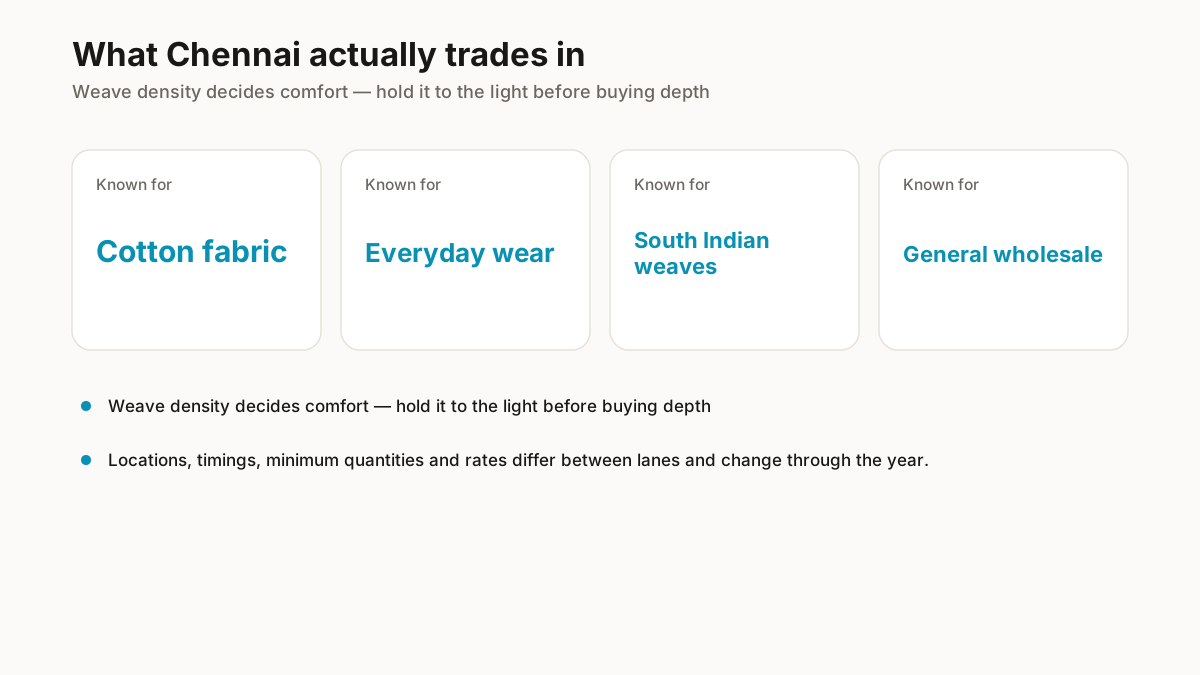
Chennai's wholesale trade concentrates around Parry’s Corner and deals heavily in cotton — practical everyday goods rather than occasion wear.
That orientation suits a seller whose customers want comfortable clothing in a warm climate, and it suits a range built to sell all year.
South India's cotton traditions also give the region real depth in weaves and finishes, which is worth building a coherent range around rather than buying piecemeal.
Where do you sell? That decides what you buy
Everyday cotton is a marketplace category. The buyer knows what she wants, filters on fabric, and chooses on price and delivery — which is what Meesho, Flipkart and Amazon are built for. Instagram works for the more distinctive weaves, where there is something to look at beyond a plain colour.
WhatsApp is where a cotton range earns repeat business, because comfort is the kind of thing a customer comes back for once she has found it.
| Meesho | |||
|---|---|---|---|
| Buyer arrives | Searching and comparing on price | Discovering while scrolling | Already knows and trusts you |
| Marketplace commission | Yes — set by category | None | None |
| Return rate | Highest of the three | Middle | Lowest — she knows you |
| Listing rules | Strict QC, primary image must be clean | None | None |
| What sells | Everyday basics at sharp prices | Distinctive, photogenic, occasion wear | Mid to premium, and repeat orders |
| What it needs from you | Volume and price discipline | A look and consistent posting | An audience you already built |
Commission rates differ by category and change — read yours from the channel’s own rate card, and run it through the break-even calculator.
How do you get there and get around?
Parry's Corner is central and reachable by public transport, and the surrounding lanes are walkable. Driving in is impractical during trading hours.
Mornings are the productive hours. The area is dense and gets busier through the day, which leaves less time for a dealer to spend with a new buyer.
First time? Weekday, early, someone with you if possible, cash split across 2 places. It is a busy working market rather than a difficult one.
Onward transport is well established. Ask the dealer before the price is settled, take the docket and photograph it.
What happens on a first buying trip?
Small lots are ordinary here. Parry's Corner trades with small retailers constantly, so a reseller taking a dozen pieces is a routine customer. Compare 3 dealers in the same lane before committing. Cotton quality varies more than price does, and handling several pieces at similar rates is the only way to calibrate.
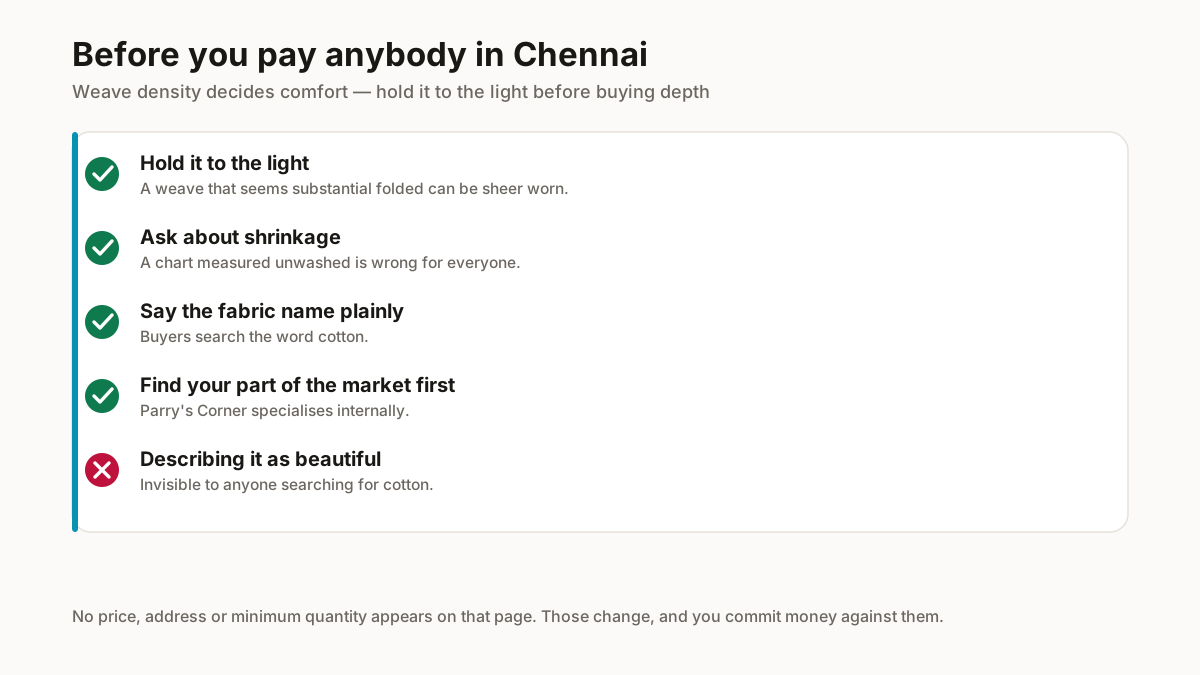
Ask about shrinkage at every stop, because it determines your size chart and your return rate. Ask what happens with a faulty piece before paying rather than after.
How much do you actually have to buy?
The tiers are gentle and the smaller ones are genuinely available, which makes Chennai a reasonable first-trip city for somebody nervous about minimums. Buy across designs rather than deep into one. A coherent range of 10 pieces that clearly belong together reads as a shop; 10 unrelated ones read as a clearance pile.
Who should you actually go and see?
Parry's Corner specialises internally, and knowing which lane handles your category is the difference between a productive morning and a walk. That knowledge sits with people who have been rather than anywhere public, which is why a first visit is worth treating as learning the geography before it is worth treating as buying.
Chennai supplier list
We are building a list of Parry’s Corner dealers by lane and by category, because which lane you need is the difference between a morning and a walk. Every number on it comes from a supplier who asked to be listed.
Your number is used to send the list and nothing else.
What should you check before paying?
Wholesale generally has no returns, so once you have paid a bad piece is yours. Cotton hides less than synthetics do, which makes these checks quick.
Weave density, against the light
Hold the fabric up. A weave that seems substantial folded can be noticeably sheer worn, and that produces returns from customers who feel misled.
Shrinkage, asked directly
Set the size chart on washed measurements. A chart built on unwashed cotton will be wrong within 30 days of your first orders.
Colour bleeding
Strong cottons can run. Ask, and put a wash instruction in the listing if the answer is uncertain.
Consistency across the lot
Lay 3 or 4 pieces side by side in daylight. Dye lots vary, and a customer who ordered what she saw will notice.
Take this checklist with you
Everything above is easy to remember at home and easy to forget in a crowded lane. Same list, printable, to carry in a bag.
Buying trip checklist — Chennai
Print this and carry it. Tick as you go.
Before you leave
- ☐Confirmed the market is open today (call, do not assume)
- ☐Decided which market — they trade different goods
- ☐Cash split across two places, not one pocket
- ☐Notebook or phone notes ready — six suppliers blur into one
- ☐Someone with me, if this is the first trip
- ☐Plan for getting goods home before buying them
Which market for what
- ☐Parry’s Corner — the main wholesale concentration
- ☐Cotton dealers — everyday cotton and sarees
- ☐General wholesale lanes — mixed apparel and trims
Ask at every shop
- ☐What is the rate at the quantity I can actually take?
- ☐Will this design be available again next month?
- ☐What happens if a piece arrives defective?
- ☐What is the smallest lot you will sell me?
Check before paying
- ☐An inside seam — loose threads, skipped stitches, puckering
- ☐Colour across 3 or 4 pieces, in daylight not tube light
- ☐Which sizes are actually in the lot, counted not stated
- ☐Compared the rate against 2 other shops in the same lane
Wholesale generally has no returns. The checks above are the only protection you get.
What margin will this stock leave you?
Everyday cotton is a volume category with modest margins per piece, which means the small costs matter proportionally more. Packing and freight are where the arithmetic is won or lost.
Same garment, three channels
Put your own numbers in. Nothing here is assumed — commission is set by category and changes, so read yours from the channel’s rate card. The return rates are starting points to overwrite with your own.
Return rate on each channel
Ad spend per order
Meesho
₹178
per order after returns · 25% margin
₹276 on a delivered order
commission + returns + ads
₹256
per order after returns · 37% margin
₹306 on a delivered order
no commission, ads to be found
WhatsAppMOST LEFT
₹300
per order after returns · 43% margin
₹321 on a delivered order
no commission, lowest returns
On these numbers the same piece leaves ₹123 more per order on WhatsApp than on the weakest channel — which is the argument for choosing the channel before choosing the stock. For the full picture including GST and a target margin, use the break-even calculator.
Why does listing the stock take longer than buying it?
Cotton photographs easily, which makes this one of the faster categories to get listed — and the size chart is where the time actually goes. Plan 3 images a style and a chart with chest, waist and length in inches across all 6 sizes, measured after washing.
Say the fabric name plainly in the title. Buyers filtering for cotton are matching on the word, and a listing that omits it never enters the comparison. Budget 1 day shooting and 2 days on listings and charts.
You have the stock. Now the listing.
After the trip
A cotton range is quick to shoot and slow to size
The photographs take a day; the size charts across every variant take the rest of the week. StitchMagic clears the image half — repair, four marketplace sizes, renaming — in one pass.
- Repairs and sharpens the photo
- Exports the 4 marketplace sizes from one upload
- Keeps the primary image clean, so QC does not bounce it
- Renames every file to its SKU
- Builds the WhatsApp PDF catalogue
Is it actually free?
Single photos are free. No signup, no watermark, no daily limit.
Do my photos get uploaded?
No. It runs in your browser — the files never leave your phone.
Is it a subscription?
No. The bulk pack is a one-off ₹99, and one photo counts once.
Phone-based, and the files stay on the device.
Where does Chennai stock get listed?
Cotton moves on Meesho, Flipkart and Amazon all year in a warm market, which makes it one of the steadier categories a new seller can build on. Put the fabric name in the title on all 3, because that is what the filter matches.
Set the chart against washed measurements, since fit returns cost 2 freight legs each and are the main leak in this category.
Why are there no prices on this page?
Because cotton rates track the weave and the count, and a figure without those attached compares nothing. Two cottons at the same price can be very different cloth. Ask what the fabric actually is, in weave and count, and price from that answer rather than from a headline rate that could describe several different cloths.
Related free seller tools
Frequently Asked Questions
How should I build a cotton size chart?
Measure after washing, and give chest, waist and length in inches across all 6 sizes you stock. Cotton that shrinks turns a correct chart into a wrong one, and each fit return costs 2 freight legs.
What is Parry’s Corner known for?
It is Chennai’s main wholesale trading concentration, dealing heavily in cotton and everyday wear rather than occasion pieces.
What should I check when buying cotton wholesale?
Weave density and weight, by holding the fabric to the light — a weave that looks substantial folded can be sheer when worn. Also ask about shrinkage, because a size chart measured on unwashed stock will be wrong for every customer.
No rate or shrinkage figure appears here. Ask the supplier and measure a washed sample before you publish a size chart.