Which market should you actually travel to?
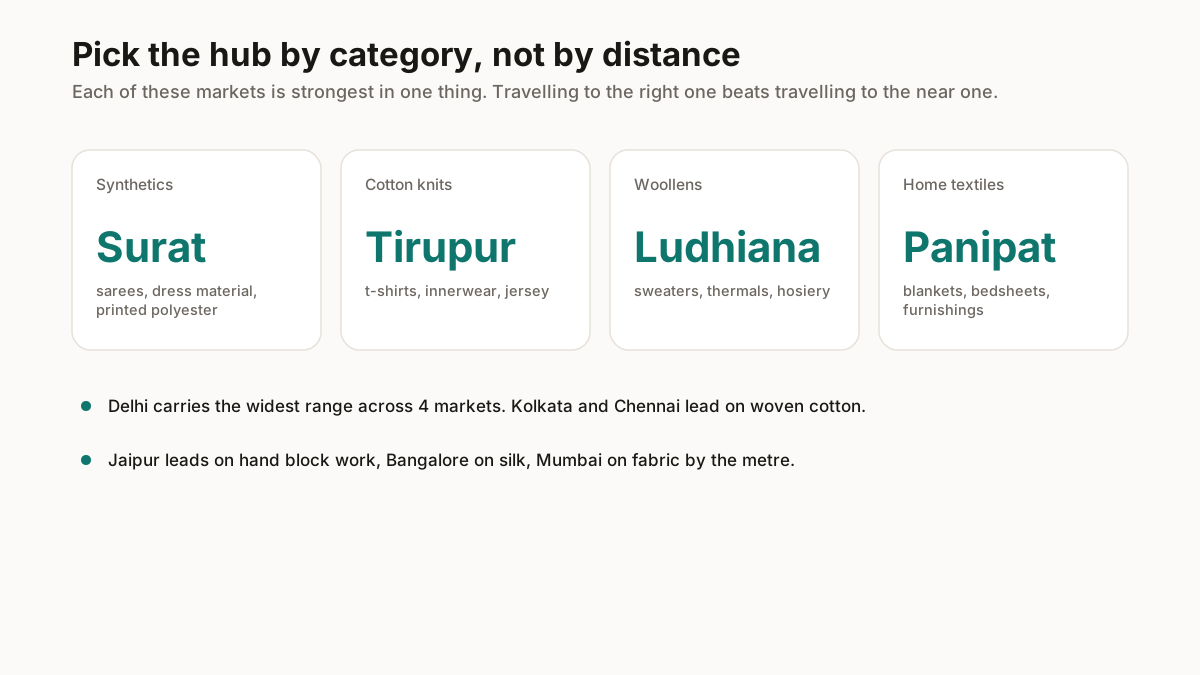
Start from what you sell, because every one of these hubs specialises and the specialisation is stronger than the distance. A seller of printed synthetic sarees who travels to a cotton market will find a thin range at unremarkable prices, and no amount of negotiating fixes being in the wrong city.
The reverse is just as true. A hub that is genuinely the best in the country for your category will usually beat a closer one on range and on rate at the same time, because depth of trade is what produces both.
So the question is not which market is near me. It is which market trades in my category, and what does getting there cost against what it saves.
Each of those pages covers what that hub trades in, what to check before paying, and where the stock tends to sell once you have it. None of them quotes a price or an address, for the reason set out at the bottom of this page.
What should a first buying trip actually achieve?
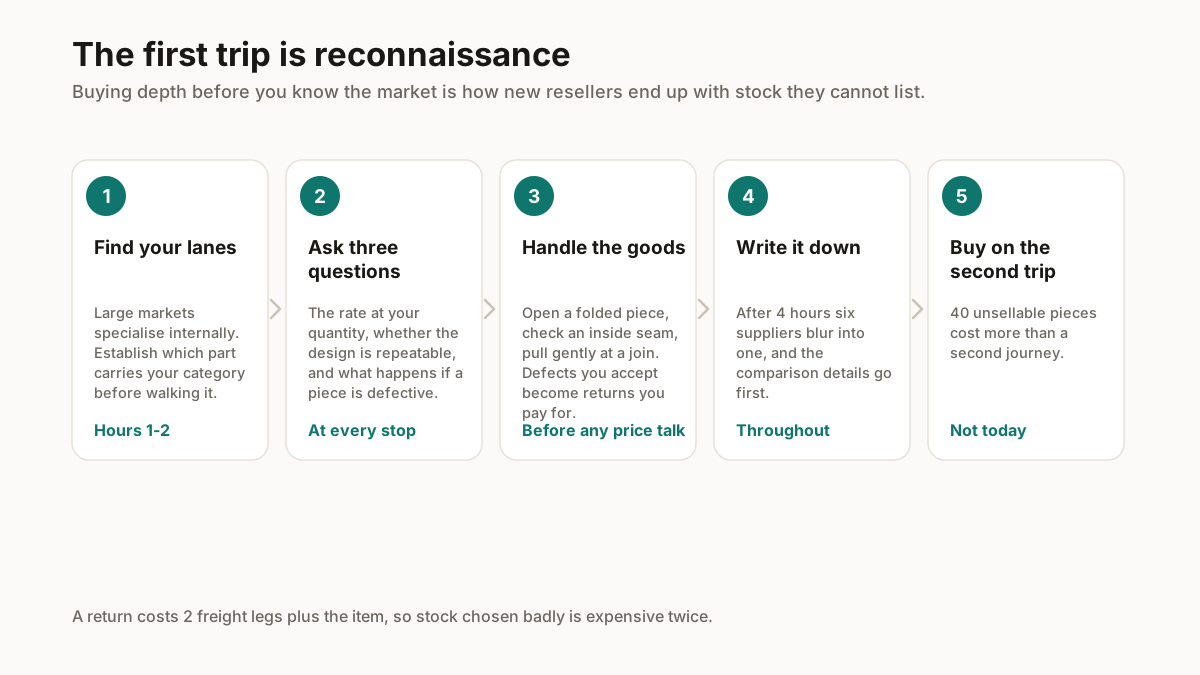
Information, not stock. The most expensive mistake a new reseller makes is buying depth on a first visit, before knowing which lanes carry their category, which suppliers deal in quantities they can absorb, or what the goods look like in the hand rather than in a photograph.
Treat the first trip as reconnaissance and the second as the purchase. It feels slow and it is far cheaper than 40 pieces you cannot sell — and returns on badly chosen stock cost you 2 freight legs each, on top of the money already spent.
Ask three things everywhere you stop: what is the rate at the quantity I can actually take, is this design repeatable, and what happens if a piece is defective. The answers tell you more about whether to buy from someone than the price does.
And carry a notebook rather than trusting memory. After 4 hours of walking, six suppliers blur into one, and the details you needed to compare are the ones that go first.
What does the trip cost you after the buying?
More time than the trip itself, and this is the part that is consistently underestimated. A lot of 40 pieces needs photographing, sizing to each portal specification, and describing before any of it can earn — realistically 2 days of shooting and 2 days of listing on top of the day spent buying.
Photograph in one session rather than piece by piece as things sell. A consistent setup makes 40 items read as one shop, and consistency does more commercially than the quality of any single image.
Keep primary images clean. Meesho, Flipkart and Amazon all reject catalog photos carrying text, logos, borders or price stickers, and a rejection discovered after the stock is paid for is an expensive way to learn a rule.
Then price with every cost in before listing. Shipping, returns and packing all come out of the number you set, and a price built on the wholesale rate alone is the most common reason a busy month makes no money.
Why are there no prices or addresses on these pages?
Because you would commit money against them, and they change. Rates move with input costs and with the season, minimum quantities differ between two shops in the same lane, and opening days shift around festivals. A figure published here would be wrong within a quarter and wrong silently.
What does not change is what each hub trades in and how buying there works — which is what these pages carry. Orientation, so the trip is to the right city and the right questions get asked when you arrive.
Confirm the rest on the ground or by phone before paying anybody. If a page anywhere quotes you a firm per-piece rate for a market it has never visited, treat that as a reason to doubt the rest of it.
Related free seller tools
Frequently Asked Questions
Which is the cheapest wholesale cloth market in India?
There is no single answer, because each hub is cheapest in its own speciality. Surat is hard to beat on synthetics, Tirupur on cotton knitwear, Ludhiana on woollens. Buying against a hub’s speciality usually means paying more for less choice.
How do I find a wholesale market near me?
Proximity is the wrong first filter. Work out which hub specialises in your category, then weigh the travel against the range and rate you get there. Travelling 2 hours to the right market usually beats 20 minutes to the wrong one.
Do I need GST to buy from a wholesale market?
To buy, generally no. To reclaim input credit on the purchase, and to sell on Flipkart or Amazon, yes. Meesho accepts an enrolment number instead of a GSTIN in several categories. Ask an accountant about your own liability rather than a guide.
How much stock should I buy on a first trip?
Less than you want to. Treat the first visit as reconnaissance and buy depth on the second, once you know which suppliers deal in your quantities and how the goods hold up. 40 unsellable pieces cost more than a second trip.
How long does it take to list stock after buying it?
Longer than the trip. Budget around 2 days photographing 40 pieces and 2 more writing listings and size charts in inches — which is why stock bought on impulse often sits in bags for 3 weeks.
No page in this cluster quotes a price, an address, a shop name or a minimum order quantity. Those differ between lanes in the same market, move with the season, and are exactly the figures a seller commits money against. Confirm them on the ground before you pay anybody.