Which Ludhiana market should you go to?
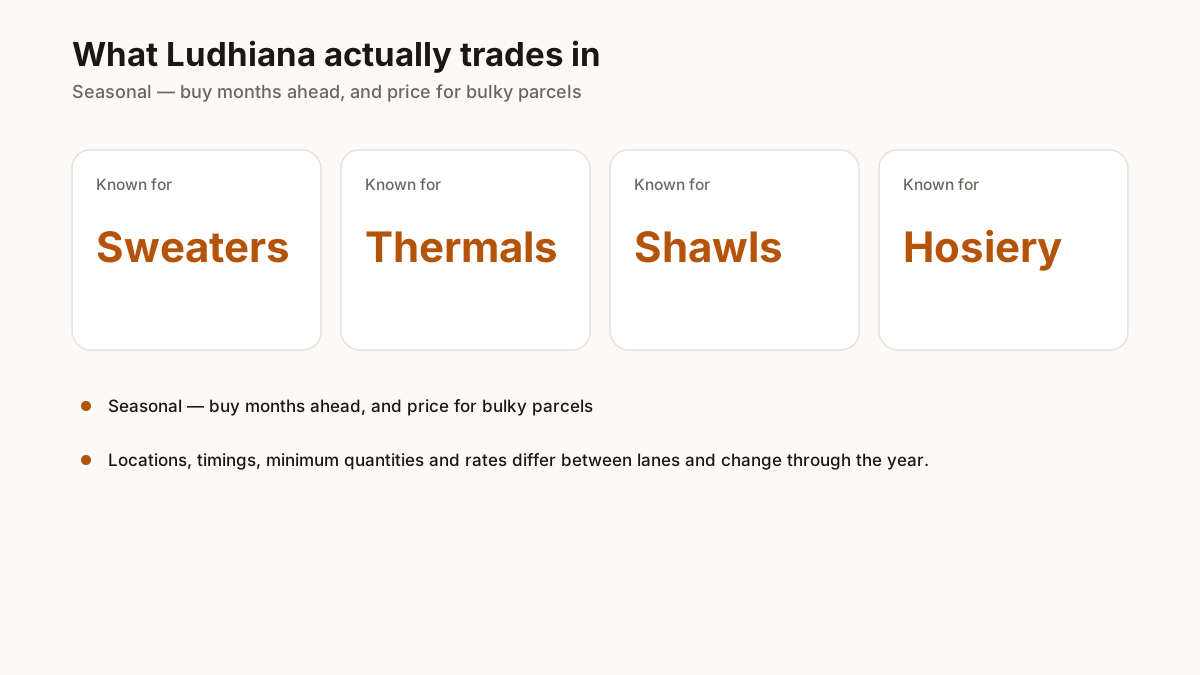
Ludhiana is the winter trade. Sweaters, thermals, shawls and hosiery, and a seller who understands that this is a seasonal market has already understood most of what matters here.
The city works in knitted woollens and hosiery at scale, which means range and rates that are hard to match elsewhere for those categories. It also means a buying calendar rather than a buying decision.
If you sell all year round, Ludhiana is a supplement to your range rather than the base of it, and treating it as the base is how sellers end up with capital asleep in sweaters through summer.
Where do you sell? That decides what you buy
Winterwear sells hardest on marketplaces, because demand spikes and a search-driven channel captures a spike better than an audience-driven one does. Meesho, Flipkart and Amazon all lift sharply as the season turns.
Instagram works for the styled end — shawls, statement knits, anything photogenic — and rewards posting ahead of the season rather than during it.
WhatsApp is where repeat winter customers live. Somebody who bought a thermal set last year is the easiest sale you will make this year, and no commission comes out of it.
| Meesho | |||
|---|---|---|---|
| Buyer arrives | Searching and comparing on price | Discovering while scrolling | Already knows and trusts you |
| Marketplace commission | Yes — set by category | None | None |
| Return rate | Highest of the three | Middle | Lowest — she knows you |
| Listing rules | Strict QC, primary image must be clean | None | None |
| What sells | Everyday basics at sharp prices | Distinctive, photogenic, occasion wear | Mid to premium, and repeat orders |
| What it needs from you | Volume and price discipline | A look and consistent posting | An audience you already built |
Commission rates differ by category and change — read yours from the channel’s own rate card, and run it through the break-even calculator.
How do you get there and get around?
Ludhiana is reachable by train and road from Delhi and Chandigarh, and it is a working manufacturing city rather than a tourist one. Most buying trips are a night, and the productive hours are the morning.
The trade is spread across units and wholesale markets rather than concentrated in a single bazaar, so plan the day around 2 or 3 areas instead of expecting to walk everything.
First time? Weekday, early, and call ahead where you can. Winter is the busy season and a supplier mid-season has less time than the same supplier in April, which is an argument for going early in more ways than one.
Woollens are bulky, so transport matters more here than in most trades. Ask about it before negotiating and factor the cost in — a bundle of sweaters takes far more space than its weight suggests, and that shows up in the freight bill.
What happens on a first buying trip?
Small lots are possible, and asking early is better than asking late. Ludhiana runs on volume, but plenty of wholesale dealers will do a dozen. Where you will struggle is at a unit mid-season with a full order book.
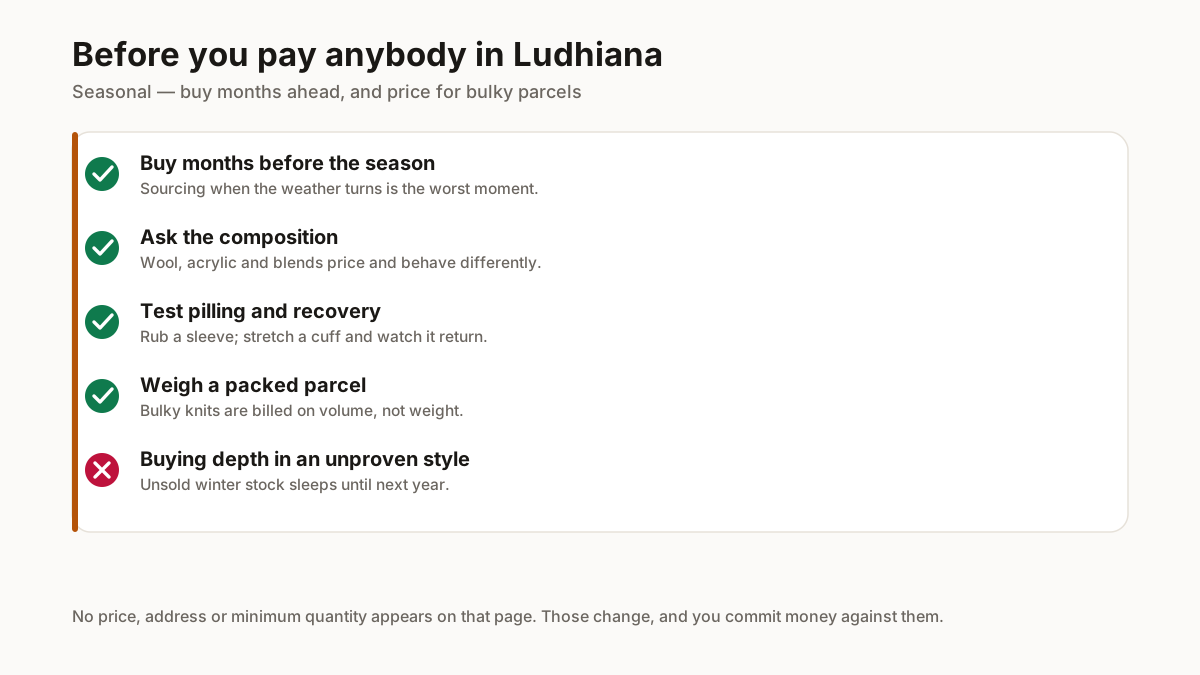
Compare 3 suppliers on composition, not just price. Wool, acrylic and blends sit at different prices for good reason, and a rate that looks sharp is often a different fibre. Ask what it actually is at every stop.
Go in the off-season if you possibly can. Suppliers have time, ranges are complete, and you are buying ahead of the demand rather than into it — which is the whole discipline this category asks for.
Ask what happens with defects, and ask specifically about pilling. It is the fault that appears a month after the customer buys, long after you have counted the money.
How much do you actually have to buy?
Tiers work as they do elsewhere — piece, half dozen, dozen, lot — but the seasonal clock changes what depth means. Stock unsold when winter closes is money asleep for 12 months, which makes buying deep in an unproven style riskier here than in a category that sells year round.
The safer shape is narrow and early: several styles in small quantities, bought ahead, with a plan to reorder the ones that move. Ludhiana can usually make more if you have asked whether the design repeats.
Who should you actually go and see?
Ludhiana's trade splits between manufacturing units and wholesale dealers, and a small reseller almost always wants the second. The units are geared to bulk orders and the dealers are geared to people like her.
Search results do not distinguish between them, which is why a first trip here often starts in the wrong place.
Ludhiana supplier list
We are building a list of Ludhiana wholesale dealers rather than manufacturing units, because a small reseller almost always wants the second kind of supplier. Every number on it comes from a supplier who asked to be listed.
Your number is used to send the list and nothing else.
What should you check before paying?
No returns, and winter goods are unforgiving of a bad buy because you cannot discount your way out of them in March. These checks take four minutes.
Composition, asked plainly
Wool, acrylic or a blend. They behave differently, wash differently and are priced differently, and a customer who expected one and received the other returns it. Ask, and then describe honestly in the listing.
Pilling resistance
Rub a sleeve firmly and watch whether the surface starts to bobble. This is the complaint that arrives weeks after the sale, and it is the single most common winterwear review problem.
Recovery after stretch
Pull the cuff or hem gently and see whether it returns to shape. A knit that stays stretched looks worn out after a few wears, and gets reviewed accordingly.
Bulk against the parcel
Compress a piece and see how it packs. Shipping is billed on chargeable weight — the greater of actual weight and length times width times height divided by 5000 — so a light sweater in a large box is billed on the box.
Take this checklist with you
Everything above is easy to remember at home and easy to forget in a crowded lane. Same list, printable, to carry in a bag.
Buying trip checklist — Ludhiana
Print this and carry it. Tick as you go.
Before you leave
- ☐Confirmed the market is open today (call, do not assume)
- ☐Decided which market — they trade different goods
- ☐Cash split across two places, not one pocket
- ☐Notebook or phone notes ready — six suppliers blur into one
- ☐Someone with me, if this is the first trip
- ☐Plan for getting goods home before buying them
Which market for what
- ☐Hosiery and knitwear units — sweaters, thermals, winterwear
- ☐Wholesale markets — ready-made woollens
- ☐Shawl and blanket dealers — heavier winter goods
Ask at every shop
- ☐What is the rate at the quantity I can actually take?
- ☐Will this design be available again next month?
- ☐What happens if a piece arrives defective?
- ☐What is the smallest lot you will sell me?
Check before paying
- ☐An inside seam — loose threads, skipped stitches, puckering
- ☐Colour across 3 or 4 pieces, in daylight not tube light
- ☐Which sizes are actually in the lot, counted not stated
- ☐Compared the rate against 2 other shops in the same lane
Wholesale generally has no returns. The checks above are the only protection you get.
What margin will this stock leave you?
Winterwear carries a shipping penalty that most categories do not, and it is the thing that quietly decides whether the margin works. Model it with the parcel, not the garment.
Same garment, three channels
Put your own numbers in. Nothing here is assumed — commission is set by category and changes, so read yours from the channel’s rate card. The return rates are starting points to overwrite with your own.
Return rate on each channel
Ad spend per order
Meesho
₹178
per order after returns · 25% margin
₹276 on a delivered order
commission + returns + ads
₹256
per order after returns · 37% margin
₹306 on a delivered order
no commission, ads to be found
WhatsAppMOST LEFT
₹300
per order after returns · 43% margin
₹321 on a delivered order
no commission, lowest returns
On these numbers the same piece leaves ₹123 more per order on WhatsApp than on the weakest channel — which is the argument for choosing the channel before choosing the stock. For the full picture including GST and a target margin, use the break-even calculator.
Why does listing the stock take longer than buying it?
The calendar is the constraint, not the hours. Photographing 40 pieces takes about 2 days and listings another 2, but a new listing needs 14 to 21 days to settle before demand arrives — so the work has to be done at least 30 days before your customers start buying.
Which means the listing work happens when it still feels absurdly early. Sellers who wait for the weather to turn are publishing into a season that is already half over.
Photograph on a hanger or a form rather than flat where you can. Knitwear laid flat loses its shape entirely and looks shapeless on screen, which is exactly the wrong impression for a category bought on how it sits.
Then weigh a packed parcel before you set a price. It is the number that turns an apparently healthy margin into a thin one.
You have the stock. Now the listing.
After the trip
A winter range has to be listed 30 days before anyone buys
Which means photographing and listing while it still feels far too early. Doing 40 pieces by hand takes the fortnight you do not have. StitchMagic does repair, four sizes, renaming and the catalogue in one pass.
- Repairs and sharpens the photo
- Exports the 4 marketplace sizes from one upload
- Keeps the primary image clean, so QC does not bounce it
- Renames every file to its SKU
- Builds the WhatsApp PDF catalogue
Is it actually free?
Single photos are free. No signup, no watermark, no daily limit.
Do my photos get uploaded?
No. It runs in your browser — the files never leave your phone.
Is it a subscription?
No. The bulk pack is a one-off ₹99, and one photo counts once.
On your phone, so the listing work happens in the evenings rather than at a desk.
Where does Ludhiana stock get listed?
Demand on Meesho, Flipkart and Amazon lifts as the season turns and collapses quickly afterwards, giving a selling window of a few months rather than a year.
Listings created after the window opens spend most of it with no sales history to rank on, which is the practical reason to publish early.
Price for the parcel rather than the garment. A sweater is billed on chargeable weight by every courier an Indian marketplace uses, and a bulky one can cost more to ship than a saree worth twice as much.
Why are there no prices on this page?
Because winter rates move within the season itself. What a supplier quotes in April and what the same supplier quotes in November are different numbers, and a figure published here would be wrong for most of the year it is read in.
Ask early, ask again later, and let the gap tell you something about when to buy.
Related free seller tools
Frequently Asked Questions
How far ahead should winter listings go live?
At least 30 days before your customers start buying. Photographing 40 pieces takes about 2 days, listings another 2, and a new listing needs 14 to 21 days to settle before demand arrives.
What is Ludhiana known for?
Woollens and hosiery — sweaters, thermals, shawls and winterwear. It is a strongly seasonal market, so timing the purchase matters as much as choosing it.
When should I buy winter stock?
Months before your customers buy it. Work backwards from when demand actually starts, then subtract the time to photograph, list and let a new listing settle — a total that is longer than most sellers expect.
Why do woollens cost more to ship?
They are bulky, and shipping is billed on chargeable weight: the greater of the actual weight and length times width times height divided by 5000. A light sweater in a large box is billed on the box, so packing size changes the cost.
No rate or seasonal date appears here. Winter timing shifts year to year, so work backwards from when your own customers start buying.