Which Delhi market should you go to?
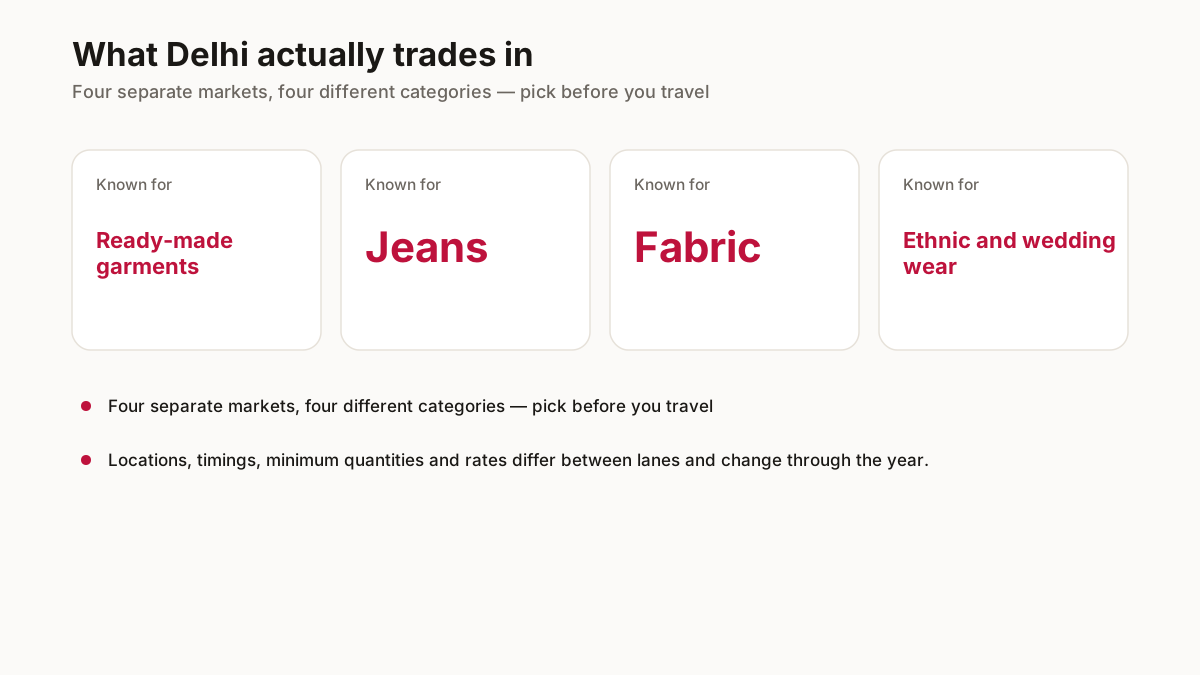
This single decision determines whether your trip works, because Delhi’s wholesale trade is split across 4 markets that specialise. A reseller who arrives at the largest one expecting to find everything spends the day walking between lanes that do not carry her category.
Gandhi Nagar, in east Delhi across the Yamuna, is the garment market — ready-made clothing and jeans above all. It is where most apparel resellers end up, and it is the one people usually mean when they say the Delhi wholesale market. The nearest metro stations are Shastri Park and Seelampur on the Red Line.
Chandni Chowk, in Old Delhi, is fabric, wedding and ethnic wear. The lanes inside it specialise sharply — Katra Neel for fabric, Kinari Bazar for trims and zari — so knowing the sub-lane matters as much as knowing the market. Take the Yellow Line to Chandni Chowk station, which puts you at the entrance.
Karol Bagh carries ready-made and ethnic wear at a slightly different price point, and is easier to walk than Old Delhi if this is your first buying trip. Karol Bagh station is on the Blue Line.
Sadar Bazar is general merchandise, not apparel — packaging, accessories, household goods. It matters if you sell add-ons alongside clothes, or if you buy your own poly bags and cartons in bulk. Tis Hazari and Pul Bangash are the closest stations.
| Market | Trades in | Nearest metro | Suits |
|---|---|---|---|
| Gandhi Nagar | Ready-made garments, jeans | Shastri Park / Seelampur (Red) | Apparel resellers |
| Chandni Chowk | Fabric, wedding and ethnic wear | Chandni Chowk (Yellow) | Occasion wear, tailoring |
| Karol Bagh | Ready-made and ethnic wear | Karol Bagh (Blue) | Mid-market boutiques |
| Sadar Bazar | General goods, packaging, accessories | Tis Hazari / Pul Bangash | Add-ons to an apparel range |
Metro stations and areas are stable. Everything else about a market — rates, minimum quantities, which lane carries what — changes, so confirm before travelling.
Decide the category before the trip, not after arriving. A reseller sourcing kurtis and one sourcing bridal lehengas are going to different parts of the city, and the second is not a longer walk from the first — it is a separate journey across the Yamuna.
Where do you sell? That decides which market
Most guides stop at what a market sells. The more useful question is where the stock is going afterwards, because Meesho, Instagram and WhatsApp are not three sizes of the same business — they take different cuts, carry different return rates, and reward different stock.
| Meesho | |||
|---|---|---|---|
| Buyer arrives | Searching and comparing on price | Discovering while scrolling | Already knows and trusts you |
| Marketplace commission | Yes — set by category | None | None |
| Return rate | Highest of the three | Middle | Lowest — she knows you |
| Listing rules | Strict QC, primary image must be clean | None | None |
| What sells | Everyday basics at sharp prices | Distinctive, photogenic, occasion wear | Mid to premium, and repeat orders |
| What it needs from you | Volume and price discipline | A look and consistent posting | An audience you already built |
Commission rates differ by category and change — read yours from the channel’s own rate card, and run it through the break-even calculator.
Read across that table and the Delhi choice gets easier. Gandhi Nagar ready-made suits Meesho, where volume and a sharp price matter and a marketplace commission is coming out anyway. Chandni Chowk wedding and ethnic pieces suit Instagram and WhatsApp, where there is no commission eating a higher price and a buyer is willing to spend time looking.
Karol Bagh mid-market sits naturally with WhatsApp repeat customers who already trust you. Sadar Bazar supplies all 3, because packaging and accessories lift order value on every channel.
The mistake to avoid is buying premium stock for a channel that competes on price, or basics for an audience that came to you for something they cannot find on a marketplace. That decision is made before you reach the market, not in it.
How do you get there and get around?
Take the metro to all 4. Parking near any of these markets is difficult and the lanes are too narrow to drive into anyway. Each market above lists its nearest station; from there it is a walk, and for Chandni Chowk and Sadar Bazar a cycle rickshaw for the last stretch is normal.
Check the weekly closing day before you travel. Delhi’s wholesale markets each take a different day off — Chandni Chowk and Sadar Bazar are generally shut on Sundays, and Karol Bagh traders commonly close on Mondays. Both are widely known and both do change, and a wasted journey is expensive, so confirm by phone before you set out; do not trust any page, including this one.
Arrive early. Wholesale trade in these markets starts in the morning and the serious buying is done before the afternoon; arriving at 2pm means fewer people willing to spend time with a small first order. Give yourself 4 to 5 hours if you want to see more than one lane properly.
Going for the first time? Pick a weekday morning rather than a weekend, take somebody with you if you can, keep cash split across 2 places instead of one pocket, and dress for walking. These markets are busy and crowded rather than unsafe, but a first visit is easier with company and no reason to feel odd about that.
Plan how the goods get home before you buy them. Forty pieces is heavier and bulkier than it sounds, and every one of these markets sits in an area where getting a loaded auto is its own negotiation. Sellers buying at any volume usually arrange transport through the shop or a nearby transport agent instead of carrying it themselves.
If you are travelling from another city, ask the shop about transport before you finish negotiating, not after. Most have an arrangement with a transport agent who will book goods to your city, and the cost and timeline are worth knowing while you still have the option of buying less. Get whatever docket or receipt they give you, and photograph it — it is the only record you will have if a bundle goes missing.
What happens on a first buying trip?
They will sell to you even if you are small. This is the belief that stops most new resellers from ever making the trip, and it is mostly wrong. Plenty of shops in all 4 markets will sell a dozen pieces, some will sell fewer, and the ones that will not simply say so. Nobody minds being asked.
Compare 3 shops in the same lane before you buy from any of them. That is how you learn whether a rate is fair, and it takes 20 minutes. A first quote in isolation tells you nothing, because it is a first quote — and a seller who has checked two others negotiates from a completely different position.
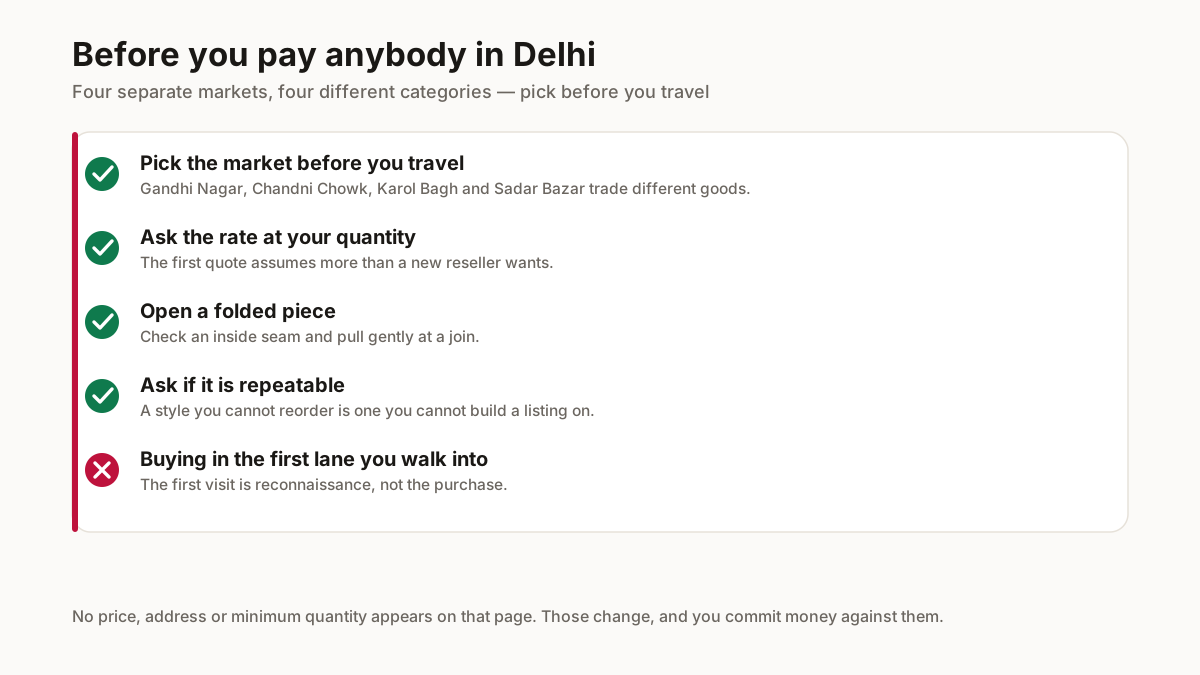
Go to look before you go to buy. Treat the first visit as reconnaissance: which lanes carry your category, which suppliers deal in the quantities you can afford, and what the range looks like in your hand, not in a photograph on a WhatsApp forward.
Carry cash and expect to negotiate, but also expect that the first quoted rate assumes a larger quantity than you want. Ask what the rate is at the volume you can genuinely take. Agreeing a price first means discovering the minimum attached to it afterwards.
Ask 3 things at every stop: the rate at your quantity, whether the design is repeatable, and what happens if a piece arrives defective. The answers tell you more about whether to buy from someone than the price does, and a supplier who is vague on the third is telling you something.
And write it down. After 4 hours of walking, six suppliers blur into one and the details you needed to compare are the first to go. A notebook beats memory, and it beats twelve near-identical photos on your phone.
How much do you actually have to buy?
Less than you think, and this is the myth that stops most new resellers from ever going. Wholesale does not mean 100 pieces minimum everywhere. Rates are tiered — a single piece, a half dozen, a dozen, then a full lot — and the price improves at each step, but plenty of shops will sell you the smaller tiers.
What varies is the shop, not the rule. Some deal only in full lots, many do not, and the only way to know is to ask. Asking costs nothing and being told no costs nothing, which makes it strange how many first-time buyers walk out without asking.
Be honest about the quantity you want when you ask, because the first quoted rate almost always assumes more than a new reseller is planning to take. Getting a price for 50 and then admitting you want 10 restarts the conversation on a worse footing.
And buy narrow before you buy deep. Six styles in small quantities tells you what your customers respond to; 60 pieces of one style tells you nothing until it is too late to change your mind.
Who should you actually go and see?
The hardest part of a first trip is not finding the market. It is finding the shops inside it that will deal with you at the quantity you can afford, because the ones with the best window displays are frequently the ones with the largest minimums.
There is no public directory of that. Google shows you the biggest names and the loudest listings, which are rarely the suppliers who will sell a reseller a dozen pieces. The useful list is the one other small sellers pass around, and it does not exist in one place.
Delhi supplier list
We are building a list of Delhi wholesalers who sell to small resellers — the ones who will do a dozen pieces, not only full lots. Every number on it comes from a supplier who asked to be listed.
Your number is used to send the list and nothing else.
Until that list is worth sending, the reliable method is the one in the checklist above: walk the lane, ask 3 shops the same 4 questions, and note which ones answered straight. The suppliers worth returning to identify themselves in that conversation.
What should you check before paying?
Wholesale generally has no returns. Once you have paid and walked out, a defective piece is yours, and that is the single biggest difference from buying retail. Nobody is being unfair about it — it is how the trade works — but it means the 4 checks below are the only protection you get, and under a minute each.
The stitching, on the inside
Open a folded piece and look at an inside seam. Loose thread ends, skipped stitches and a seam that puckers when you pull gently are what a customer photographs and returns, and each return costs you 2 freight legs plus the item. This check takes 30 seconds and it is the one most first-time buyers skip.
Colour consistency across the lot
Ask to see more than the top piece. Garments are dyed in batches and a lot assembled from 2 batches can differ visibly, which matters when a customer orders the exact item she saw photographed. Lay 3 or 4 pieces side by side in daylight, never under the shop’s tube light.
Whether the design is repeatable
A style you cannot reorder is a style you cannot build a listing around, and photographing something you will sell out of in a week is wasted work. Ask directly whether the design will be available in a month, and treat a vague answer as a no.
Sizes actually present in the lot
Count them; do not accept a stated size range. A lot sold as covering 5 sizes that is mostly S and M leaves you with a listing that goes out of stock in its best-selling sizes within days, which hurts ranking on every marketplace.
Take this checklist with you
Everything above is easy to remember sitting at home and easy to forget at 11am in a crowded lane. This is the same list, printable, to carry in a bag.
Buying trip checklist — Delhi
Print this and carry it. Tick as you go.
Before you leave
- ☐Confirmed the market is open today (call, do not assume)
- ☐Decided which market — they trade different goods
- ☐Cash split across two places, not one pocket
- ☐Notebook or phone notes ready — six suppliers blur into one
- ☐Someone with me, if this is the first trip
- ☐Plan for getting goods home before buying them
Which market for what
- ☐Gandhi Nagar — ready-made garments and jeans
- ☐Chandni Chowk — fabric, wedding and ethnic wear
- ☐Karol Bagh — ready-made and ethnic, mid-market
- ☐Sadar Bazar — packaging, accessories, general goods
Ask at every shop
- ☐What is the rate at the quantity I can actually take?
- ☐Will this design be available again next month?
- ☐What happens if a piece arrives defective?
- ☐What is the smallest lot you will sell me?
Check before paying
- ☐An inside seam — loose threads, skipped stitches, puckering
- ☐Colour across 3 or 4 pieces, in daylight not tube light
- ☐Which sizes are actually in the lot, counted not stated
- ☐Compared the rate against 2 other shops in the same lane
Wholesale generally has no returns. The checks above are the only protection you get.
What margin will this stock leave you?
Nobody can tell you a number, and anyone who does is guessing. It depends on the piece, the channel, your return rate and how well you bought. What is stable is which deductions apply where — and that turns out to be more useful than an average, because it explains why the same garment earns three different amounts.
Same garment, three channels
Put your own numbers in. Nothing here is assumed — commission is set by category and changes, so read yours from the channel’s rate card. The return rates are starting points to overwrite with your own.
Return rate on each channel
Ad spend per order
Meesho
₹178
per order after returns · 25% margin
₹276 on a delivered order
commission + returns + ads
₹256
per order after returns · 37% margin
₹306 on a delivered order
no commission, ads to be found
WhatsAppMOST LEFT
₹300
per order after returns · 43% margin
₹321 on a delivered order
no commission, lowest returns
On these numbers the same piece leaves ₹123 more per order on WhatsApp than on the weakest channel — which is the argument for choosing the channel before choosing the stock. For the full picture including GST and a target margin, use the break-even calculator.
Commission is the line that surprises people. A piece sold on WhatsApp to a customer who already knows you keeps the commission and avoids most of the returns, which is why sellers with an audience often make more from fewer orders than a marketplace seller makes from many.
Shipping is the one that catches people out. It is billed on chargeable weight — the greater of the actual weight and length times width times height divided by 5000 — so a light garment in an oversized parcel is billed on the parcel. Packing smaller is the cheapest margin improvement available to you.
Enter your own wholesale cost, rate card and return rate, and the arithmetic stops being guesswork.
Why does listing the stock take longer than buying it?
The buying is a day. Getting the stock listed is the fortnight, and this is where sellers consistently under-plan. Every one of 40 pieces needs photographing, sizing to each portal’s specification, and describing before it can earn anything at all.
Photograph in one session, not piece by piece as you go. A consistent setup — even daylight, plain wall, garment filling the frame — makes 40 pieces read as one shop instead of 40 separate purchases, and that consistency does more commercially than the quality of any single image.
Keep the primary images clean. Meesho, Flipkart and Amazon all reject catalog photos carrying text, logos, borders or price stickers, and a rejection discovered after you have paid for the stock is an expensive way to learn a rule that costs nothing to follow.
Budget the week honestly: 1 day buying, about 2 days photographing 40 pieces, and another 2 days writing listings and size charts in inches. Sellers who budget only for the trip are the ones whose stock sits in bags for 3 weeks.
You have the stock. Now the listing.
This is the half of the job that decides whether the trip paid for itself, and it is the half that happens on your phone after the shop shuts.
After the trip
40 pieces × 4 marketplace sizes is 160 exports by hand
That is the fortnight this page keeps warning you about, and it is the part that happens on your phone in the evening after the shop shuts. StitchMagic runs the whole drop through in one pass instead.
- Repairs and sharpens the photo
- Exports the 4 marketplace sizes from one upload
- Keeps the primary image clean, so QC does not bounce it
- Renames every file to its SKU
- Builds the WhatsApp PDF catalogue
Is it actually free?
Single photos are free. No signup, no watermark, no daily limit.
Do my photos get uploaded?
No. It runs in your browser — the files never leave your phone.
Is it a subscription?
No. The bulk pack is a one-off ₹99, and one photo counts once.
Works on the phone you took to the market. No laptop, and it keeps working when the signal does not.
Whatever you use, the order matters: repair the photo, size it to the portal, keep the primary image clean, then write the description. Doing it in that order means each step works on something already fixed, and it is the difference between one evening and three.
Where does Delhi stock get listed?
Most of it goes to Meesho, Flipkart and Amazon, and the ready-made lines from Gandhi Nagar suit all 3. Meesho tends to take the volume because several categories there need no GSTIN to start, while Flipkart and Amazon both want one before you can list at all.
Wedding and ethnic pieces from Chandni Chowk behave differently. They sell better where a buyer is browsing instead of price-comparing, which in practice means Instagram and WhatsApp carry more of that trade than a marketplace search page does.
Whichever channel you choose, price with every cost in before listing. Shipping, returns and packing all come out of the number you set, and a price built on the wholesale rate alone is the most common reason a busy month makes no money.
Why are there no prices on this page?
Because you would commit money against them and they change. Rates move with input costs and with the season, minimum quantities differ between 2 shops in the same lane, and what a supplier quotes a first-time buyer is not what they quote a regular. A per-piece figure published here would be wrong within a quarter, and wrong silently.
What does not change is which market trades in what, where each one is, and how buying there works — which is what this page carries. If a guide anywhere quotes you a firm per-piece rate for a market it has never visited, treat that as a reason to doubt the rest of it.
Related free seller tools
Frequently Asked Questions
Do I need GST to buy from Delhi wholesale markets?
To buy, generally no. To reclaim input credit on the purchase, and to sell on Flipkart or Amazon, yes. Meesho accepts an enrolment number instead of a GSTIN in several categories. Ask an accountant about your own liability; a guide cannot answer it.
Minimum kitna lena padega — will they sell me a small quantity?
Often yes. Rates are tiered — a single piece, a half dozen, a dozen, then a full lot — and plenty of shops sell the smaller tiers. Some deal only in full lots and will say so. Asking costs nothing, and the belief that wholesale means 100 pieces minimum is what stops most new resellers going at all.
Can I go to the market alone?
Yes, and many sellers do. A weekday morning is easier than a weekend, take somebody with you the first time if you can, keep cash split across 2 places rather than one pocket, and dress for walking. These markets are crowded and busy rather than unsafe.
How do I know if the rate I am being quoted is fair?
Compare 3 shops in the same lane before buying from any of them. It takes about 20 minutes and it is the only reliable method — a first quote in isolation tells you nothing. A buyer who has checked two others negotiates from a completely different position.
What if a piece is defective when I get home?
Wholesale generally has no returns, so it is yours. That is why the physical checks matter: an inside seam, colour across 3 or 4 pieces in daylight, and which sizes are in the lot. Under a minute each, and the only protection you get.
How do the goods get back to my city?
Ask the shop before you finish negotiating, not after. Most have an arrangement with a transport agent who will book goods to your city. Get the docket or receipt and photograph it — it is the only record you have if a bundle goes missing.
Can I do the photos and listings from my phone?
Yes. Resizing to each marketplace spec, keeping the primary image clean and building a WhatsApp catalogue all run in a phone browser, and the photos never leave the device. No laptop is needed for any part of it.
Which is the biggest wholesale cloth market in Delhi?
Gandhi Nagar in east Delhi is the one most apparel resellers mean, and it is known for ready-made garments and jeans. Chandni Chowk is larger in fabric and ethnic wear. They are separate markets trading different goods, so the useful question is which one carries your category.
How do I reach Gandhi Nagar market?
Shastri Park and Seelampur on the Red Line are the nearest metro stations, and it is a short walk or rickshaw from either. Driving is impractical: parking is difficult and the lanes are too narrow to enter, which is true of all 4 Delhi wholesale markets.
Which day are Delhi wholesale markets closed?
They differ. Chandni Chowk and Sadar Bazar are generally shut on Sundays, and Karol Bagh traders commonly close on Mondays. Both are widely known and both do change, so confirm by phone before travelling and do not rely on a published guide.
Can I buy small quantities in Delhi wholesale markets?
Often yes, though the rate improves with volume and the first quote usually assumes more than a new reseller wants. Ask what the price is at the quantity you can actually take. Agree a rate first and you find the minimum attached to it later.
How many days should I budget for a Delhi buying trip?
Plan a week, not a day. Roughly 1 day buying, 2 days photographing 40 pieces, and 2 days writing listings and size charts in inches. Sellers who budget only for the trip are the ones whose stock sits in bags for 3 weeks.
What should I check before paying for a lot?
An inside seam for loose threads and skipped stitches, colour consistency across 3 or 4 pieces in daylight, whether the design is repeatable next month, and which sizes are actually present. Each takes under a minute and each prevents a return that costs 2 freight legs.
No shop number, lane or rate appears on this page. Delhi's markets differ street by street and change through the year, so confirm on the ground before you commit cash.