Where are sarees sourced wholesale in India?
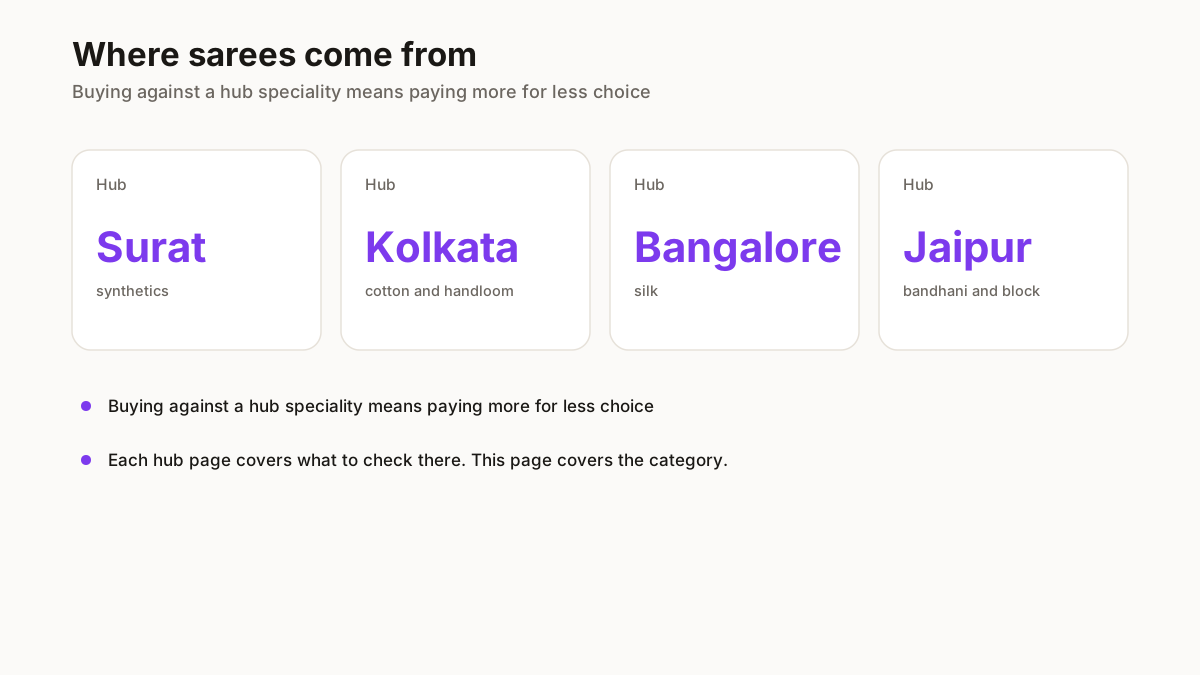
Saree sourcing is the clearest fabric-decides-city case in Indian apparel, and getting it wrong is the most common way a first buying trip is wasted. Surat is man-made fibre — georgette, chiffon, printed polyester — at a scale nowhere else matches. Kolkata is woven cotton and Bengal handloom. Bangalore is silk, through Chickpet. Jaipur is bandhani and hand block.
Those four cover most of what a reseller sells. The mistake is arriving in one expecting the speciality of another, and no amount of negotiating fixes being in the wrong city. Decide the fabric before the ticket.
What separates a good sarees from a bad one?
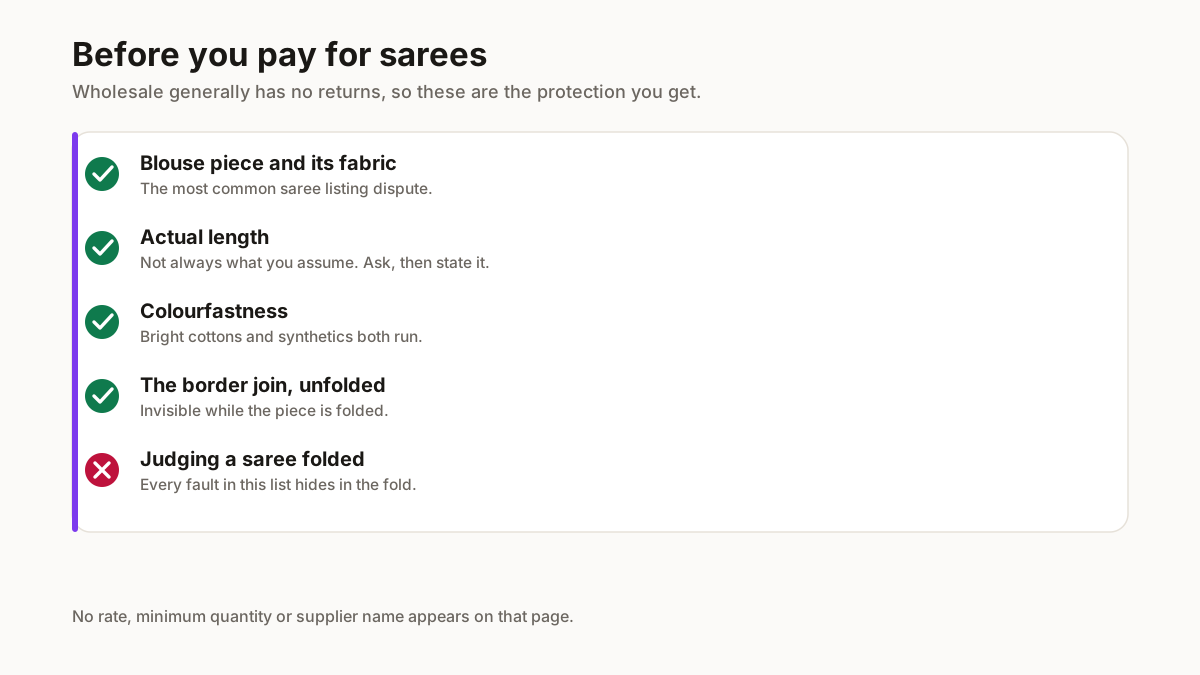
The blouse piece
Sarees hide their faults better than most garments, because they are sold folded and judged unfolded. Confirm whether one is attached and whether it is the same fabric. It is the single most common source of dispute on a saree listing, and it is answered by looking before you pay.
Length, and it is not always 5.5 metres
Ask, and state it in the listing. A customer who expected a longer drape and received a shorter one returns it, and she is right to.
Colourfastness on strong dyes
Bright cottons and synthetics both run. If the answer is uncertain, put a wash instruction in the listing rather than absorbing the refund.
The border and the join
Unfold the piece fully. Where a border is attached rather than woven, the join is where it fails, and it is invisible until the saree is open.
Where do you sell? That decides what you buy
Everyday printed sarees are a volume category and belong where buyers compare on price, which in India means Meesho above all. Silk, handloom and hand work earn a better price on Instagram and WhatsApp, where the story can be told and no commission comes out of the higher price. The rule of thumb: the more the piece needs explaining, the further from a search-ranked marketplace it should sit.
| Meesho | |||
|---|---|---|---|
| Buyer arrives | Searching and comparing on price | Discovering while scrolling | Already knows and trusts you |
| Marketplace commission | Yes — set by category | None | None |
| Return rate | Highest of the three | Middle | Lowest — she knows you |
| Listing rules | Strict QC, primary image must be clean | None | None |
| What sells | Everyday basics at sharp prices | Distinctive, photogenic, occasion wear | Mid to premium, and repeat orders |
| What it needs from you | Volume and price discipline | A look and consistent posting | An audience you already built |
Commission rates differ by category and change — read yours from the channel’s own rate card, and run it through the break-even calculator.
How much do you have to buy?
Sarees tier from a single piece upward, and the smaller tiers are genuinely available in most trading markets. Production towns are firmer than trading areas. Buy across designs rather than deep into one, particularly on higher-value fabric where a single unsold piece ties up what several cotton sarees would.
Who should you actually buy from?
The suppliers worth returning to are the ones who will deal at your quantity and whose goods hold up. Neither of those is visible from a search result.
Sarees supplier list
We are building a list of saree suppliers by fabric, because a Surat synthetics wholesaler and a Kolkata handloom dealer share almost nothing beyond the word saree. Every number on it comes from a supplier who asked to be listed.
Your number is used to send the list and nothing else.
What margin do sarees leave you?
Saree margins vary enormously by fabric, and the same channel arithmetic produces very different answers on a printed synthetic and a silk piece. Run both rather than assuming one carries the other.
Same garment, three channels
Put your own numbers in. Nothing here is assumed — commission is set by category and changes, so read yours from the channel’s rate card. The return rates are starting points to overwrite with your own.
Return rate on each channel
Ad spend per order
Meesho
₹178
per order after returns · 25% margin
₹276 on a delivered order
commission + returns + ads
₹256
per order after returns · 37% margin
₹306 on a delivered order
no commission, ads to be found
WhatsAppMOST LEFT
₹300
per order after returns · 43% margin
₹321 on a delivered order
no commission, lowest returns
On these numbers the same piece leaves ₹123 more per order on WhatsApp than on the weakest channel — which is the argument for choosing the channel before choosing the stock. For the full picture including GST and a target margin, use the break-even calculator.
What does listing sarees take?
Drape is what the buyer is judging and a flat-lay hides it entirely. One photograph showing how the fabric hangs beats 3 more angles of the same folded piece. Then the detail shot on the border or the weave, which is what a buyer zooms into before deciding. Say the fabric name in the title. Buyers search for georgette, cotton, silk and bandhani by name, and a listing calling the piece beautiful never enters that comparison.
You have the stock. Now the listing.
After the trip
40 sarees at 3 angles each is 120 images to size
Every one has to meet a portal spec before it uploads, and drape shots are the hardest to get right on a phone. StitchMagic runs the whole drop through repair, four marketplace sizes and the WhatsApp catalogue in one pass.
- Repairs and sharpens the photo
- Exports the 4 marketplace sizes from one upload
- Keeps the primary image clean, so QC does not bounce it
- Renames every file to its SKU
- Builds the WhatsApp PDF catalogue
Is it actually free?
Single photos are free. No signup, no watermark, no daily limit.
Do my photos get uploaded?
No. It runs in your browser — the files never leave your phone.
Is it a subscription?
No. The bulk pack is a one-off ₹99, and one photo counts once.
Browser-based, so an unreleased range stays on your device.
Why are there no prices on this page?
Because a saree rate without the fabric and the work attached describes nothing. Two pieces at the same number can be a printed synthetic and a handwoven cotton. Ask what the fabric is, ask how it was made, and price from those answers.
Related free seller tools
Frequently Asked Questions
Where are sarees bought wholesale in India?
By fabric rather than by one market. Surat for synthetics at volume, Kolkata for cotton and handloom, Bangalore for silk, Jaipur for bandhani and block print. Buying against a hub’s speciality means paying more for less choice.
What should I check before buying sarees wholesale?
Whether a blouse piece is attached and what fabric it is, the actual length, colourfastness on strong dyes, and the border join with the saree fully unfolded. All four are invisible while the piece is folded.
How do I describe a saree so it does not get returned?
Name the fabric, state the length, say whether a blouse piece is included, and add a wash instruction if the dye is strong. Those four lines answer the questions that otherwise arrive as messages or as returns.
Do sarees sell better on Meesho or WhatsApp?
Everyday printed sarees sell on volume, which suits Meesho. Silk, handloom and hand work earn more on WhatsApp and Instagram, where no commission comes out of the higher price and the piece can be explained.
No supplier name or supplier-specific rate appears on this page. Those differ by supplier and move through the year, so confirm them directly before you commit money. For indicative price bands and minimums across categories, see buying apparel in bulk.