Where are kurtis sourced wholesale in India?
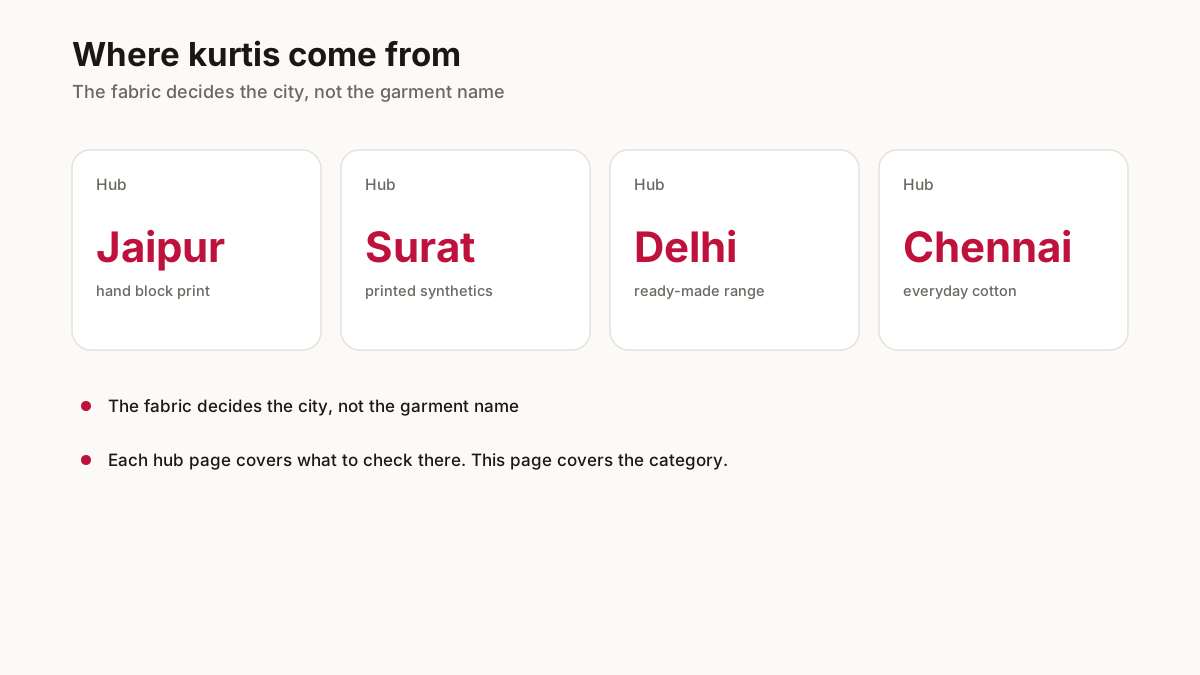
There is no single kurti market, because a kurti is a shape rather than a fabric. What you are actually sourcing is cotton, or synthetic, or hand block work, and each of those has a different home. For printed cotton and hand block, Jaipur leads, and the craft is what supports the price. For printed synthetics at volume, Surat is hard to beat on range and rate. For ready-made at scale, Delhi's Gandhi Nagar carries the widest choice.
South Indian cotton through Chennai suits a warm-climate customer, and Ahmedabad works for everyday cotton basics. So the first decision is not which city. It is which kurti, and the city follows from that.
What separates a good kurtis from a bad one?
Length, stated in inches
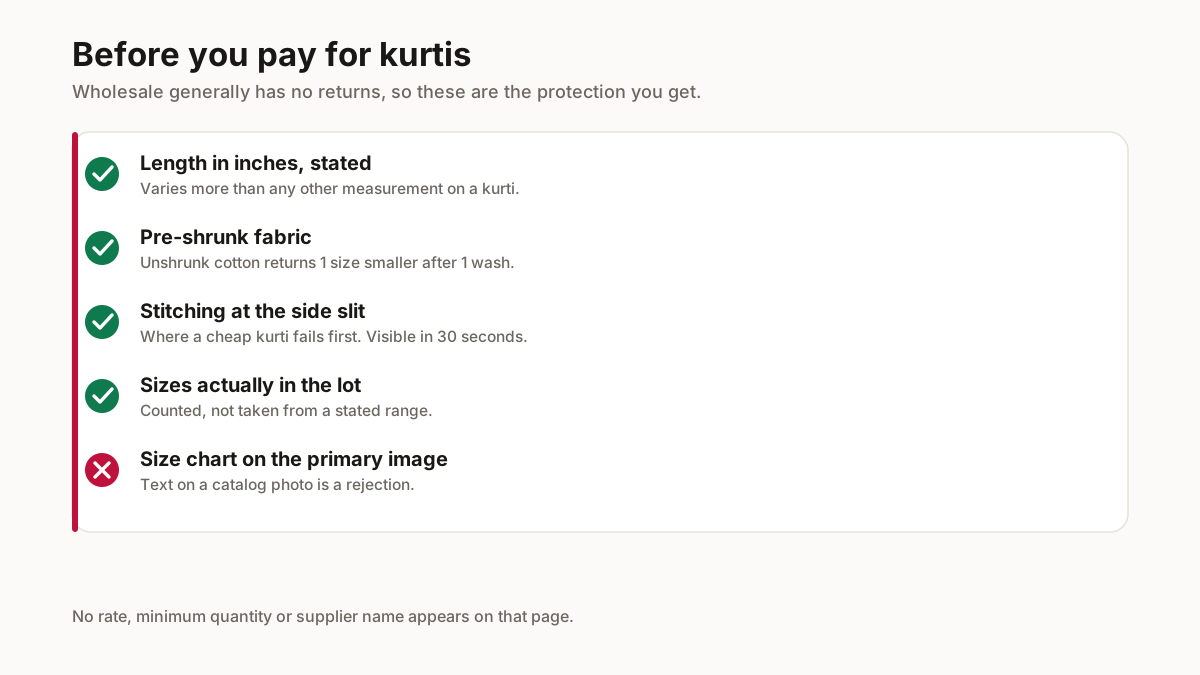
Three things decide whether a kurti sells and stays sold, and none of them is the print. Kurti length varies more than any other measurement and the same size label covers knee-length and calf-length garments. It is the second most common question you will be asked and the first most common reason for a return.
Whether the fabric is pre-shrunk
Cotton that has not been treated comes back a size smaller after 1 wash. A size chart built on unwashed stock is wrong for every customer who follows it.
The side slit and the stitching at it
It is where a cheap kurti fails first, and it is visible in 30 seconds. Pull gently at the top of the slit and see whether the stitching holds.
Ask about all 3 before paying, because wholesale generally has no returns and these checks are the protection you get instead.
Where do you sell? That decides what you buy
Everyday printed kurtis are a marketplace product: the buyer filters on fabric and size, compares on price, and orders. Meesho carries the most volume of this in India. Hand block and distinctive work earn more on Instagram and WhatsApp, where there is no commission on the higher price and the technique can be explained. WhatsApp is also where a kurti range earns repeat business, because fit is the thing a customer comes back for once she has found it.
| Meesho | |||
|---|---|---|---|
| Buyer arrives | Searching and comparing on price | Discovering while scrolling | Already knows and trusts you |
| Marketplace commission | Yes — set by category | None | None |
| Return rate | Highest of the three | Middle | Lowest — she knows you |
| Listing rules | Strict QC, primary image must be clean | None | None |
| What sells | Everyday basics at sharp prices | Distinctive, photogenic, occasion wear | Mid to premium, and repeat orders |
| What it needs from you | Volume and price discipline | A look and consistent posting | An audience you already built |
Commission rates differ by category and change — read yours from the channel’s own rate card, and run it through the break-even calculator.
How much do you have to buy?
Kurtis are one of the easier categories to buy small in, because they are sold as finished pieces and most dealers will do a dozen. Rates tier upward from there. Buy across sizes rather than deep in one. A lot that is mostly M and L goes out of stock in the sizes that sell first, and an out-of-stock listing loses ranking on every marketplace it sits on.
Who should you actually buy from?
The suppliers worth returning to are the ones who will deal at your quantity and whose goods hold up. Neither of those is visible from a search result.
Kurtis supplier list
We are building a list of kurti suppliers by fabric and by the smallest lot each will sell, because a hand block unit and a synthetic wholesaler are different businesses entirely. Every number on it comes from a supplier who asked to be listed.
Your number is used to send the list and nothing else.
What margin do kurtis leave you?
Kurtis sit at a price point where a flat per-order fee is a meaningful share of the margin, which makes the channel choice matter more than it does on higher-value goods.
Same garment, three channels
Put your own numbers in. Nothing here is assumed — commission is set by category and changes, so read yours from the channel’s rate card. The return rates are starting points to overwrite with your own.
Return rate on each channel
Ad spend per order
Meesho
₹178
per order after returns · 25% margin
₹276 on a delivered order
commission + returns + ads
₹256
per order after returns · 37% margin
₹306 on a delivered order
no commission, ads to be found
WhatsAppMOST LEFT
₹300
per order after returns · 43% margin
₹321 on a delivered order
no commission, lowest returns
On these numbers the same piece leaves ₹123 more per order on WhatsApp than on the weakest channel — which is the argument for choosing the channel before choosing the stock. For the full picture including GST and a target margin, use the break-even calculator.
What does listing kurtis take?
The size chart does more selling than the photograph here, which is unusual. Give bust, waist and length in inches for every size you stock, measured after washing. Plan 3 images a style: 1 overall, 1 showing length against something for scale, 1 close on the fabric. A kurti photographed flat with no sense of length is the listing that generates fit returns. Keep the primary image clean. Putting the size chart on it is the single most common reason a kurti catalog is rejected, and it is entirely avoidable.
You have the stock. Now the listing.
After the trip
A kurti range lives or dies on the size chart
Which means every variant needs measuring, photographing and sizing to each portal before it earns. StitchMagic clears the image half — repair, four marketplace sizes, renaming — in one pass.
- Repairs and sharpens the photo
- Exports the 4 marketplace sizes from one upload
- Keeps the primary image clean, so QC does not bounce it
- Renames every file to its SKU
- Builds the WhatsApp PDF catalogue
Is it actually free?
Single photos are free. No signup, no watermark, no daily limit.
Do my photos get uploaded?
No. It runs in your browser — the files never leave your phone.
Is it a subscription?
No. The bulk pack is a one-off ₹99, and one photo counts once.
Runs on your phone, and the photos never leave it.
Why are there no prices on this page?
Because a kurti rate means nothing without the fabric, the length and the work attached. The same figure covers a plain cotton piece and a hand-blocked one that took a day to print. Ask for the specification alongside the rate and compare suppliers on the pair.
Related free seller tools
Frequently Asked Questions
Where can I buy kurtis wholesale in India?
It depends on the fabric. Jaipur leads for hand block print, Surat for printed synthetics at volume, Delhi for ready-made range, and Chennai or Ahmedabad for everyday cotton. Decide the kind of kurti first and the city follows.
What is the minimum quantity for wholesale kurtis?
It varies by supplier, and many will sell a dozen. Rates improve as quantity rises, but the belief that wholesale means a hundred-piece minimum stops far more resellers than the actual minimums do. Asking costs nothing.
What should I check before buying kurtis wholesale?
Length in inches, whether the cotton is pre-shrunk, and the stitching at the side slit. Those 3 cover most of what goes wrong, each takes under a minute, and wholesale generally has no returns so they are the only protection you get.
What size chart should a kurti listing carry?
Bust, waist and length in inches for every size you stock, measured on the garment after washing rather than on the body. Length is the measurement that varies most between styles and the one buyers ask about.
Can I put the size chart on the product photo?
Not on the primary image. Text on a primary catalog photo is one of the most common rejection reasons on Meesho and Flipkart. Put the chart in a secondary image and repeat the key numbers in the description as text.
No supplier name or supplier-specific rate appears on this page. Those differ by supplier and move through the year, so confirm them directly before you commit money. For indicative price bands and minimums across categories, see buying apparel in bulk.