Why is break-even higher than cost plus shipping?
Because returned orders still cost you. You paid forward shipping, you paid for packing, and often you paid the return leg too — and none of that is recovered. Those costs have to be carried by the orders that were delivered.
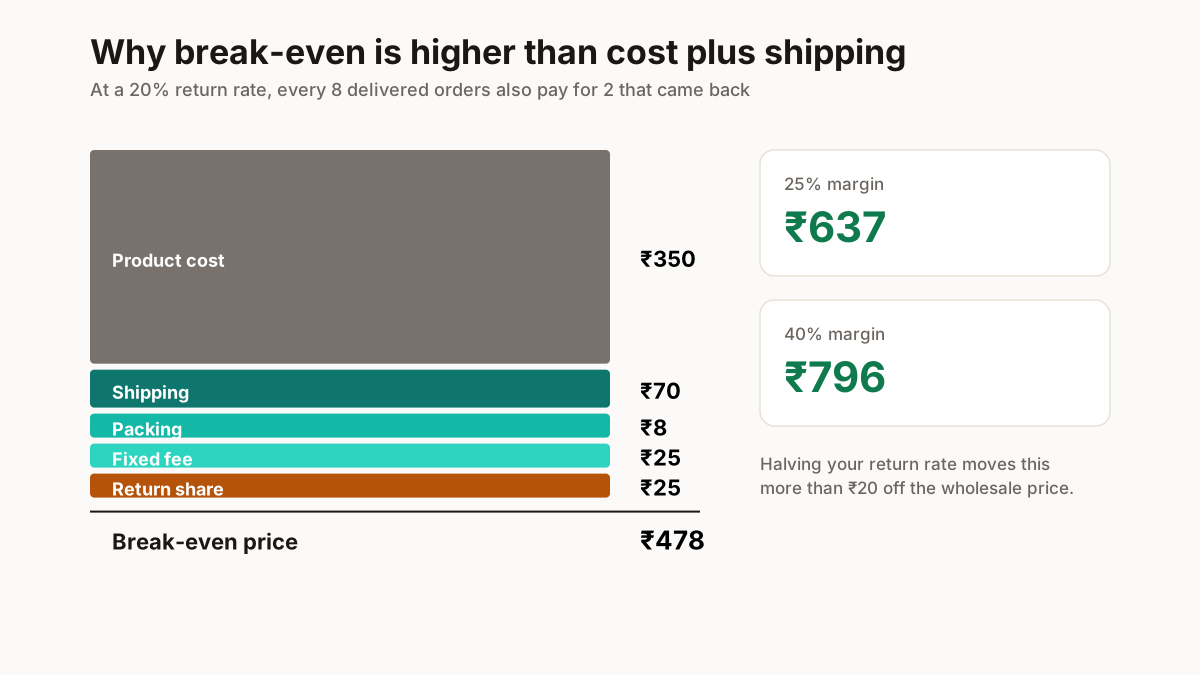
At a 20% return rate, every 8 delivered orders are also paying for 2 that came back. That is why a price that looks profitable per order can still produce a loss across the month.
The higher the return rate, the more sharply this bites. It is why apparel needs a wider margin than a phone case at the same product cost.
What should you do with the break-even number?
Treat it as a floor, never a price. Selling at break-even means working for nothing, and any surprise — a penalty, a weight dispute, a damaged return — pushes it negative.
The 25% and 40% suggestions above are starting points. A daily-wear kurti at ₹350 to ₹650 usually cannot carry 40%; a considered purchase with a lower return rate often can.
If your break-even lands above what the category sells for, the product is wrong for the channel. Change the packing, the supplier or the platform — not the price.
Which inputs move the answer most?
Return rate first, shipping second. Product cost matters least of the three, which surprises most sellers — halving your return rate does more for margin than shaving ₹20 off the wholesale price.
That is why a size chart pays for itself. It reduces the input with the largest effect, and it costs an afternoon once.
Shipping is the other lever, and it is decided by packing. A polybag instead of a box moves the chargeable weight slab, which moves this number directly.
Why is there no single commission rate?
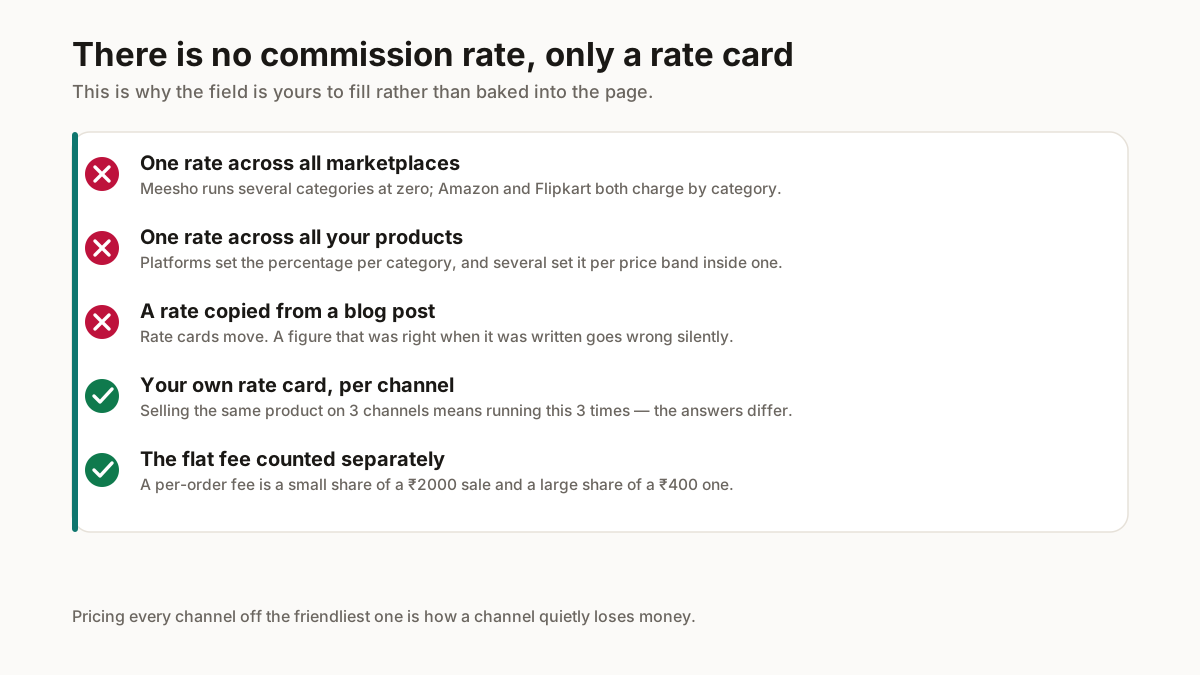
Because there is no such thing as a marketplace commission rate, only a rate card. Every platform sets its percentage by category, several set it by price band within a category, and the same garment can carry a different rate on two channels you sell it on simultaneously. A calculator that assumed one number would be wrong for almost everyone using it.
Meesho runs several categories at zero commission, which is a large part of why sellers start there. Amazon and Flipkart both charge a referral percentage that varies by category, with apparel typically sitting apart from electronics. None of those figures belong hardcoded in a page that a seller might read a year after it was written.
So the field is yours to fill. Open the rate card for the channel you are pricing for, find your actual category and not the group above it, then type that number in. If you sell the same product on three channels, run this three times — the break-even price genuinely differs, and pricing all three off the friendliest one is how a channel quietly loses money.
The fixed fee field works the same way. Some platforms charge a flat closing or collection fee per order regardless of value, which matters far more on a ₹400 product than on a ₹2000 one, and it is the reason cheap items often fail to break even where expensive ones comfortably do.
How does GST fit into a break-even price?
What you bear is the difference between the GST you charge on the sale and the input credit you reclaim on what you bought, not the headline rate on either. A seller charging output GST at one rate and reclaiming input credit at the same rate on the wholesale purchase carries almost no net GST cost, which surprises people who model the output rate alone.
The gap opens when the rates differ. Apparel below a price threshold is commonly taxed at a lower rate than apparel above it, so a seller buying at one rate and selling at another carries the difference — and if you cross that threshold with a price rise, the effective cost of the increase is larger than the rise itself.
It also opens if you cannot claim input credit at all. A seller operating without GST registration pays the tax embedded in their wholesale purchase and cannot reclaim any of it, which raises the real cost of goods above the invoice figure. That is a genuine trade-off against the simplicity of not registering.
Enter both rates, not a net figure. Seeing the two side by side is what makes the mechanic visible, and it is the field most likely to be wrong in a spreadsheet built from memory.
Related free seller tools
Frequently Asked Questions
How do I calculate break-even price?
Add product cost, shipping and packing, then add the share of returned-order costs that each delivered order has to carry. At a 20% return rate, every 8 delivered orders are also paying for 2 that came back.
Why is break-even more than my cost plus shipping?
Because returns still cost you forward shipping, packing and often the return leg, and none of it is recovered. Those costs are carried by the orders that stuck.
What margin should I add above break-even?
25% to 40% is the usual range. Daily-wear apparel at ₹350 to ₹650 rarely carries 40%; a considered purchase with a lower return rate often can.
Which input matters most?
Return rate, then shipping, then product cost. Halving your return rate does more for margin than shaving ₹20 off the wholesale price, which is why a size chart pays for itself.
What if break-even is above the market price?
The product is wrong for that channel at that cost. Change the packing, the supplier or the platform — raising the price above what the category sells for will not work.
What commission rate should I enter?
Your own, from the rate card of the channel you are pricing for, against your actual category and not the group above it. Meesho runs several categories at zero; Amazon and Flipkart both vary by category. If you sell on three channels, run the calculation three times.
Do I include GST in a break-even price?
Include the net figure — the GST you charge on the sale minus the input credit you reclaim on the wholesale purchase. If both rates match, the net cost is close to nothing. If you cannot claim input credit, you bear the tax embedded in your purchase and the real cost of goods is above the invoice.
No rate is hardcoded here. Read the current figures from your seller panel and type them in — that is the only way this stays right.