Which Kolkata market should you go to?
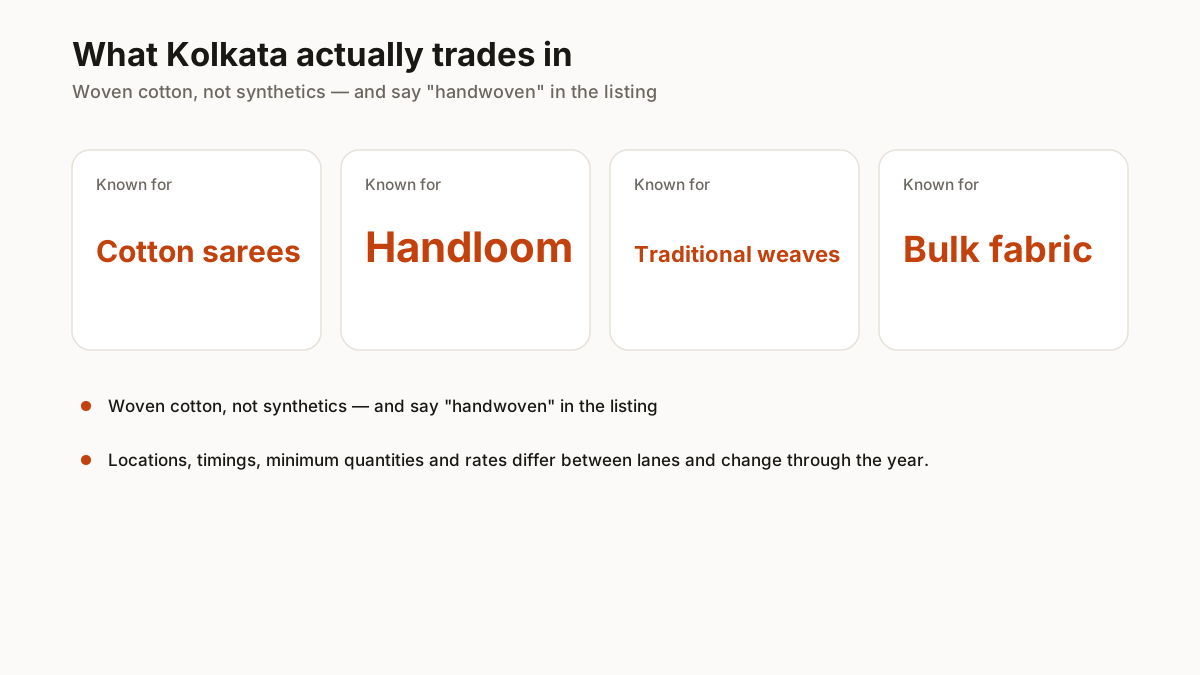
Kolkata trades in woven cotton and handloom, which makes it close to the opposite of Surat. Where one city works in man-made fibre at volume, this one is known for cotton sarees and traditional weaves.
Burrabazar is the wholesale concentration most buyers mean, and like Delhi's markets it specialises internally rather than being one undifferentiated space. Knowing which part handles your category before you arrive saves most of a day.
Bengal's handloom traditions are a genuine commercial asset if your customers care about them. A weave with a name and an origin supports a price that an anonymous piece does not, and it gives a listing something specific to say.
Where do you sell? That decides what you buy
Handloom is the clearest case on this whole list for selling somewhere other than a marketplace. A buyer comparing on price does not pay for a weave she cannot see in a thumbnail, and the story that justifies the price needs room to be told.
Instagram and WhatsApp both give that room, and neither takes a commission out of the higher price the story earns. For handloom specifically, an audience is worth more than search traffic.
Everyday cotton is the reverse and belongs on Meesho, where volume and price do the work. Most Kolkata buying trips end up supplying both, which is an argument for deciding the split before you buy rather than after.
| Meesho | |||
|---|---|---|---|
| Buyer arrives | Searching and comparing on price | Discovering while scrolling | Already knows and trusts you |
| Marketplace commission | Yes — set by category | None | None |
| Return rate | Highest of the three | Middle | Lowest — she knows you |
| Listing rules | Strict QC, primary image must be clean | None | None |
| What sells | Everyday basics at sharp prices | Distinctive, photogenic, occasion wear | Mid to premium, and repeat orders |
| What it needs from you | Volume and price discipline | A look and consistent posting | An audience you already built |
Commission rates differ by category and change — read yours from the channel’s own rate card, and run it through the break-even calculator.
How do you get there and get around?
Burrabazar sits in central Kolkata and is dense, old and crowded. The metro and a short rickshaw ride is the practical way in; driving is not, and the lanes are narrow enough that walking is faster than anything with wheels.
Go early. The trade starts in the morning and the afternoon is noticeably slower for a small buyer, which matters when you want time from somebody.
First time? Weekday morning, take someone with you if you can, keep cash split across 2 places rather than one, and wear something you can walk in. The area is busy and crowded rather than unsafe, and company makes a first visit easier.
Transport is well established out of Kolkata, and most dealers work with an agent who will book goods onward. Ask before you finish negotiating, take the docket and photograph it.
What happens on a first buying trip?
Small lots are normal here. Burrabazar handles a lot of trade with small retailers, so a reseller taking a dozen sarees is a recognisable customer rather than an awkward one. This is one of the friendlier hubs for a first trip.
Compare 3 dealers in the same lane. Cotton quality varies more than price does, and the only way to calibrate is to handle several pieces at similar rates before committing to any.
Ask about the weave by name. A dealer who can tell you where a piece was woven and what the technique is called is a dealer worth returning to, and the answer is also the copy for your listing.
Ask what happens if a piece is faulty, before you pay rather than after.
How much do you actually have to buy?
Tiers work as elsewhere, and Burrabazar's long trade with small retailers means the smaller tiers are genuinely available rather than grudgingly offered. Asking costs nothing.
With handloom in particular, buy narrow. Handwoven pieces vary between each other by nature, so a large lot of one design is less uniform than a large lot of a printed synthetic — which is charming to the right customer and a problem if you were expecting consistency.
Who should you actually go and see?
Burrabazar is old, dense and hard to navigate from the outside. Which lane handles which category is knowledge that comes from having been, and there is no map that carries it.
The dealers who deal well with small resellers are known to the small resellers who found them, and to almost nobody else.
Kolkata supplier list
We are building a list of Burrabazar dealers who work with small retailers, and which lane each of them trades in. Every number on it comes from a supplier who asked to be listed.
Your number is used to send the list and nothing else.
What should you check before paying?
Assume no returns, and on handloom assume also that variation is not a fault. Both facts change what you check for.
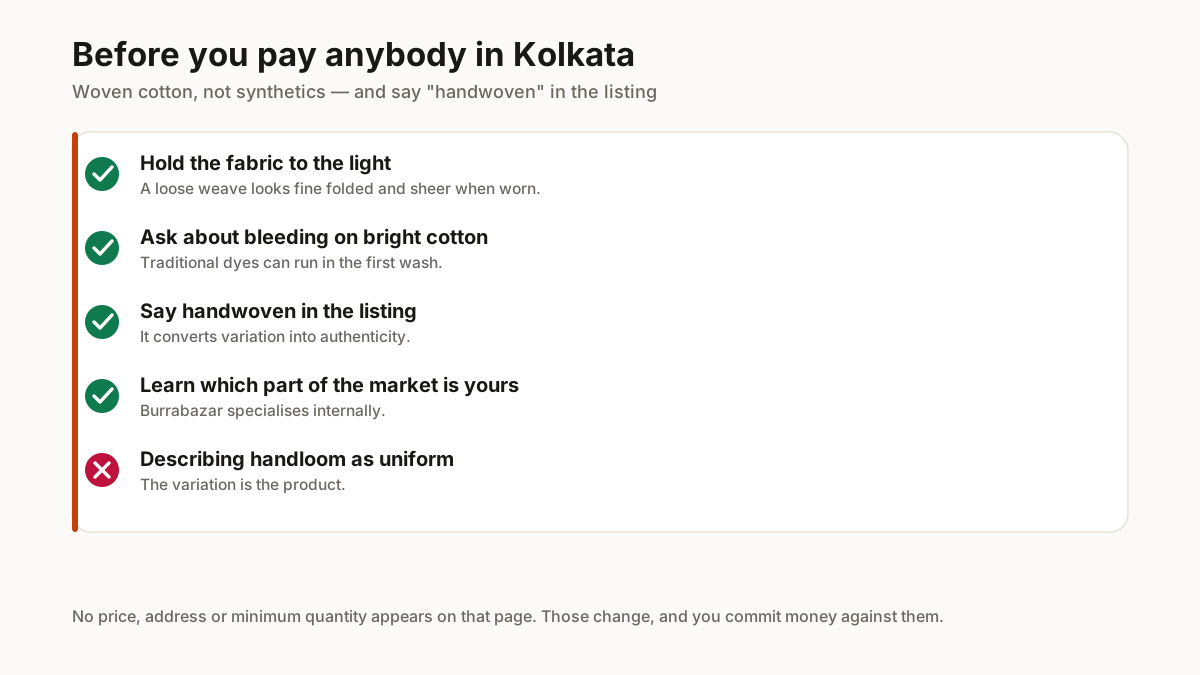
Weave density, against the light
Hold the fabric up. A loose weave that looks substantial folded can be noticeably sheer when worn, and that is a complaint from a customer who feels misled rather than one who changed her mind.
Bleeding on strong colours
Traditional dyes and bright cottons can run in the first wash. Ask, and if in doubt tell the customer to wash it separately the first 1 or 2 washes — far cheaper than a refund.
Whether it is genuinely handwoven
Look at the selvedge and at the regularity of the weave. Handwoven cloth shows small variations that powerloom cloth does not, and the difference is what you are charging for if you describe it as handloom.
The blouse piece
Confirm whether one is attached and whether it is the same fabric. It is the single most common source of disputes on saree listings, and it is answered by looking.
Take this checklist with you
Everything above is easy to remember at home and easy to forget in a crowded lane. Same list, printable, to carry in a bag.
Buying trip checklist — Kolkata
Print this and carry it. Tick as you go.
Before you leave
- ☐Confirmed the market is open today (call, do not assume)
- ☐Decided which market — they trade different goods
- ☐Cash split across two places, not one pocket
- ☐Notebook or phone notes ready — six suppliers blur into one
- ☐Someone with me, if this is the first trip
- ☐Plan for getting goods home before buying them
Which market for what
- ☐Burrabazar — the main wholesale concentration
- ☐Cotton saree dealers — everyday and handloom
- ☐Weave specialists — traditional Bengal weaves
Ask at every shop
- ☐What is the rate at the quantity I can actually take?
- ☐Will this design be available again next month?
- ☐What happens if a piece arrives defective?
- ☐What is the smallest lot you will sell me?
Check before paying
- ☐An inside seam — loose threads, skipped stitches, puckering
- ☐Colour across 3 or 4 pieces, in daylight not tube light
- ☐Which sizes are actually in the lot, counted not stated
- ☐Compared the rate against 2 other shops in the same lane
Wholesale generally has no returns. The checks above are the only protection you get.
What margin will this stock leave you?
Handloom and everyday cotton have almost opposite margin shapes — one earns on story and audience, the other on volume and price. Run both through the same arithmetic before deciding what to buy.
Same garment, three channels
Put your own numbers in. Nothing here is assumed — commission is set by category and changes, so read yours from the channel’s rate card. The return rates are starting points to overwrite with your own.
Return rate on each channel
Ad spend per order
Meesho
₹178
per order after returns · 25% margin
₹276 on a delivered order
commission + returns + ads
₹256
per order after returns · 37% margin
₹306 on a delivered order
no commission, ads to be found
WhatsAppMOST LEFT
₹300
per order after returns · 43% margin
₹321 on a delivered order
no commission, lowest returns
On these numbers the same piece leaves ₹123 more per order on WhatsApp than on the weakest channel — which is the argument for choosing the channel before choosing the stock. For the full picture including GST and a target margin, use the break-even calculator.
Why does listing the stock take longer than buying it?
Handloom rewards more images than most categories, which lengthens the shoot. Budget 4 photographs a piece — 1 overall, 1 showing scale, 1 close on the weave, 1 of the border — and on 20 sarees that is 80 images to prepare.
The close weave shot is the one doing the work. It is what a buyer zooms into, and it is what separates your listing from an identical saree photographed carelessly.
The description matters as much. Naming the weave, the fabric and the fact that it is handwoven turns natural variation into authenticity instead of into a return.
Budget 2 days shooting and 2 days writing, and treat the writing as the part that earns the price rather than an afterthought.
You have the stock. Now the listing.
After the trip
20 handloom sarees at 4 photographs each is 80 images
Handloom needs more images than most categories, because the weave is what the buyer is paying for. Preparing 80 by hand is the fortnight; StitchMagic sizes and renames the whole set in one run.
- Repairs and sharpens the photo
- Exports the 4 marketplace sizes from one upload
- Keeps the primary image clean, so QC does not bounce it
- Renames every file to its SKU
- Builds the WhatsApp PDF catalogue
Is it actually free?
Single photos are free. No signup, no watermark, no daily limit.
Do my photos get uploaded?
No. It runs in your browser — the files never leave your phone.
Is it a subscription?
No. The bulk pack is a one-off ₹99, and one photo counts once.
Browser-based, so an unreleased range stays on your phone.
Where does Kolkata stock get listed?
Cotton sarees sell across Meesho, Flipkart and Amazon, but handloom does better where the buyer reads. Instagram and WhatsApp reward a story about the weave in a way a marketplace search result does not.
On the marketplaces, put the weave name in the title. A buyer searching for a specific handloom is typing that word, and a listing calling the piece beautiful is invisible to her.
Keep the primary image clean whichever channel you use. A watermark added to protect a handloom photograph is the most common reason those catalogs bounce.
Why are there no prices on this page?
Because handloom is priced by the work in it, and the work varies piece to piece. Two sarees that look similar on a shelf can be separated by days of weaving, and a single published figure would misrepresent both.
Ask what the weave is and how long it takes. The answer explains the price better than any number this page could print.
Related free seller tools
Frequently Asked Questions
How many photos does a handloom saree need?
About 4 a piece — 1 overall, 1 showing scale, 1 close on the weave and 1 of the border. On 20 sarees that is 80 images to prepare, which is the part sellers forget to budget.
What is Kolkata known for in the cloth trade?
Cotton sarees and handloom, traded largely through Burrabazar. It is close to the opposite of Surat: woven cotton and traditional weaves rather than man-made fibre.
How should I describe handloom in a listing?
Say plainly that it is handwoven and that slight irregularities in the weave are characteristic rather than faults. A buyer who was told treats variation as authenticity; one who was not treats it as a defect and returns it.
No rate, lane or shop name appears here. Burrabazar specialises internally and changes, so confirm before you travel with cash.