Where are dress materials sourced wholesale in India?
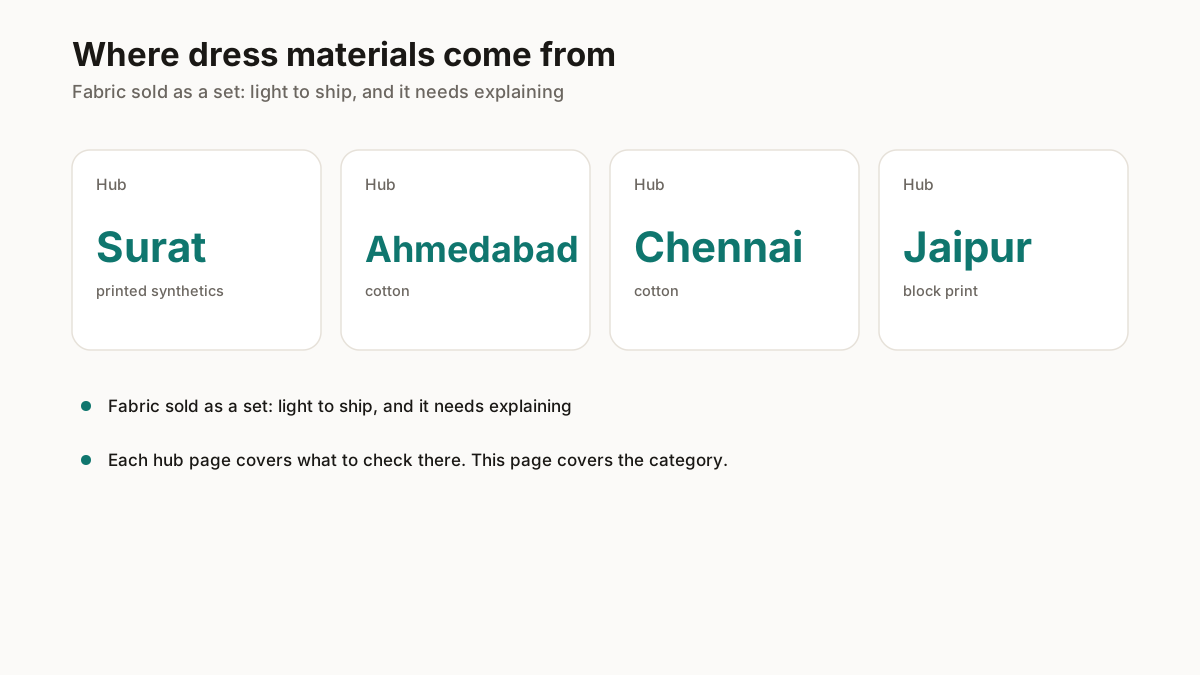
Dress material is a Surat trade above all, because the category is built on printed synthetics and that is what the city makes at scale. Cotton dress material comes through Ahmedabad and Chennai, and block-printed cotton sets through Jaipur where the print is the product.
For a seller, the appeal is the economics: lighter parcels, lower cost per set, and no size range to hold because the customer has it made to fit. The cost is that every sale needs explaining, which shapes where you should sell it.
What separates a good dress materials from a bad one?
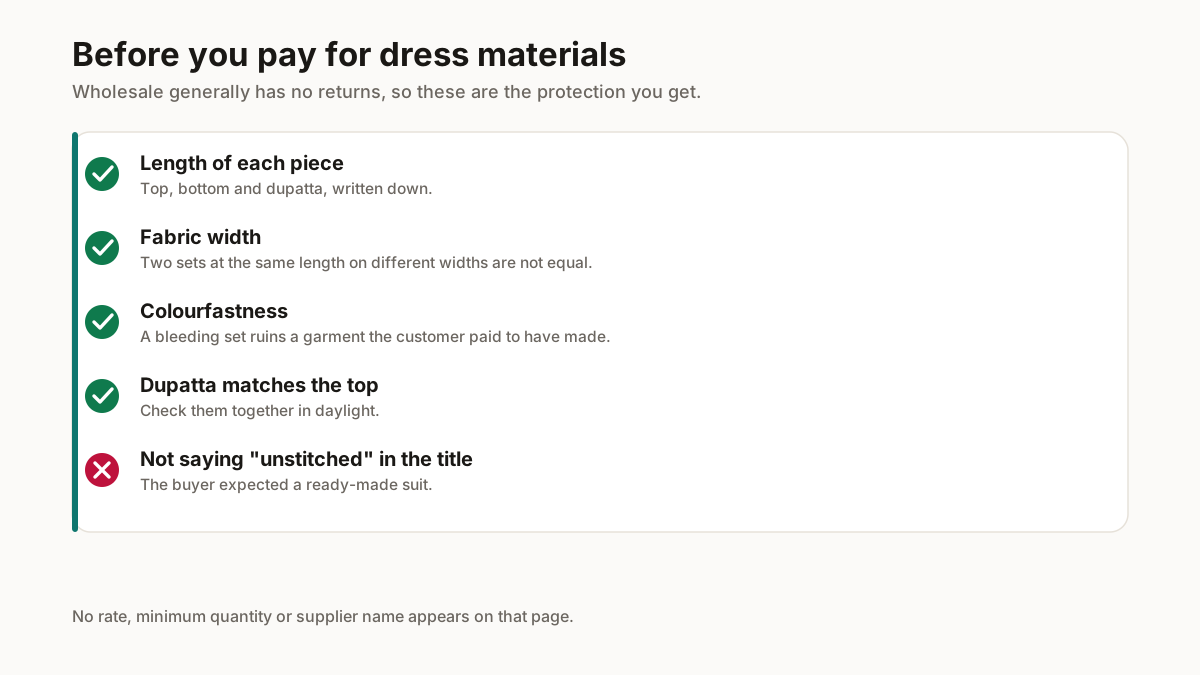
Length of each piece
Because the customer is buying cloth rather than a garment, the checks are about what she can make from it. Top, bottom and dupatta lengths, asked and written down. A tailor short of fabric is a problem that reaches you as a review.
Width of the fabric
It decides whether the length is enough, and two sets quoted at the same length on different widths are not equivalent.
Colourfastness
Ask before buying depth on strong colours, because a set that bleeds ruins the finished garment after the customer has paid for tailoring too.
Whether the dupatta matches the top
Check them together in daylight. A visible mismatch is obvious once stitched and invisible while folded.
Where do you sell? That decides what you buy
Unstitched goods need a conversation, which makes WhatsApp the strongest channel for this category and Instagram second. On Meesho, Flipkart and Amazon the listing has to do that work in text, and most do not, which is why the category converts unevenly there. If you sell mostly through an audience, dress material is one of the better-margin things you can carry.
| Meesho | |||
|---|---|---|---|
| Buyer arrives | Searching and comparing on price | Discovering while scrolling | Already knows and trusts you |
| Marketplace commission | Yes — set by category | None | None |
| Return rate | Highest of the three | Middle | Lowest — she knows you |
| Listing rules | Strict QC, primary image must be clean | None | None |
| What sells | Everyday basics at sharp prices | Distinctive, photogenic, occasion wear | Mid to premium, and repeat orders |
| What it needs from you | Volume and price discipline | A look and consistent posting | An audience you already built |
Commission rates differ by category and change — read yours from the channel’s own rate card, and run it through the break-even calculator.
How much do you have to buy?
Sets are sold as units and the tiers start low, which makes this an accessible category to test with. Surat's density means comparing several suppliers in an afternoon is realistic. Buy across prints rather than deep in one, since a print that does not move is very hard to sell on.
Who should you actually buy from?
The suppliers worth returning to are the ones who will deal at your quantity and whose goods hold up. Neither of those is visible from a search result.
Dress materials supplier list
We are building a list of dress material suppliers by fabric and by the smallest number of sets each will sell. Every number on it comes from a supplier who asked to be listed.
Your number is used to send the list and nothing else.
What margin do dress materials leave you?
Dress material has the best freight-to-value ratio in this list — light parcels, no size range to hold — which shows up directly in the margin once shipping is modelled.
Same garment, three channels
Put your own numbers in. Nothing here is assumed — commission is set by category and changes, so read yours from the channel’s rate card. The return rates are starting points to overwrite with your own.
Return rate on each channel
Ad spend per order
Meesho
₹178
per order after returns · 25% margin
₹276 on a delivered order
commission + returns + ads
₹256
per order after returns · 37% margin
₹306 on a delivered order
no commission, ads to be found
WhatsAppMOST LEFT
₹300
per order after returns · 43% margin
₹321 on a delivered order
no commission, lowest returns
On these numbers the same piece leaves ₹123 more per order on WhatsApp than on the weakest channel — which is the argument for choosing the channel before choosing the stock. For the full picture including GST and a target margin, use the break-even calculator.
What does listing dress materials take?
State the lengths in the description, every time. It is the information the buyer needs and the reason she will choose your listing over an identical one. Photograph the set laid out so all pieces are visible together, and add a close shot of the print. Say clearly that the set is unstitched. A buyer who expected a ready-made suit returns it, and that return was created by the listing rather than the goods.
You have the stock. Now the listing.
After the trip
Every set needs its pieces shown together before it sells
Which means laying out and photographing each set, then sizing every image to each portal. StitchMagic handles repair, four marketplace sizes and renaming in one pass.
- Repairs and sharpens the photo
- Exports the 4 marketplace sizes from one upload
- Keeps the primary image clean, so QC does not bounce it
- Renames every file to its SKU
- Builds the WhatsApp PDF catalogue
Is it actually free?
Single photos are free. No signup, no watermark, no daily limit.
Do my photos get uploaded?
No. It runs in your browser — the files never leave your phone.
Is it a subscription?
No. The bulk pack is a one-off ₹99, and one photo counts once.
On your phone, and the files stay there.
Why are there no prices on this page?
Because a set rate depends on the fabric, the lengths and the print, and none of those is implied by a number. Ask for the lengths and the composition alongside the rate and compare on the set.
Related free seller tools
Frequently Asked Questions
What is dress material?
Fabric sold as a set, usually with the pieces for a kurta, bottom and dupatta, which the customer takes to a tailor. It is a different product to a stitched suit, and listings that blur the two produce returns.
Where is dress material bought wholesale?
Mostly Surat, because the category is built on printed synthetics and that is what the city makes at scale. Cotton sets come through Ahmedabad and Chennai, and block-printed cotton through Jaipur.
What must a dress material listing state?
The length of each piece, the fabric, and clearly that the set is unstitched. A buyer who expected a ready-made suit will return it, and that return was created by the listing rather than by the goods.
No supplier name or supplier-specific rate appears on this page. Those differ by supplier and move through the year, so confirm them directly before you commit money. For indicative price bands and minimums across categories, see buying apparel in bulk.