What do jewellery buyers actually ask?
Two things, over and over: what is it made of, and will it turn black. Imitation jewellery has a reputation problem in India built on a decade of pieces that went green in a fortnight, and every buyer is carrying that memory into your comments section.
Answer it before she asks. Say brass with gold plating, or oxidised silver, or anti-tarnish coated. Say how to store it. A caption that volunteers the honest material spec outsells one that calls everything premium, because premium is what the untrustworthy sellers say.
Weight matters more than sellers think, particularly for jhumkas and heavy necklaces. Someone who has worn a painful pair of earrings to one wedding will ask, and a caption that says “lightweight, comfortable for full-day wear” is answering a real worry.
How should you photograph jewellery for the caption to work?
The caption cannot rescue a bad jewellery photo. This is the one category where the close-up is the entire product — buyers zoom, and they are looking at the finish of the plating and the setting of the stones, not the overall shape.
Shoot on a plain surface in daylight, take one full shot and one macro, and let the caption carry the material, the weight and the price. That division of labour is why jewellery posts with two images and three lines of caption outperform elaborate ones.
Then make the photo sharp enough to survive the zoom. A soft close-up reads as a seller hiding the finish, which is exactly the suspicion you are trying to overcome.
How long does imitation jewellery last?
Gold-plated brass holds its finish for roughly 6 to 18 months — around 12 months of regular wear, depending on plating thickness and how it is stored. Oxidised silver runs 2 to 3 years but darkens deliberately, which is the point of the finish instead of a fault.
Tell buyers to store pieces in an airtight pouch away from perfume and moisture. That single instruction roughly doubles the life of a plated piece, and a seller who volunteers it reads as someone who knows the product.
Lightweight jhumkas sit around 8 to 15 grams per pair. Anything heavier than about 25 grams becomes uncomfortable across a full-day function, and that is worth a line in the caption.
Why does a caption have to supply the scale?
Because a zoomed photograph destroys it. Jewellery is photographed close, which is what sells it, and the same image can equally be a delicate pendant or a statement piece twice that size. A buyer with no reference point either asks or moves on, and most move on.
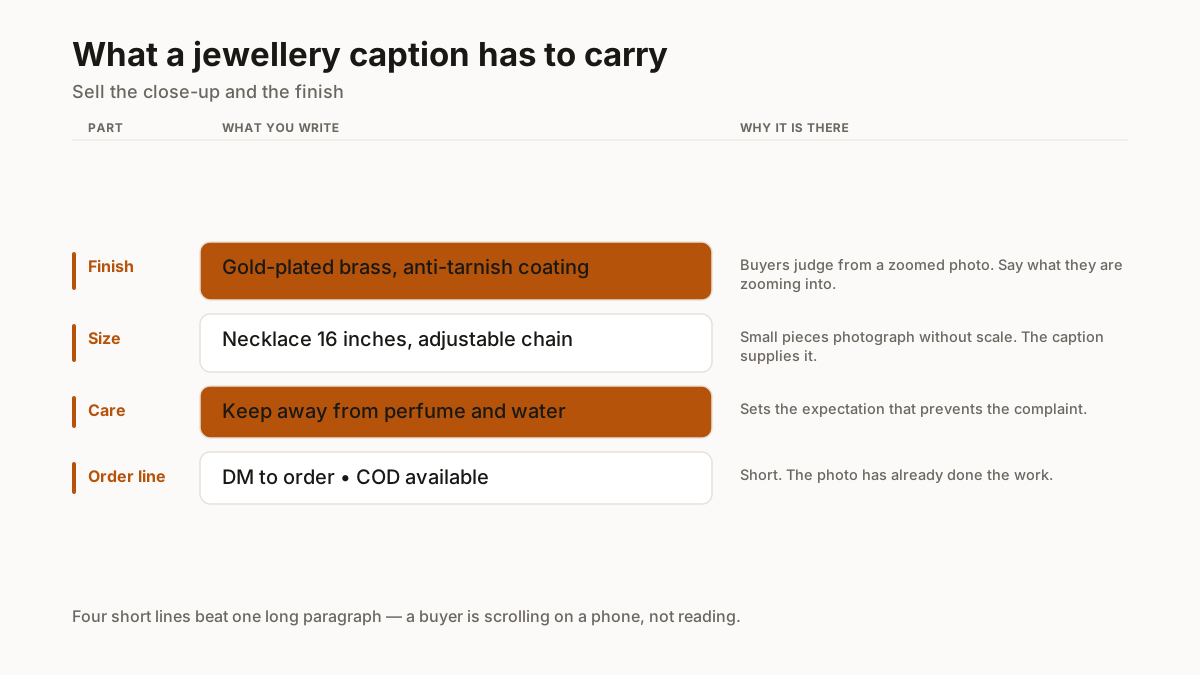
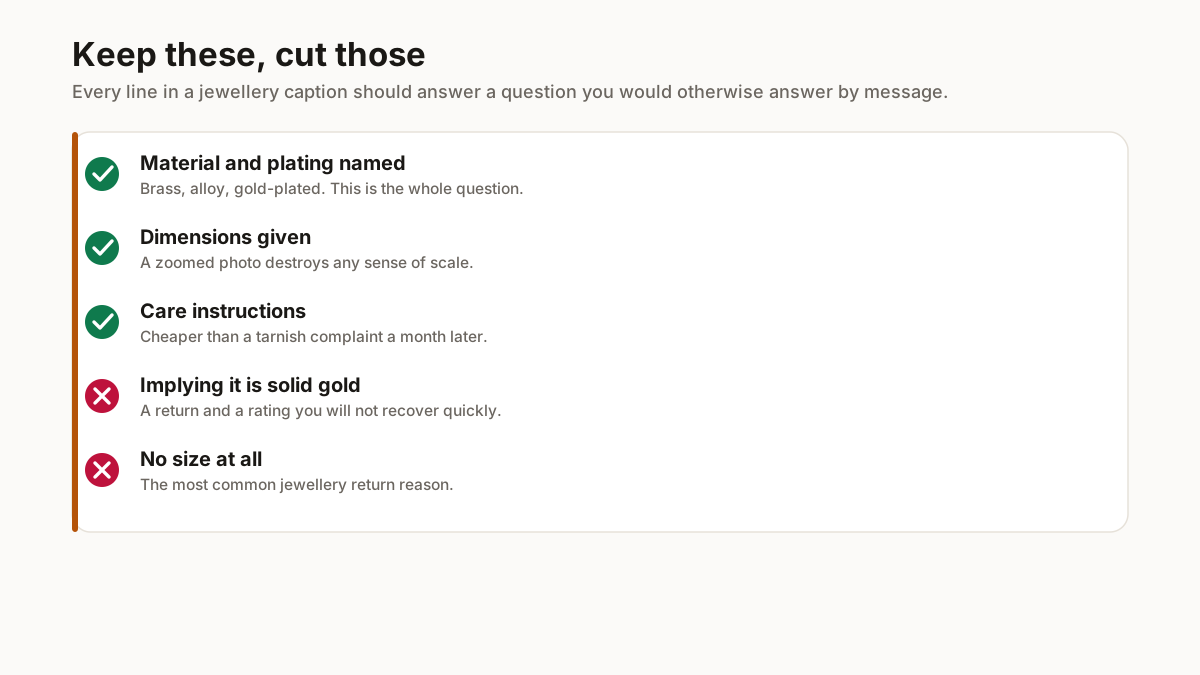
Give the dimensions in the units your buyers use. Chain length, pendant size, earring drop and bangle diameter are the four that get asked about, and stating them costs one line and removes the most common jewellery return reason.
Adjustability is worth saying explicitly. An adjustable chain or a bangle with a flexible opening widens the pool of buyers who can wear it, and a buyer who was unsure about sizing will choose the listing that removed the uncertainty.
A hand or a neck in one photograph does the same job visually, and the two together — a scale shot and a stated measurement — leave nothing for the buyer to guess at.
How do you describe plating without overclaiming?
Say the base and the finish separately. “Gold-plated brass” is honest and specific; “gold jewellery” is neither, and a buyer who reads the second and receives the first has a complaint that will cost you far more than the sale was worth.
Anti-tarnish coating is worth naming where it exists, because tarnishing is the thing buyers in this category have been disappointed by before and are quietly worried about again. Naming the protection addresses a concern the buyer had not said out loud.
Care instructions belong in the caption rather than the parcel. Keeping a piece away from perfume, water and sweat is what determines how long it lasts, and telling the buyer before they order sets the expectation that prevents the complaint a month later.
Being straightforward about materials is also the commercially better position over any length of time. Fashion jewellery sells perfectly well as fashion jewellery; it sells badly as something it was implied to be and turned out not to be.
Related free seller tools
Frequently Asked Questions
What should a jewellery caption say?
The material and plating, whether it tarnishes, the weight if it is earrings or a heavy set, and how to order. Those are the questions behind almost every jewellery DM, and answering them upfront converts browsers into buyers.
How do I reassure buyers about imitation jewellery quality?
By being specific and not flattering. Brass with gold plating, oxidised silver, anti-tarnish coated — these tell a buyer something. Calling it premium tells her nothing, and it is what the sellers she does not trust also say.
Do jewellery posts need close-up photos?
Yes, and it is the one category where the close-up is the product. Buyers zoom to judge the plating finish and the stone setting, so shoot one full shot and one macro in daylight on a plain surface.
Should I mention the weight of earrings?
For jhumkas and heavier sets, definitely. Anyone who has worn painful earrings through a wedding will ask, and a line saying lightweight and comfortable for full-day wear answers a genuine worry rather than a technicality.
Which hashtags suit jewellery posts?
Mix material tags like oxidisedjewellery or kundan with occasion tags like bridaljewellery. Specific tags reach a smaller but far more relevant audience than a broad one like fashion.
Why do I need to give jewellery dimensions in the caption?
Because a close-up photograph destroys any sense of scale — the same image could be a delicate pendant or a piece twice the size. Chain length, pendant size, earring drop and bangle diameter are the four that get asked about, and missing them is the most common jewellery return reason.
How should I describe gold-plated jewellery?
Name the base and the finish separately: "gold-plated brass" is honest and specific where "gold jewellery" is neither. Fashion jewellery sells perfectly well as what it is, and badly as something it was implied to be.
Caption ready? Photos next. Resize for Instagram and every marketplace in one pass, free.