How to read the result
2 columns matter: whether it passed, and why it did not.
Well formed means all four structural checks agreed — length, state code, PAN shape and check digit. A number that reaches this state was almost issued by someone rather than typed at random, because guessing a valid check digit by accident is a 1-in-36 shot.
Check digit is X but should be Y is the most useful failure you will see, and it nearly always means a typo. One transposed pair of characters anywhere in the first fourteen changes the fifteenth, so the tool can tell you the number is wrong without knowing what the right one was.
State code not in use means the first 2 digits are not a real state. Invented numbers fail here constantly, because whoever made them up picked digits instead of a jurisdiction.
14th character is not Z is a structural giveaway. Position fourteen is Z in every GSTIN issued, so anything else means the number was not copied from a real certificate.
What a GSTIN is made of
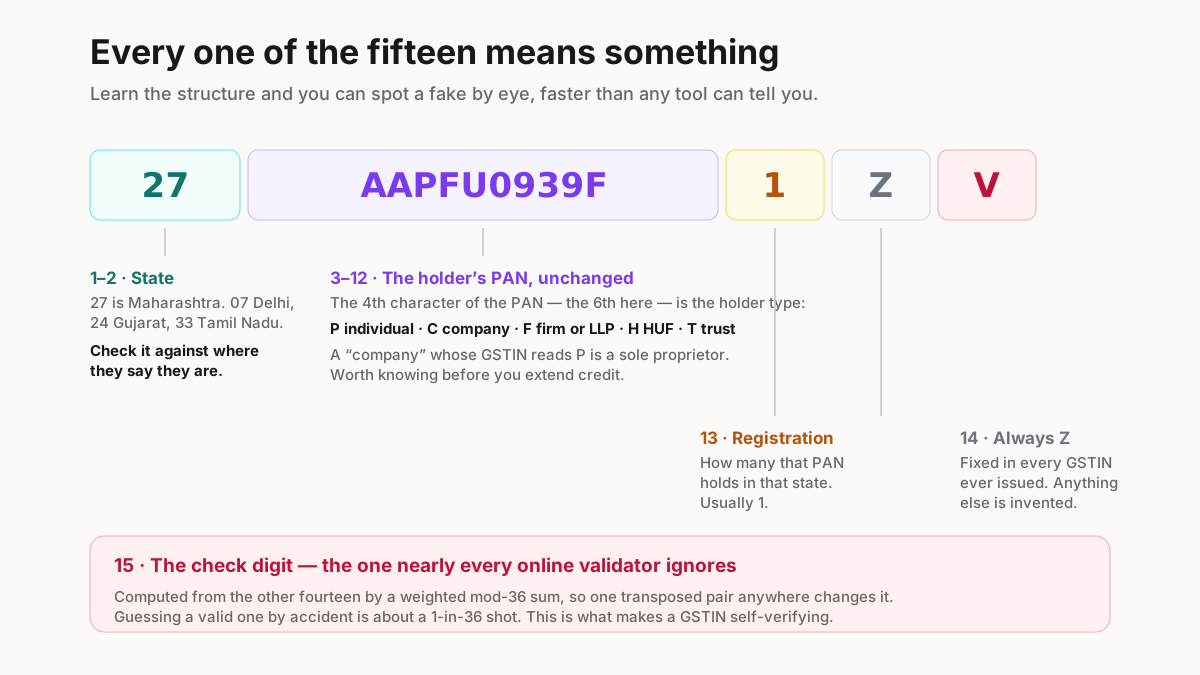
15 characters, and every one of them means something. Learning the structure takes 2 minutes and lets you spot a fake by eye, which is faster than any tool.
Characters 1–2: the state
The jurisdiction that issued it. 27 is Maharashtra, 07 is Delhi, 24 is Gujarat, 33 is Tamil Nadu, 29 is Karnataka. If a supplier tells you they are in Surat and the number starts 07, one of those two things is wrong.
Characters 3–12: the PAN
The holder’s PAN sits inside the GSTIN unchanged. The fourth character of the PAN — so the sixth of the GSTIN — encodes the holder type: P for an individual, C for a company, F for a firm or LLP, H for a Hindu Undivided Family, T for a trust. A “company” whose GSTIN says P is a sole proprietor, which is worth knowing before you extend credit.
Character 13: the registration number
How many registrations that PAN holds in that state. Usually 1.
Character 14: always Z
Reserved, and fixed. It is the cheapest single check on this list.
Character 15: the check digit
Computed from the other 14 by a weighted mod-36 sum. This is the character that makes a GSTIN self-verifying, and it is the one nearly every online validator ignores.
Why this catches what a regex does not
Most free GST validators match a pattern: 2 digits, five letters, 4 digits, and so on. Anything with the right shape passes — including a number someone invented by following the pattern.
The check digit closes that. It is derived from the other 14 characters, so a number has to be internally consistent rather than merely correctly shaped.
Worth being concrete about how well it works: while testing this tool, three GSTINs quoted as examples on various sites were run through it, and all three failed the checksum. They looked completely plausible. They were shaped correctly. They were wrong, and a pattern-matching validator would have passed every one.
That is the practical value on a vendor list — not the numbers you doubt, but the ones you had no reason to doubt.
Why wholesalers check GSTINs in bulk
Three situations, and they all cost real money.
Onboarding a batch of reseller buyers
You have taken fifty registrations at an exhibition or over WhatsApp. Some were mistyped by the person writing them down and some were mistyped by you. Running the list takes a minute and tells you which invoices are going to bounce before you raise them.
Input tax credit risk
A B2B invoice against a wrong GSTIN is a problem for your buyer’s credit and eventually for your relationship with them. It is much cheaper to catch at onboarding than at reconciliation.
Checking a supplier before you pay
The single most useful moment. A wholesaler who cannot produce a GSTIN, or produces one that fails the checksum, has told you something important before your money moved. Pair it with the rest of the checks in vetting a supplier.
Bulk PAN verification
The PAN tab does the same job for a ten-character PAN: length, shape, and the holder-type code.
PAN has no check digit, which is an important limitation and not one this page will paper over. Any correctly shaped PAN will pass, so this catches typos in structure — a digit where a letter belongs, a missing character — but it cannot catch a plausible invented PAN the way the GSTIN checksum can.
What it does give you is the holder type, from the fourth character. That is genuinely useful when someone describes themselves as a company and their PAN says individual.
The limits of this, stated plainly
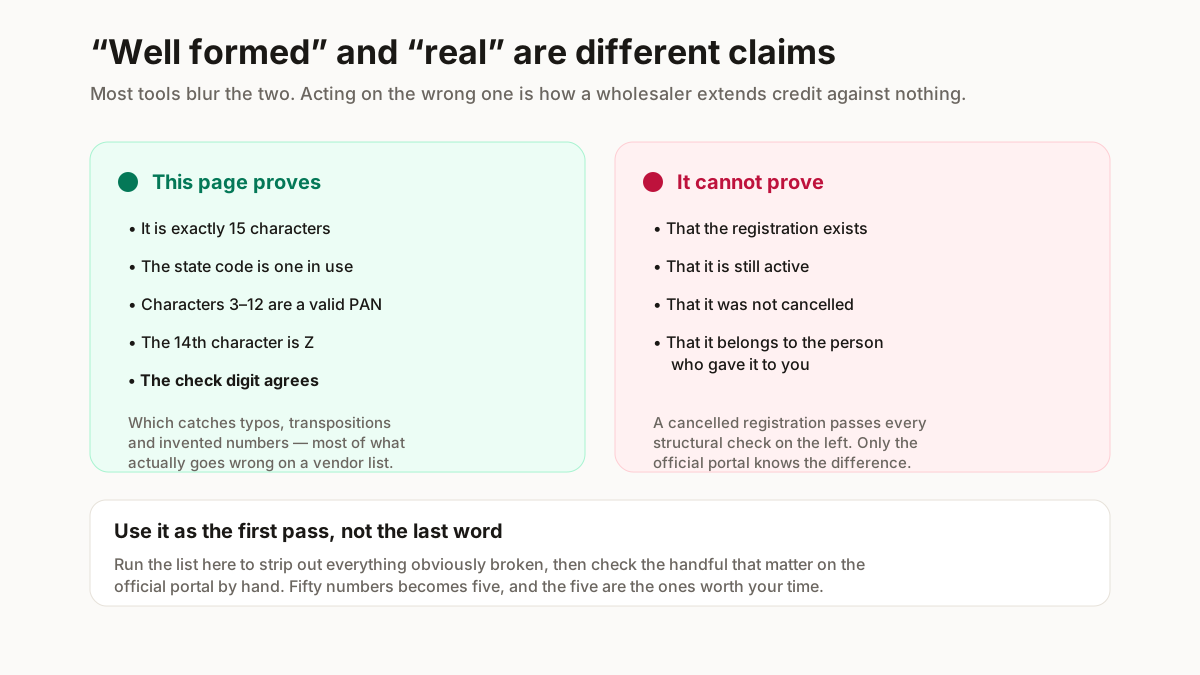
An offline check proves structure, not existence. Everything on this page follows from that sentence.
A number can pass every check here and still be a registration that was cancelled last year, or one that belongs to someone other than the person who gave it to you. Structure cannot tell you either of those things, and no amount of arithmetic will.
For status, legal name and whether a registration is active, use the official GST portal’s search. It is the authoritative source and it is free.
Use this tool the way it is built to be used: as the fast first pass that removes the obviously broken entries, so the handful you check by hand on the portal is a handful instead of a list of fifty.
Nothing you paste here is uploaded. The validation runs in your browser, which for a commercially sensitive vendor list is the point — a checksum is not a good reason to send your customer list to somebody’s server.
Related free seller tools
Frequently Asked Questions
Is this GSTIN checker free?
Yes, with no signup and no email gate. It handles 100 numbers per run — split a longer list and run it again. The cap keeps the page responsive rather than gating anything.
Does this confirm a GST registration exists?
No, and that distinction matters. It confirms a number is well formed — correct length, real state code, valid PAN shape and an agreeing check digit. A cancelled registration or a number belonging to someone else will still pass. Use the official GST portal for status and legal name.
Do you store or upload my vendor list?
No. Validation is arithmetic and runs entirely in your browser, so the list never leaves your machine. There is no reason for a commercially sensitive list of customers or suppliers to be sent to a server for a checksum.
What does the check digit prove?
That the 15 characters are internally consistent. The last character is computed from the other 14 by a weighted mod-36 sum, so a single transposed pair anywhere in the number changes it. Guessing a valid one by chance is roughly a 1-in-36 shot, which is why invented numbers usually fail here.
Why did a GSTIN that looks correct fail?
Almost always a typo — the tool will tell you which check digit it expected. Other common causes are a state code that is not in use, or a fourteenth character that is not Z. Each failure names the specific problem instead of just rejecting the row.
Can I check PAN numbers too?
Yes, on the PAN tab. Note that PAN has no check digit, so the check is structural only — length, shape and the holder-type code in the fourth character. It catches malformed entries but cannot detect a plausible invented PAN the way the GSTIN checksum can.
Can I tell which state a GSTIN belongs to?
Yes, from the first 2 digits, and the results table names it. This is a quick sanity check against what a supplier has told you — a business that says it is in Surat should have a GSTIN starting 24, not 07.
This is an offline structural check, not the official verifier. It proves a number is well formed; it cannot prove a registration exists or is active. For status and legal name, search the number on the official GST portal.