What makes a kurti caption convert?
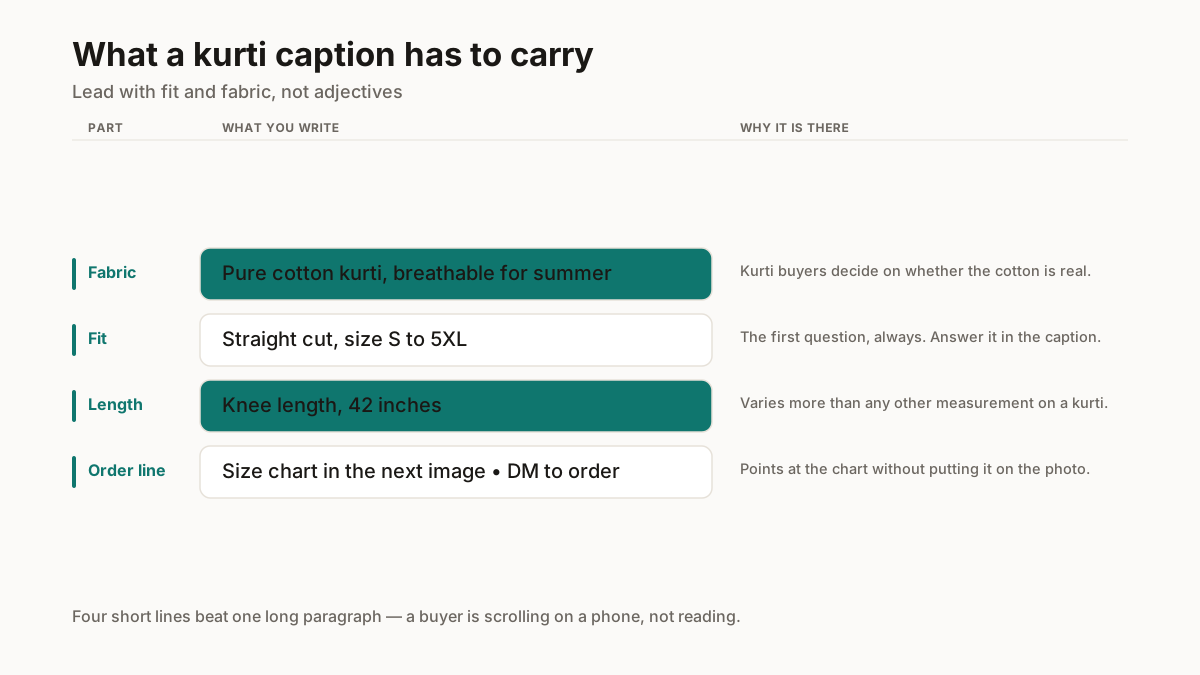
Kurti shopping is a volume decision, not an occasion one. She is buying something to wear to work on Tuesday, so the questions in her head are practical: does it come in XXL, is it real cotton or a blend, will the colour bleed in the first wash. A caption that answers even one of those beats a caption full of praise.
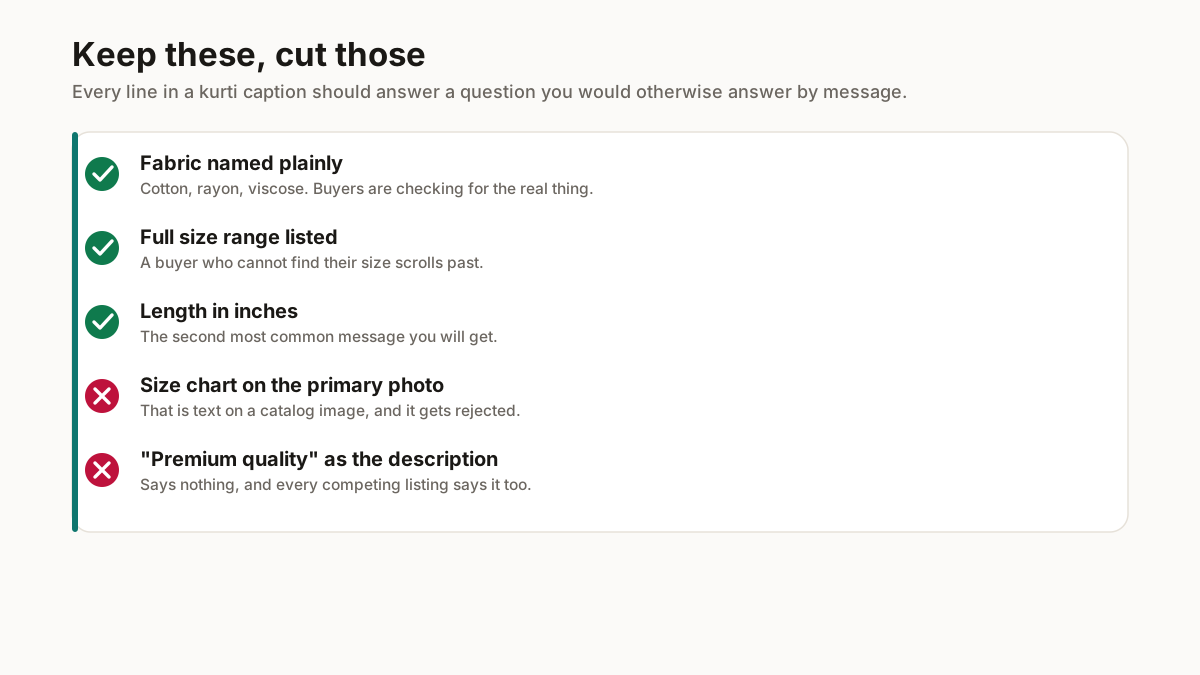
Put the size range in the caption. “S to 5XL” is four characters of effort and it removes the single most common DM on a kurti post. Sellers who add it report the obvious thing — fewer questions, more orders.
Say what the fabric actually is. Cotton, rayon, viscose, cotton blend — these are not interchangeable and your buyer knows it. Vagueness here reads as hiding something, and on a ₹400 kurti trust is the whole transaction.
How often should you post kurtis?
More often than you think, and with less agonising over each one. Kurtis move on newness — the same customer buys again in six weeks, and she comes back to accounts that always have something new. Three posts a week beats one perfect post a fortnight.
That only works if writing the caption is fast. Generate ten, pick one, change the colour word, post. The edit matters more than the choosing: one changed detail is what stops fifty accounts posting the same line.
Keep a note of which captions got replies. After a month you will have four or five that work on your audience, and those become your rotation. That is a more useful asset than any generator.
What size range and price point sells best?
Stock S to 5XL if you can. The 42-inch and above sizes are chronically under-served in Indian online fashion, and sellers who carry them report noticeably lower return rates because those buyers are grateful not experimenting.
The volume price band for cotton kurtis sits around ₹350 to ₹650. Below ₹300 the margin disappears once you account for a 15 to 25% return rate; above ₹800 you are competing with brands that have return policies you cannot match.
Three posts a week, roughly 20 to 30 new pieces a month, is the cadence most single-person kurti businesses can actually photograph, caption and dispatch without falling behind.
Why does fit information reduce returns?
Because a fit return is a decision the buyer made on missing information, and supplying it moves the decision to before the order rather than after. A caption that gives the length in inches and the size range answers the two questions that otherwise get answered by ordering and finding out.
Length is the one sellers most often omit and buyers most often need. Kurti lengths vary far more than bust and waist do, and the same size label covers a knee-length and a calf-length garment depending on the cut. A buyer who wanted one and received the other returns it, correctly.
Saying the garment is measured flat, not on a body, prevents a second class of complaint. Buyers measure themselves and compare, and the two numbers only match if you have told them which one you are quoting.
Every return you prevent this way is worth more than the sale it might have cost. A returned order pays freight in both directions and often comes back in a condition you cannot resell, which makes the caption line one of the cheapest interventions available to you.
How do you write about fabric honestly?
Name it and say what it does. “Pure cotton, breathable for summer” tells a buyer something checkable; “premium quality fabric” tells them nothing and appears on every competing listing, which means it functions as noise rather than as a claim.
Blends need saying as blends. A cotton-blend kurti described as cotton will be received as a disappointment by exactly the buyer who cared enough to check, and that buyer is the one who writes reviews. Naming the blend costs you the sale you would have lost at delivery anyway.
Behaviour is more useful than adjectives. Whether it creases, whether it needs ironing, whether the colour is likely to run in the first wash — each of those is something a buyer wonders about and almost nobody states, which makes stating it a genuine differentiator.
And avoid claiming what you cannot verify. If you buy from a wholesaler and do not know the exact composition, describing what you can see and feel is more defensible than repeating a description you cannot stand behind.
Related free seller tools
Frequently Asked Questions
What should I write in a kurti caption?
The fabric and the size range in the first line, then a reason to buy now, then how to order. Kurti buyers are making a practical decision, so practical detail converts better than praise.
Should I mention the size range in the caption?
Yes, always. S to 5XL takes four characters and removes the most common DM on any kurti post. Every question you answer in the caption is an order you do not have to chase in the inbox.
How many times a week should I post kurtis?
Three or so. Kurtis sell on newness and repeat buyers return to accounts that always have something fresh, so frequency beats perfection. That only works if writing a caption takes seconds instead of minutes.
Do hashtags still work for kurti posts?
Yes, and specific beats broad. A tag like cottonkurti or officewear reaches fewer people than fashion but reaches people who are actually shopping for a kurti. Fifteen to twenty-five is the practical range.
Why do the same captions stop working?
Because your audience has seen them. Rotate four or five that work, change one detail each time — colour, fabric, occasion — and they keep their effect. Posting the identical line weekly is what makes an account feel automated.
What should a kurti caption always include?
Fabric named plainly, the full size range, and the length in inches. Length varies far more than bust or waist, and the same size label covers knee-length and calf-length garments depending on the cut.
How do I stop fit-related kurti returns?
Give the length in inches, state the size range, and say the measurements are of the garment measured flat rather than of a body. Buyers measure themselves and compare, and the numbers only match if you have said which you are quoting.
Caption ready? Photos next. Resize for Instagram and every marketplace in one pass, free.