Stitched or unstitched — why does it matter so much?
It is the single biggest source of returns and arguments in the suit category. A buyer who thought she was getting a ready-to-wear set and receives three pieces of cloth is going to open a return, and she is going to be right to.
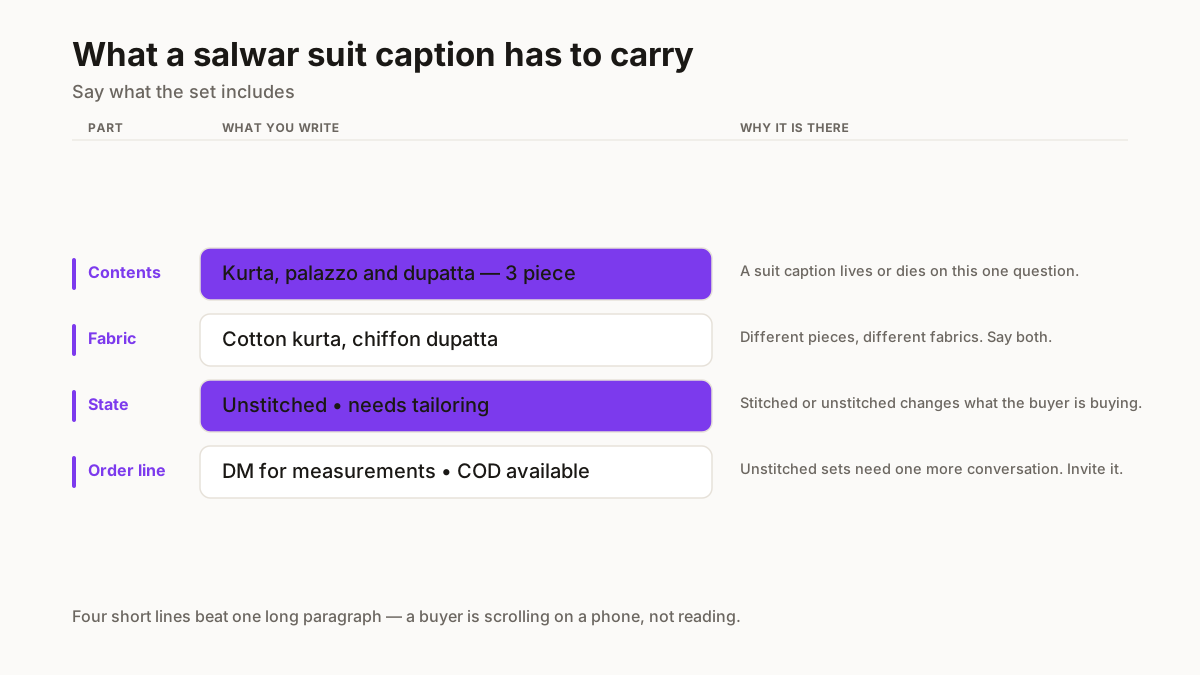
Say it in the caption, not just the listing. “Unstitched 3-piece — top, bottom, dupatta” is unambiguous. So is “Ready to wear, stitched, only dupatta loose”. Both take a few words and both prevent a dispute that costs you the freight twice.
If it is unstitched, mention the metre count. Two and a half metres for the top, two for the bottom, two and a quarter for the dupatta — a buyer who sews knows exactly what that means, and a buyer who does not will ask her tailor rather than you.
When do salwar suits sell best?
Suits are the most seasonal thing most Indian sellers carry. Demand climbs into the festive stretch from Navratri through Diwali, holds through the wedding months, and drops in the heat. Your caption should sound different in October than it does in May.
In festive season, lead with the occasion. Outside it, lead with the fabric and the comfort — cotton suits for daily wear sell steadily all year to women who need something to teach or work in, and those buyers are not thinking about Diwali at all.
Stock and caption for both audiences. The mistake is writing every suit post as though it is going to a wedding, which loses you the larger, quieter, more repeatable half of the market.
What do unstitched suit measurements mean?
A standard unstitched 3-piece gives you roughly 2.5 metres for the kurta, 2 metres for the bottom and 2.25 metres for the dupatta. Those numbers are what a tailor needs, and quoting them saves a round of questions.
Stitching typically adds 5 to 10 days and ₹400 to ₹900 depending on the city. If you offer stitching, say both figures — a buyer planning around a function needs the timeline more than she needs the price.
Festive demand runs from Navratri through Diwali, then again through the wedding months. Outside those windows cotton daily-wear suits at ₹450 to ₹700 carry the account.
Why is "what is included" the whole caption?
Because a salwar suit is a set, and a set is defined by its contents. A buyer looking at a photograph of a kurta, a bottom and a dupatta has no way to know whether all three are in the price, and the assumption they make is the one they will hold you to when the parcel arrives.
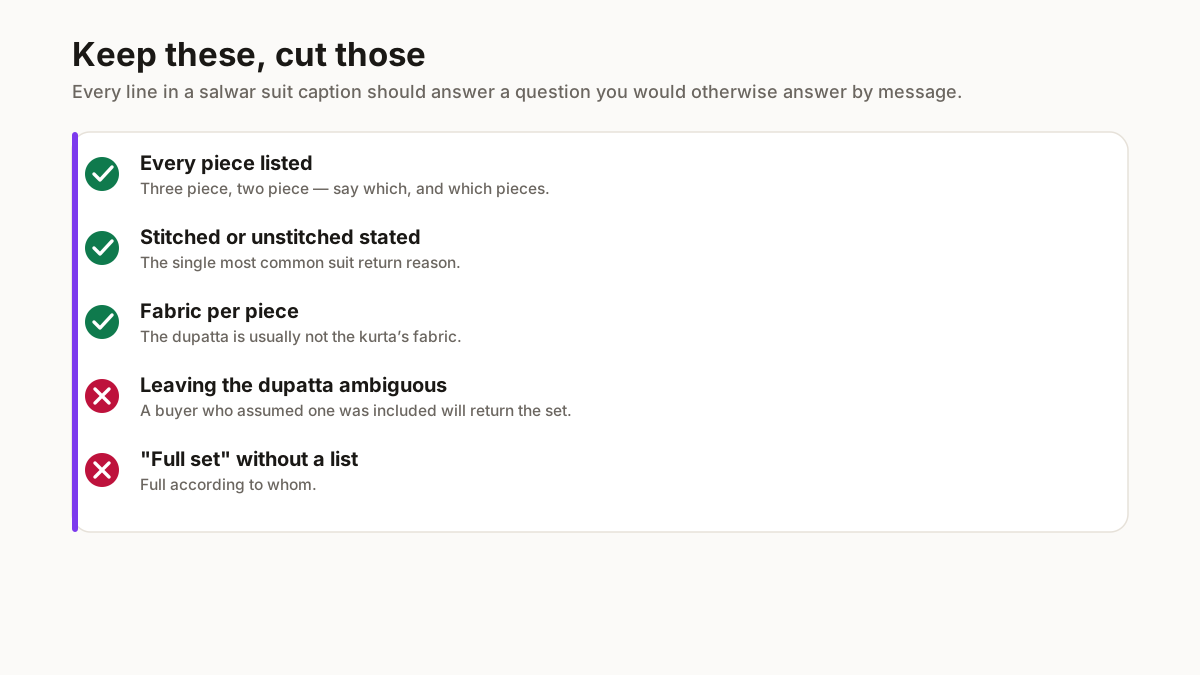
The dupatta is the piece that causes the most trouble. It appears in almost every photograph, is often not included, and is the single most common source of “item missing” messages on suits. One line stating it plainly removes an entire category of dispute.
Naming the count is not enough on its own. “3 piece” is ambiguous when the pieces could be kurta, bottom and dupatta, or kurta, dupatta and lining, so list what they are rather than how many there are.
This is one of the rare cases where a longer caption converts better, because the buyer genuinely cannot proceed without the information and will move to a listing that supplies it.
Stitched or unstitched changes the buyer
They are almost two different products sold from the same photograph. An unstitched set is fabric and a plan; a stitched one is something to wear this weekend. A buyer who wanted the second and received the first has a legitimate complaint, and it is entirely preventable in one line.
Unstitched sets need more of the caption, not less. Say the fabric length for each piece, because a buyer taking it to a tailor needs to know whether there is enough, and a tailor asked to work with too little will tell them so in a way that becomes your review.
Semi-stitched sits between the two and needs the most explanation of all, because the term means different things to different sellers. State what is done and what the buyer still has to arrange.
For stitched sets, the measurements are the caption. Size label, bust, length and bottom length, stated plainly, because a stitched garment either fits or comes back and there is no middle outcome.
Related free seller tools
Frequently Asked Questions
What should a salwar suit caption say?
Whether the set is stitched or unstitched, what pieces are included, and how to order. That single clarification prevents most suit returns, which are usually a buyer expecting ready-to-wear and receiving cloth.
How do I write a caption for an unstitched suit?
State the piece count and the metres — for example, unstitched 3-piece with 2.5m top, 2m bottom and 2.25m dupatta. A buyer who sews reads that instantly, and one who does not will take it to her tailor over back to your inbox.
When is the best time to post suits?
Festive season from Navratri through Diwali and the wedding months are the peak, but cotton daily-wear suits sell steadily all year to working women. Write for both audiences in place of treating every post as festive.
Should suit captions be in Hindi?
Hinglish tends to work best. Keep fabric and construction words like unstitched or cotton in English because that is how buyers search, and let the rest sound like you.
What causes suit returns?
Two things above all: a stitched-versus-unstitched misunderstanding, and dupatta expectations. Both are solved with one clear line in the caption, which is far cheaper than paying freight in both directions.
What must a salwar suit caption say?
Exactly which pieces are included, named rather than counted — "3 piece" is ambiguous when the pieces could be kurta, bottom and dupatta or kurta, dupatta and lining. The dupatta specifically is the most common source of "item missing" messages.
Do I need to say whether a suit is stitched?
Always. An unstitched set is fabric and a plan; a stitched one is something to wear this weekend. For unstitched, also give the fabric length per piece, because a tailor told there is too little will say so in what becomes your review.
Caption ready? Photos next. Resize for Instagram and every marketplace in one pass, free.