How is Shopsy different from Flipkart itself?
Same company, same seller infrastructure, different buyer. Shopsy targets the price-led, tier-2 and tier-3 shopper that Meesho built its business on, and it competes directly for that audience with a zero-commission structure.
For a seller already on Flipkart, enabling Shopsy is closer to a checkbox than an onboarding. Your catalog, your fulfilment and your Account Health carry across, which is why it is one of the cheapest additional channels available.
The trade is price expectation. A product that holds ₹900 on Flipkart may need to sit near ₹500 to move on Shopsy, so it is not a channel to list your premium range into unchanged.
Should you sell on Shopsy and Meesho at the same time?
Most sellers targeting this buyer do exactly that, because the two platforms compete for the same shopper and neither has locked her in. Running both roughly doubles your reach for the same catalogue work.
Keep the pricing consistent across them. A buyer who finds the same product cheaper on the other app will not simply buy the cheaper one — she will stop trusting your listing, and that reputational cost outlives the sale.
Watch stock rather than orders. Selling the same physical inventory across two platforms is how oversells happen, and an oversell on Flipkart's infrastructure damages the Account Health score that governs both.
What performs on Shopsy?
The same categories that work on Meesho: daily-wear apparel, kitchen and home items, accessories, and anything under roughly ₹700 where the buyer is deciding on price and photograph alone.
Because commission is zero, shipping and returns are again the whole margin question. Pack flat, price for a 15 to 25% return rate on apparel, and the channel works.
Photographs do more work than descriptions. This buyer scrolls, and a sharp 1000×1000 image on a clean background is what stops her.
How does Shopsy relate to Flipkart?
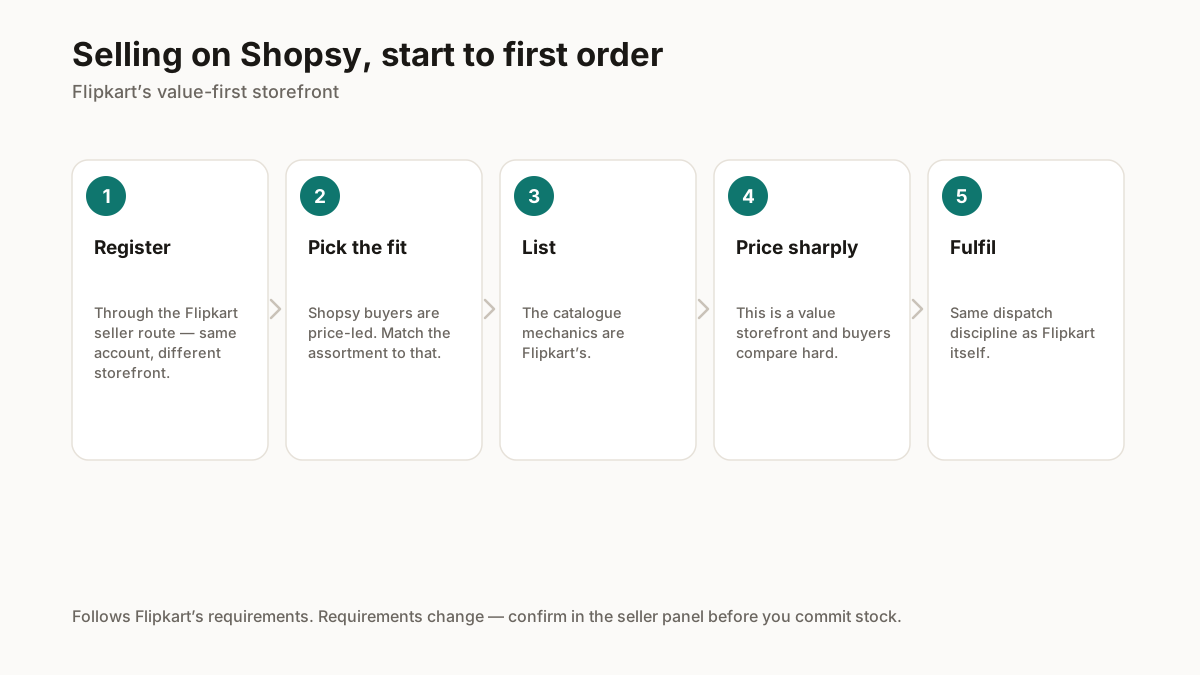
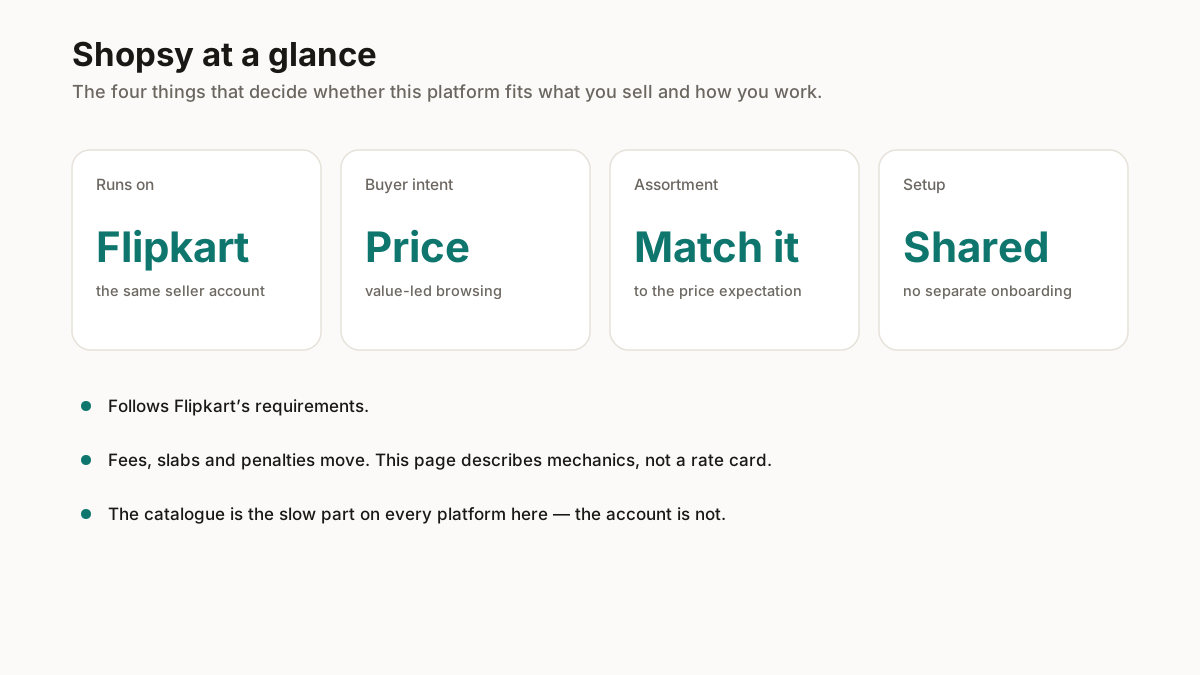
It is a storefront on the same infrastructure, reached through the same seller account, aimed at a more price-led audience. That means the onboarding you have already done carries over and the catalogue mechanics are the ones you know, which makes it a genuinely low-cost channel to add.
What changes is the buyer. Shopsy traffic is comparing hard on price, closer to Meesho in behaviour than to Flipkart’s main storefront, so the assortment that works is not automatically the assortment that works next door.
Sellers frequently list identical stock to both and wonder why one converts. The answer is usually price positioning: a product that reads as good value on Shopsy can read as underpriced and therefore suspect on the main storefront, and the reverse holds too.
Treat it as a second audience rather than a second listing. The catalogue work is shared; the pricing judgement is not.
What sells on a value storefront?
Products where the buyer already knows what they want and is choosing on price. Basics, staples and familiar categories do well because the buyer does not need educating — they need convincing that yours is the sensible purchase at that price.
Bundles work here in a way they do not everywhere. Two or three of something at a combined price gives a price-led buyer a reason to choose you that does not require you to be the cheapest per unit, and it lifts the order value at the same time.
What struggles is anything needing explanation or a premium justification. If your margin depends on the buyer understanding why this fabric costs more, a value storefront is the hardest place to have that conversation.
Shipping economics matter more at low order values, because a flat per-order cost is a much larger share of a small sale. Packing small and flat is worth more here than on a platform with higher basket sizes.
Related free seller tools
Frequently Asked Questions
What is Shopsy?
Flipkart's zero-commission app aimed at price-led buyers in tier-2 and tier-3 India — the same audience Meesho built its business on. It runs on Flipkart's seller infrastructure.
Do I need a separate registration for Shopsy?
Not if you already sell on Flipkart. Your catalog, fulfilment and Account Health carry across, which makes it one of the cheapest extra channels a seller can add.
Should I sell on both Shopsy and Meesho?
Most sellers targeting this buyer do, since the two compete for the same shopper. Keep pricing consistent across them — a buyer who finds a cheaper version of your listing elsewhere stops trusting you over switching.
Is Shopsy really zero commission?
The commission structure is zero for most categories, which puts shipping and returns back at the centre of your margin. Pack flat and price with a realistic return rate built in.
What price range works on Shopsy?
Broadly under ₹700, where the buyer is deciding on price and photograph. A product holding ₹900 on Flipkart usually needs to sit near ₹500 to move here.
Can an oversell on Shopsy affect my Flipkart account?
Yes. Both run on the same seller infrastructure, so a stock failure damages the Account Health score that governs your Flipkart listings too.
Is Shopsy a separate account from Flipkart?
No. It runs through the same seller account and the same catalogue mechanics, which makes it a low-cost channel to add. The difference is the buyer, who compares on price far harder than Flipkart’s main storefront.
Should I list the same products on Flipkart and Shopsy?
The catalogue work is shared but the pricing judgement is not. A product that reads as good value on Shopsy can read as suspiciously cheap on the main storefront, and the reverse holds too.
Rates and policies change. Check the current rate card in your seller panel before pricing — the structure above stays stable, the numbers do not.