What does Amazon actually deduct per order?
Four things. A referral fee as a percentage of selling price, set by category. A fixed closing fee. Shipping or fulfilment, depending on whether you self-ship or use FBA. And 18% GST charged on top of those marketplace fees.
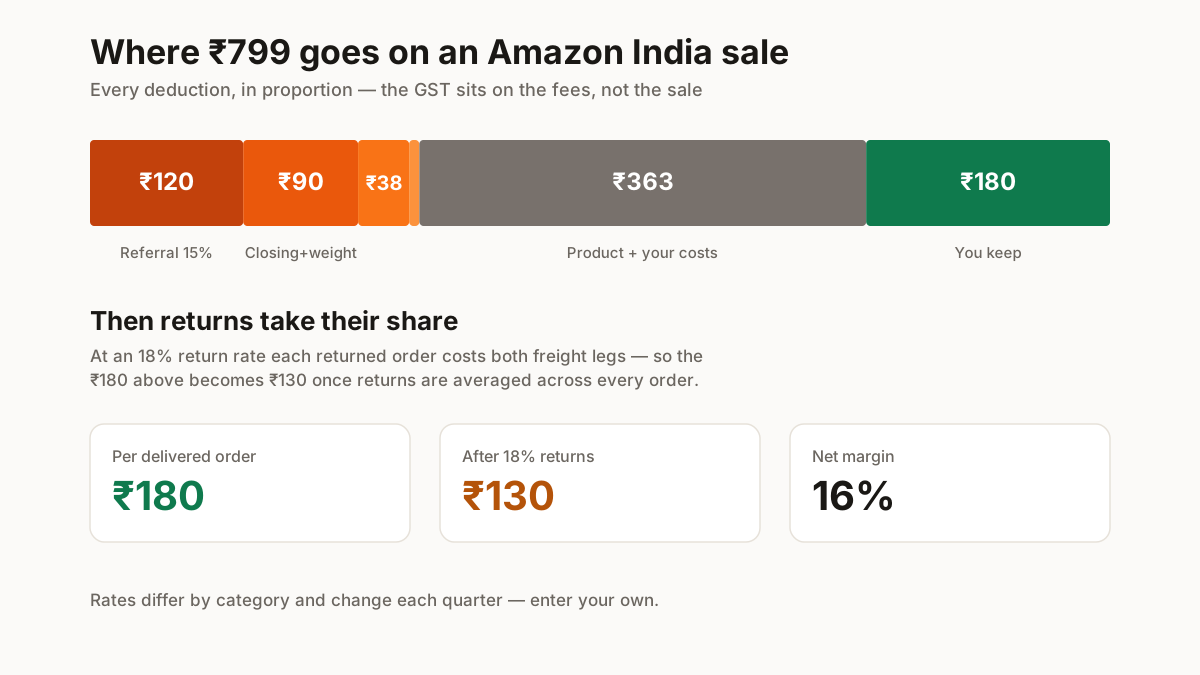
The GST on fees is what sellers forget. On a ₹799 order with a 15% referral, that is roughly ₹22 of tax on the fee alone, which is real money at 200 orders a month.
Referral percentages differ sharply by category — apparel, electronics and books are nowhere near each other, and the gap between them is wider than most sellers expect. Read yours from the current rate card in Seller Central and type it into the field above rather than trusting a figure from a blog post.
Why does the return rate change the answer so much?
Because a returned order does not simply undo the sale — it costs you the forward shipping, often the return shipping, and any damage in transit. On a ₹799 product at 18% returns, that drag is larger than most sellers assume.
The calculator shows both numbers deliberately: profit on a delivered order, and expected profit once returns are averaged in. Pricing off the first number is how a catalogue looks profitable and the settlement does not.
Apparel commonly runs 15 to 25%. Electronics and accessories sit lower. Use your own figure from the last 3 months rather than a category average.
How should you use the result?
Work backwards. Decide the profit you need per order, then raise the selling price until the expected figure reaches it. That is a more reliable method than costing upward and hoping.
If the expected profit is negative at a realistic return rate, the product does not work at that price on that channel. That is worth knowing before you list 40 of them.
Re-run it when your rate card changes. Marketplace fees move, and a price set 6 months ago against old numbers is the most common quiet loss in a seller account.
What are the fields most sellers leave at zero?
Weight handling is the first one. Amazon charges shipping against chargeable weight, which is the greater of what the parcel weighs on a scale and what its dimensions imply. The volumetric figure is length times width times height divided by 5000, so a light garment in an oversized carton is billed on the carton rather than on the garment inside it.
Pick and pack applies when Amazon handles fulfilment, not you. If your orders ship from your own premises this field is genuinely zero, but if any part of your catalogue sits in an Amazon warehouse the fee is being deducted whether or not you have modelled it, and it belongs in the calculation for those units.
Storage is the one that grows while you are not watching. It accrues against inventory sitting in a fulfilment centre by volume and by time, which means slow-moving stock quietly costs more per unit every month it fails to sell. A seller reviewing margin only at the point of sale never sees it.
TCS is tax collected at source on the sale, held back by the marketplace and reconciled when you file. It is not a fee in the sense that it is not money Amazon keeps, but it is money that does not reach your account on settlement day, so it belongs in a cash flow view even though it washes out at filing.
Where do you read your own numbers?
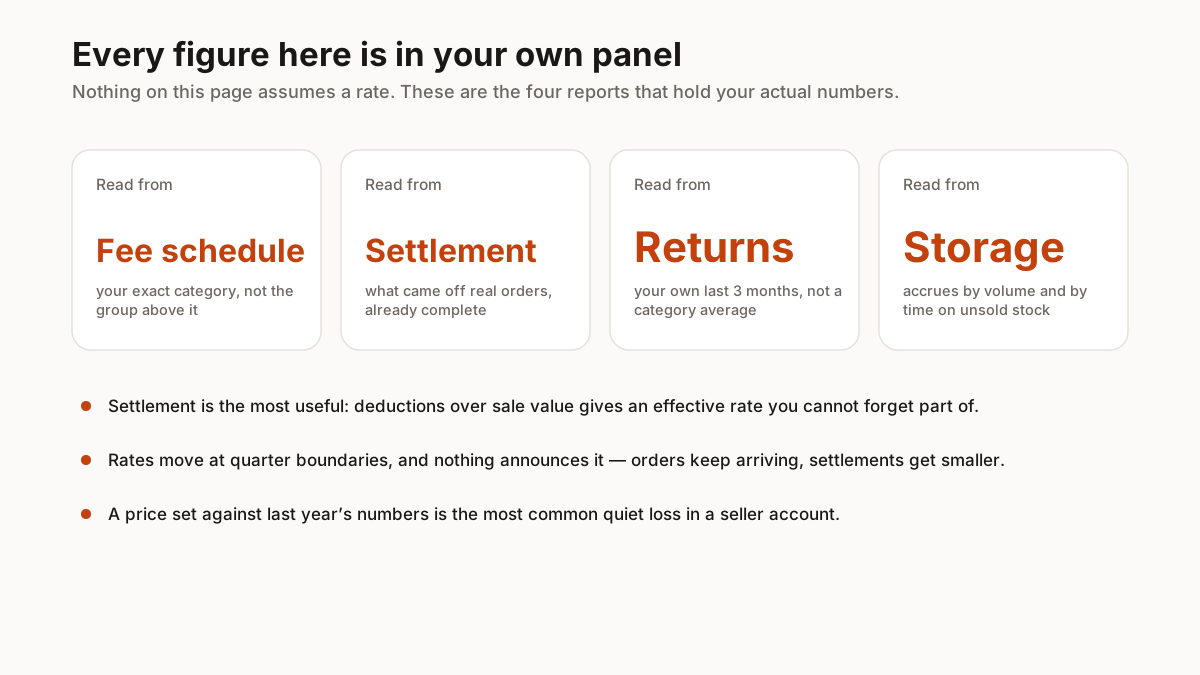
Every figure this calculator asks for exists in Seller Central, and reading them beats estimating by a wide margin. The referral percentage sits in the fee schedule against your specific category, not against the broad group it belongs to — apparel subcategories differ from each other, and the difference is large enough to change whether a product is worth listing.
Your settlement report is the more useful document, because it shows what came off real orders, not what should have. Pull a month of it, take the total deductions against the total sale value, and you have an effective rate that already includes anything you would have forgotten to model.
Return rate comes from your own returns report over the last three months, never a category average. Averages hide the thing that matters: return behaviour varies enormously between two sellers in the same category, driven mostly by how honestly the listing described fit and colour.
Rates and slabs change, often at a quarter boundary. A price set against last year’s numbers is the most common quiet loss in a seller account, because nothing announces itself — the orders keep arriving and the settlement is simply smaller than the spreadsheet said.
Related free seller tools
Frequently Asked Questions
How do I calculate profit on Amazon India?
Take the selling price, subtract the referral fee for your category, the closing fee, shipping, and 18% GST charged on those fees. What remains is the settlement. Subtract your product cost from that for profit per delivered order.
What is the Amazon referral fee in India?
It is a percentage of selling price set by category, and it differs sharply between apparel, electronics and books. Read the current figure from your Seller Central rate card and enter it above — nothing is assumed here because the rates change.
Is GST charged on Amazon seller fees?
Yes, 18% on the marketplace fees themselves. On a ₹799 order with a 15% referral that is roughly ₹22, which is the deduction sellers most often forget when pricing.
Should I include returns in my Amazon pricing?
Yes. A return costs forward shipping and often return shipping too, so profit on a delivered order overstates what you actually earn. Use your own return rate from the last 3 months.
Why is my Amazon settlement lower than expected?
Usually GST on fees, or a referral percentage that differs from the one you assumed. Both are visible in the settlement report line by line.
What is chargeable weight on Amazon India?
The greater of the actual weight and the volumetric weight, where volumetric is length times width times height divided by 5000. A light garment in an oversized box is billed on the box, which is why packing size changes the shipping cost.
What is TCS on marketplace sales?
Tax collected at source: the marketplace holds back a portion of the sale value and remits it against your account, where it is reconciled at filing. It is not a fee the marketplace keeps, but it does not reach your bank on settlement day, so it belongs in a cash flow view.
No rate is hardcoded here. Read the current figures from your seller panel and type them in — that is the only way this stays right.