Why is COD so much more expensive than it looks?
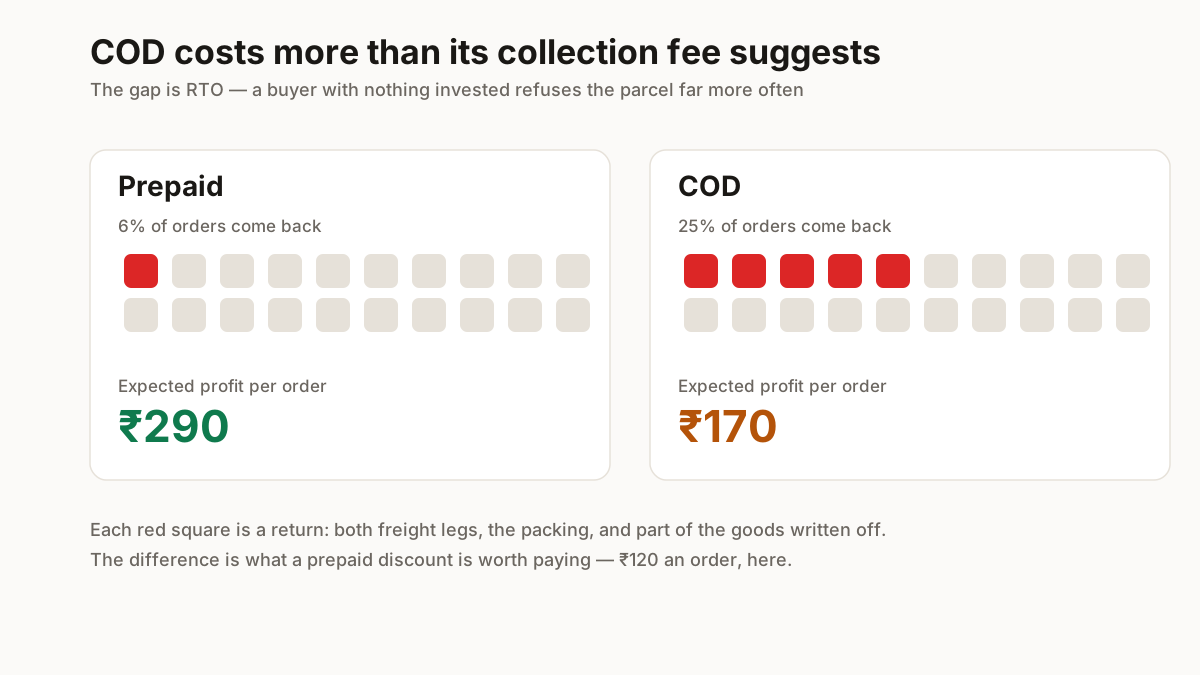
The collection fee is the visible cost and the smaller one. The expensive part is return-to-origin: a buyer who has not paid has nothing invested, so refusal at the door is far more common than on a prepaid order.
Every RTO costs you the forward shipping and the return shipping, with no revenue against it. At a 25% COD RTO rate, one order in four is pure cost.
That is why the calculator asks for both RTO rates separately. A single blended figure hides exactly the difference you are trying to measure.
How do you move buyers to prepaid?
Make it worth their while. A small discount for paying upfront — even ₹20 to ₹30 — often costs less than the RTO risk it removes, and the calculator above will tell you the exact break-even for your numbers.
Trust does the rest. A shop with a real name, a catalogue, consistent photos and a phone number that answers gets more prepaid orders than one that looks temporary, because prepayment is a bet on you.
Ask for it directly on WhatsApp orders. A great many buyers default to COD without really thinking about it, and will happily pay by UPI if you send a link — particularly on a repeat purchase where they already know the shop delivers.
Should you refuse COD entirely?
Rarely, and not at the start. COD is still how a large share of first-time Indian buyers order, and refusing it costs you the customers who have not learned to trust you yet.
A middle path works better: COD available, prepaid incentivised, and COD switched off for pin codes where your own RTO data shows it failing. That is a decision your settlement report can make for you.
Watch the number by pin code rather than overall. RTO is heavily geographic, and a blanket policy throws away good areas to fix bad ones.
What does a returned COD order really cost?
More than the two freight legs, which is the part most sellers model and stop at. The packing material is spent on a parcel that earned nothing. A share of what comes back is unsellable — creased, marked, opened, or returned in a condition that means it goes to the discount pile rather than back into stock at full value.
Returns unsellable is the field for that share, and it is worth measuring instead of guessing. Sellers who start counting are usually surprised in one direction or the other, and the number varies enormously with packaging quality and with what you sell — a cotton kurti survives a round trip far better than anything with delicate work on it.
There is a handling cost too, which this calculator deliberately does not try to price. The hour spent receiving, checking, repacking and relisting a returned parcel is real, but it is your own time, not an invoice, and putting a rupee figure on it would be inventing a number instead of reporting one.
Put together, the cost of one RTO is frequently larger than the profit on a delivered order. That is the whole argument of this page: at a high enough refusal rate, each delivered sale is funding the ones that were refused, and the channel can be busy and unprofitable at the same time.
Why does the remittance delay matter?
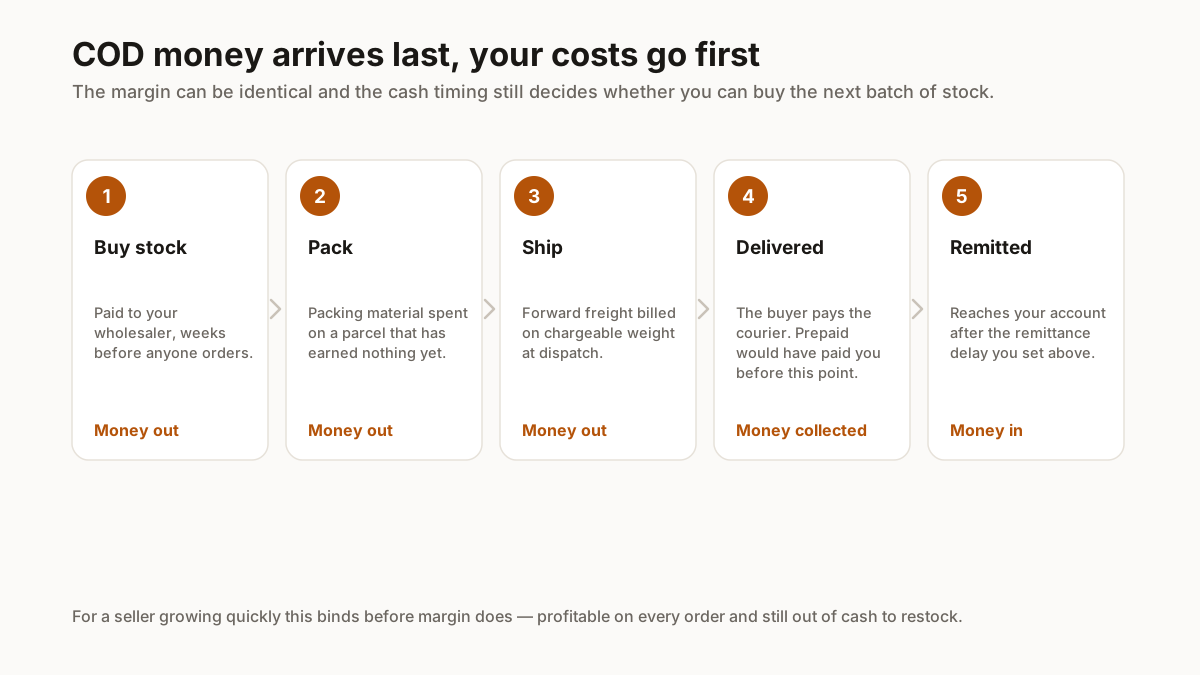
Because COD money is collected from the buyer and then held before it reaches you, while your own costs were paid weeks earlier. The wholesale purchase, the packing and the forward freight are all out of your account before the buyer has even seen the parcel, and on a COD order the reimbursement arrives some days after delivery, not at the point of sale.
For a seller growing quickly this binds before margin does. Every additional order widens the gap between money spent and money received, so a business that is profitable per order can still run out of cash to buy the next batch of stock — which is the most common way a good month becomes a crisis.
Prepaid inverts it. The money arrives before or alongside dispatch, so growth funds itself instead of eating working capital, and the same margin supports a larger catalogue. That is worth something distinct from the RTO saving, and it is why the field exists even though the calculator does not attempt to price the days directly.
Which is how to read the final figure. The gap between prepaid and COD profit is what a prepaid discount can be worth per order before it costs you anything, and the freed-up days are an additional benefit sitting on top of that number, not inside it.
Related free seller tools
Frequently Asked Questions
Is COD or prepaid more profitable?
Prepaid, usually by more than the COD fee suggests. The real cost is RTO — COD orders are refused far more often, and each return costs forward and return shipping with no revenue against it.
What is the RTO rate on COD orders?
It varies by category and geography, and commonly runs several times the prepaid rate. Use your own figure from the settlement report rather than an average, because RTO is heavily pin-code dependent.
Should I offer a discount for prepaid?
Often yes. A ₹20 to ₹30 incentive frequently costs less than the RTO risk it removes, and the calculator above shows the exact break-even for your own numbers.
Should I stop offering COD?
Rarely, and not early on. COD is how many first-time Indian buyers order. A better approach is COD available, prepaid incentivised, and COD switched off only for pin codes where your data shows it failing.
How do I get more prepaid orders?
Ask directly on WhatsApp orders and send a UPI link — many buyers default to COD without thinking. Beyond that, a shop that looks permanent gets more prepayment, because paying upfront is a bet on you.
How much does one RTO actually cost?
The forward freight, the return freight, the packing material, and the share of returned goods that comes back unsellable. Together that is frequently more than the profit on a delivered order, which is why a high-refusal channel can be busy and unprofitable at once.
Why does the COD remittance delay matter if the margin is the same?
Because your costs were paid weeks before the money arrives. For a seller growing quickly, cash timing binds before margin does — a business profitable on every order can still run out of money to buy the next batch of stock.
No rate is hardcoded here. Read the current figures from your seller panel and type them in — that is the only way this stays right.