What ROAS do you actually need?
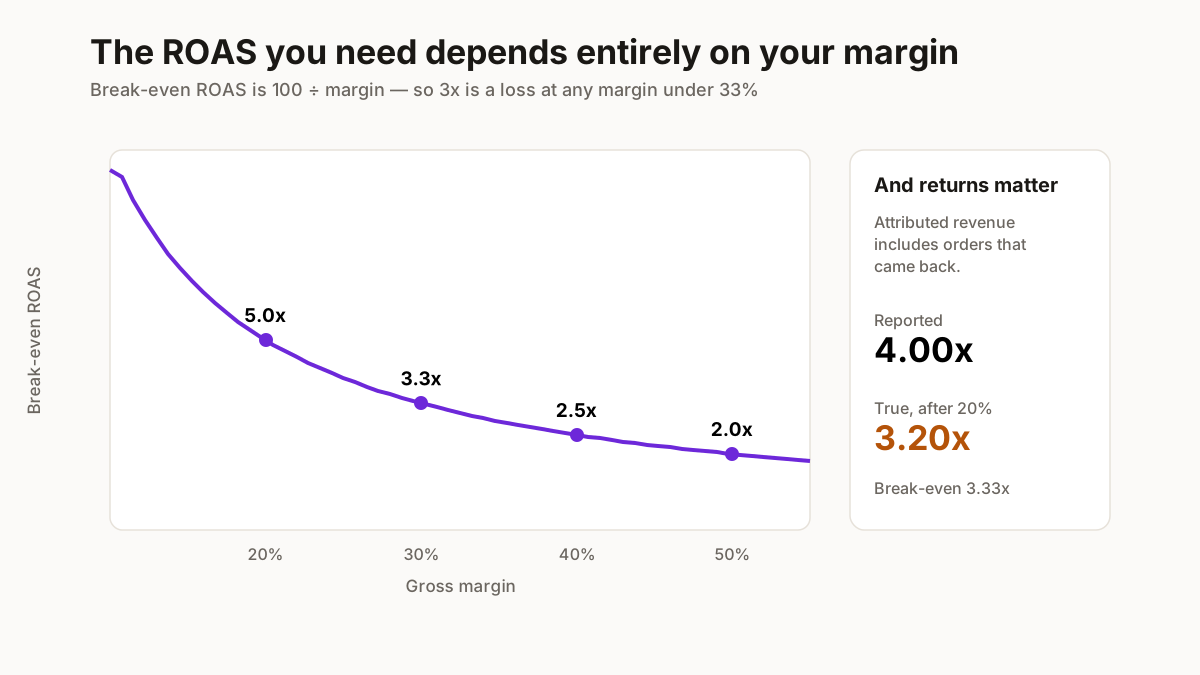
Your margin decides it, and that is the part most ad advice skips. On a 30% gross margin every rupee of revenue returns 30 paise of profit, so ₹1 of spend has to bring ₹3.33 of revenue before the campaign breaks even. Drop the margin to 20% and the same campaign needs 5x; lift it to 50% and 2x is enough.
So 4x is excellent on a 40% margin and a slow loss on a 20% one. Quoting ROAS without the margin beside it says nothing at all, which is why the calculator asks for both before it will show you anything.
Work the break-even figure out once and write it on the wall. Every campaign decision afterwards becomes a comparison against that one number, which is a great deal easier than re-deriving it at 11pm with the spend still running.
What does ROAS not tell you?
Whether the sale would have happened anyway. A campaign aimed at people already searching your shop name reports a spectacular ROAS while paying for orders you had won before the ad ran, and the dashboard has no way to tell the two apart.
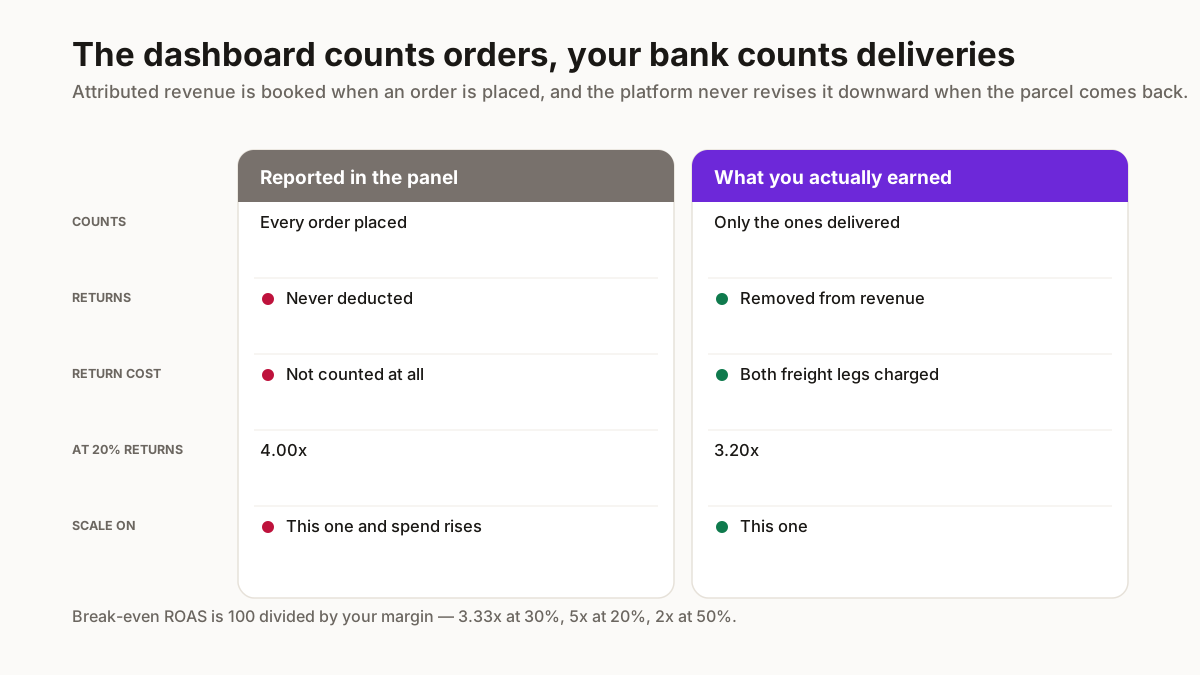
Returns are the second blind spot. Attributed revenue counts orders that later came back, so in a category returning 20% a reported 4x is closer to 3.2x before the cost of the returned parcels is even subtracted.
Repeat purchase is the third. A campaign sitting exactly at break-even that brings buyers who order again 6 weeks later is a good campaign, and the single number in the dashboard cannot see the second order at all.
When should a small seller run ads at all?
After the listing converts organically, never before. Sending paid traffic to a page that does not convert buys the same outcome faster, and the money is gone either way — 500 paid visitors to a listing nobody buys from produces 500 more people who did not buy.
Start with a budget you could lose for 2 weeks without it hurting. Long enough to see whether break-even ROAS is reachable, short enough that being wrong costs you a fortnight instead of a season.
If the campaign cannot clear break-even ROAS after a fortnight of honest effort, the problem is usually the price or the product photograph rather than the targeting.
Why does the reported number overstate what you earned?
Because attributed revenue counts an order at the moment it is placed, and a share of those orders comes back. The platform has no reason to revise the number downward when a parcel is refused at the door, so the ROAS shown in the dashboard describes gross orders while your bank account describes delivered ones.
Take a 20% return rate: a fifth of the revenue is gone, which is enough to move a campaign from comfortably profitable to marginal. Sellers who scale on the reported figure often find spend rising while the settlement does not, and the explanation is sitting in the returns report rather than the ads panel.
Returned orders cost money; they do not merely earn none. The forward leg was paid, the reverse leg is usually paid, the packing is gone, and some share of the goods comes back in a state you cannot sell. That is why the calculator subtracts a return cost rather than simply scaling the revenue down.
Scale on the true figure. If it sits above your break-even ROAS you have a campaign worth more budget; if it sits below, more budget buys more losses faster, which is the failure mode that empties an ad account in a fortnight.
What does a break-even ROAS actually depend on?
Your gross margin, and nothing else. The arithmetic is 100 divided by your margin percentage: at a 30% margin you need 3.33x to stand still, at 20% you need 5x, and at 50% you need only 2x — and the two of them can look at the same campaign and reach opposite conclusions about it, both correctly.
Hence the uselessness of a benchmark ROAS quoted without a margin attached. A figure that is comfortable for a jewellery seller with a wide margin is a slow loss for an apparel seller competing on price, and copying a number from someone else’s account is copying their cost structure along with it.
Cost to acquire one order is the more intuitive companion figure, because it is a rupee amount you can hold against the profit on a single sale. If acquiring an order costs more than the order earns after every deduction, no volume of them fixes it, and the campaign is buying revenue at a discount to its own cost.
Improving margin moves the break-even bar down, which is often easier than improving the campaign. Better packing that cuts chargeable weight, a listing that reduces size-based returns, or a supplier price negotiated at volume all lower the ROAS you need before you touch a single ad setting.
Related free seller tools
Frequently Asked Questions
What is a good ROAS?
It depends on your margin. Break-even ROAS is 100 divided by your gross margin percentage — at a 30% margin you need 3.33x just to stand still, so 4x is strong there and a loss at a 20% margin.
How do I calculate ROAS?
Revenue from the ads divided by the ad spend. It becomes useful only when compared against your break-even ROAS, which is set by your margin.
Does ROAS account for returns?
No. Attributed revenue includes orders that later came back, so in a category returning 20% your real ROAS is meaningfully below the reported figure.
Should a new seller run ads?
Not until the listing converts organically. Paying to send traffic to a page that does not convert buys the same outcome faster and the money is gone either way.
My ROAS is 3x but I am losing money. Why?
Your margin is below 33%. At a 30% margin break-even is 3.33x, so 3x is a small loss before returns are even counted.
Why is my true ROAS lower than the dashboard shows?
Attributed revenue counts an order when it is placed, and a share of those orders is returned. The platform does not revise the figure downward, The dashboard therefore describes gross orders while your bank account describes delivered ones.
What is a good ROAS for an Indian seller?
There is no answer without your margin, because break-even ROAS is one hundred divided by your gross margin percentage. A figure that is comfortable at a wide margin is a slow loss at a thin one, which is why benchmarks quoted without a margin attached are useless.
No rate is hardcoded here. Read the current figures from your seller panel and type them in — that is the only way this stays right.