Which Panipat market should you go to?
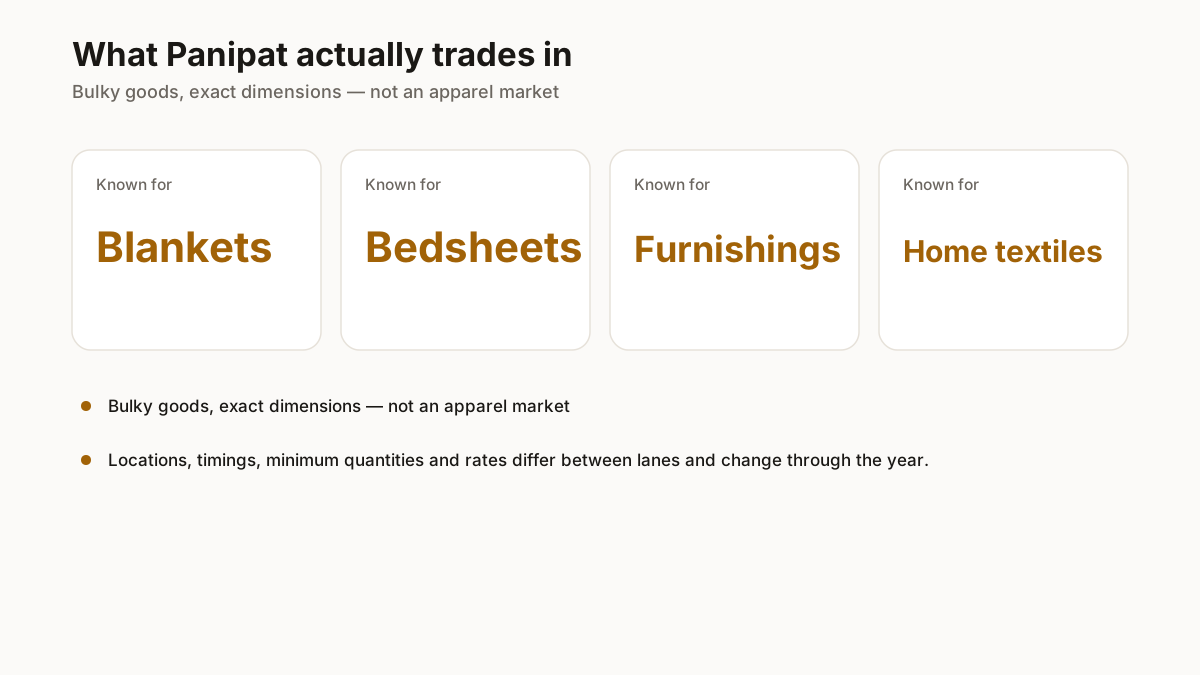
Panipat is home textiles — blankets, bedsheets, furnishings — and not an apparel market at all. A seller who arrives expecting clothing has come to the wrong city.
What it is very good at is volume in bedding and furnishing goods, which is a different business from selling garments.
The economics differ in ways that catch apparel sellers out, and shipping is where it shows.
Where do you sell? That decides what you buy
Home textiles sell well on marketplaces because the purchase is specification-led: a buyer wants a particular size and material, filters for it, and buys. Instagram fits less well unless the range is styled, since a folded bedsheet makes a poor image.
WhatsApp works for repeat and bulk buyers — a customer furnishing a home, or a small hotel, buys repeatedly and in quantity.
| Meesho | |||
|---|---|---|---|
| Buyer arrives | Searching and comparing on price | Discovering while scrolling | Already knows and trusts you |
| Marketplace commission | Yes — set by category | None | None |
| Return rate | Highest of the three | Middle | Lowest — she knows you |
| Listing rules | Strict QC, primary image must be clean | None | None |
| What sells | Everyday basics at sharp prices | Distinctive, photogenic, occasion wear | Mid to premium, and repeat orders |
| What it needs from you | Volume and price discipline | A look and consistent posting | An audience you already built |
Commission rates differ by category and change — read yours from the channel’s own rate card, and run it through the break-even calculator.
How do you get there and get around?
Panipat is a short road journey from Delhi and most buying is done at units instead of in a bazaar. That makes calling ahead more use than turning up.
Go on a weekday morning and plan the day around 2 or 3 units instead of expecting to browse.
First time? Bring someone, keep cash split, and be clear about your quantity on the phone beforehand so the visit is worth everybody's time.
Transport is the big one here. Home textiles are bulky enough that freight becomes a real share of the cost, so settle it before the price and get the docket photographed.
What happens on a first buying trip?
Minimums are higher here than in apparel, and that is simply how the town works. It is a manufacturing town geared to volume, but dealers holding finished stock will frequently do smaller lots.
Compare 3 suppliers on the specification — size, weight, material — because a blanket rate without those attached tells you nothing.
Ask about size consistency across a lot. Bedding sold as a standard size that varies by a couple of inches produces immediate returns.
Ask what happens with a faulty piece, and factor the return freight into the answer, because it is heavy.
How much do you actually have to buy?
Volume is the assumption here more than anywhere else on this list, so the dealer route is the practical one for a small seller. Units are geared to larger runs. If you are testing the category, buy narrow from a dealer first and only go to a unit once a design has proven itself.
Who should you actually go and see?
Panipat splits between manufacturing units and dealers holding finished stock, and a small buyer nearly always needs the second. Nothing public distinguishes the two, and arriving at a manufacturing unit with a small order wastes a morning for everybody, which is the single most avoidable mistake on a first trip here.
Panipat supplier list
We are building a list of Panipat dealers holding finished stock, separated from the manufacturing units, because a small buyer almost always needs the first. Every number on it comes from a supplier who asked to be listed.
Your number is used to send the list and nothing else.
What should you check before paying?
Wholesale generally has no returns, so once you have paid a bad piece is yours. And on bulky goods the return freight makes a bad lot expensive twice over, so check properly.
Actual measured size
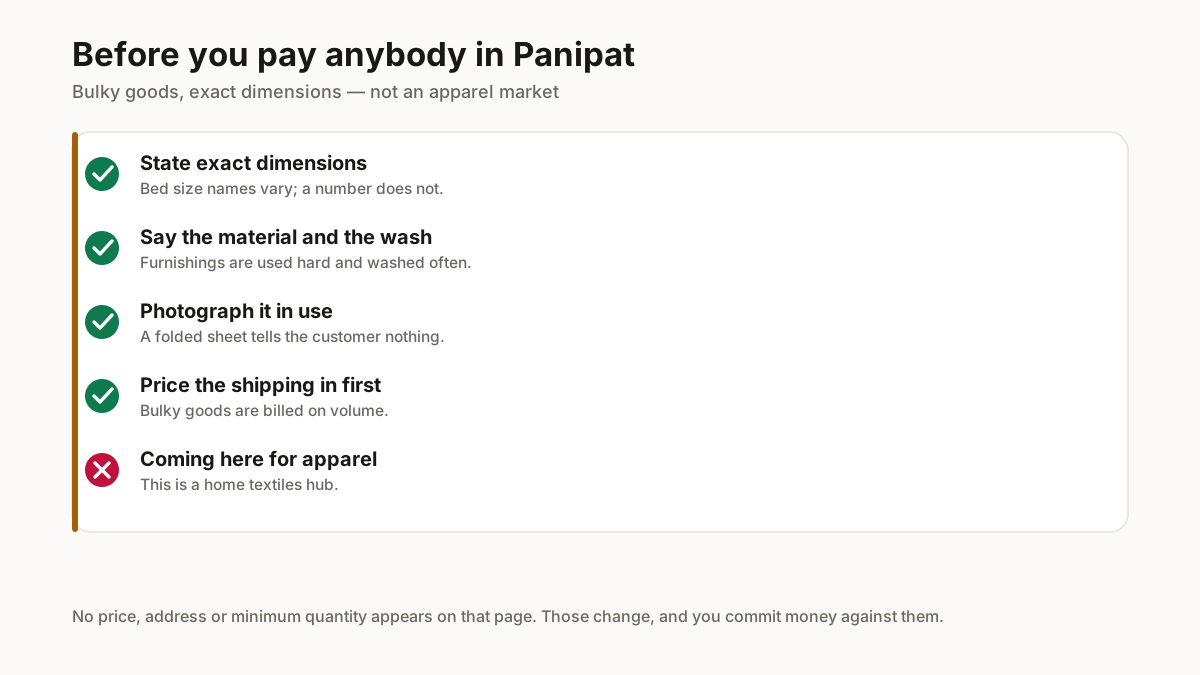
Measure a piece; do not trust the label. Bed sizes vary between manufacturers and a stated size that does not match is an immediate return.
Material and blend
Ask what the fibre actually is. Blends are normal and fine. Describing one as pure cotton is not, and the customer discovers it in the first wash.
Weight and warmth
For blankets particularly, weight is what the customer pays for. Ask for the figure so you can state it instead of calling the piece warm.
How it packs
Compress a piece and measure the packed parcel. Shipping is billed on chargeable weight and bulky goods are billed on volume, and on a low-value sheet that can swallow most of the margin.
Take this checklist with you
Everything above is easy to remember at home and easy to forget in a crowded lane. Same list, printable, to carry in a bag.
Buying trip checklist — Panipat
Print this and carry it. Tick as you go.
Before you leave
- ☐Confirmed the market is open today (call, do not assume)
- ☐Decided which market — they trade different goods
- ☐Cash split across two places, not one pocket
- ☐Notebook or phone notes ready — six suppliers blur into one
- ☐Someone with me, if this is the first trip
- ☐Plan for getting goods home before buying them
Which market for what
- ☐Blanket and bedding units — home textiles at volume
- ☐Furnishing dealers — curtains and upholstery cloth
- ☐Recycled yarn mills — lower-cost blended goods
Ask at every shop
- ☐What is the rate at the quantity I can actually take?
- ☐Will this design be available again next month?
- ☐What happens if a piece arrives defective?
- ☐What is the smallest lot you will sell me?
Check before paying
- ☐An inside seam — loose threads, skipped stitches, puckering
- ☐Colour across 3 or 4 pieces, in daylight not tube light
- ☐Which sizes are actually in the lot, counted not stated
- ☐Compared the rate against 2 other shops in the same lane
Wholesale generally has no returns. The checks above are the only protection you get.
What margin will this stock leave you?
Home textiles carry the worst freight-to-value ratio on this list. The parcel, not the product, is what decides whether a price works here.
Same garment, three channels
Put your own numbers in. Nothing here is assumed — commission is set by category and changes, so read yours from the channel’s rate card. The return rates are starting points to overwrite with your own.
Return rate on each channel
Ad spend per order
Meesho
₹178
per order after returns · 25% margin
₹276 on a delivered order
commission + returns + ads
₹256
per order after returns · 37% margin
₹306 on a delivered order
no commission, ads to be found
WhatsAppMOST LEFT
₹300
per order after returns · 43% margin
₹321 on a delivered order
no commission, lowest returns
On these numbers the same piece leaves ₹123 more per order on WhatsApp than on the weakest channel — which is the argument for choosing the channel before choosing the stock. For the full picture including GST and a target margin, use the break-even calculator.
Why does listing the stock take longer than buying it?
Home textiles need fewer images than apparel and far more precise copy, because the buyer matches a specification instead of imagining a fit. Give every dimension in inches on every listing. A range of 12 designs across 3 sizes is 36 listings, and one wrong measurement on any of them is a return.
Photograph the item in use, never folded. A folded bedsheet tells the customer nothing about colour, drape or scale. Budget 1 day shooting and 2 days on listings, and price the shipping in before publishing any of them.
You have the stock. Now the listing.
After the trip
12 designs across 3 sizes is 36 listings to prepare
Home textiles need exact copy more than they need images, but every photograph still has to meet a portal spec. StitchMagic handles the sizing and renaming in one run.
- Repairs and sharpens the photo
- Exports the 4 marketplace sizes from one upload
- Keeps the primary image clean, so QC does not bounce it
- Renames every file to its SKU
- Builds the WhatsApp PDF catalogue
Is it actually free?
Single photos are free. No signup, no watermark, no daily limit.
Do my photos get uploaded?
No. It runs in your browser — the files never leave your phone.
Is it a subscription?
No. The bulk pack is a one-off ₹99, and one photo counts once.
Browser-based, so it works from the phone you took to the unit.
Where does Panipat stock get listed?
Meesho, Flipkart and Amazon all carry home textiles, and the category behaves unlike apparel: no fit to get wrong, but a stated size that must match exactly. Give dimensions in inches for every piece on all 3, because a size name that does not match the buyer's mattress is an immediate return.
Price the shipping in before listing. Bulky goods are billed on volume, and on a low-value sheet that can be most of the margin.
Why are there no prices on this page?
Because a blanket or a sheet is priced by size, weight and material together, and no single figure carries all three. Ask for the specification and the rate together as a pair, then compare suppliers on both at once, because a cheaper blanket that weighs less is not actually cheaper.
Related free seller tools
Frequently Asked Questions
How many listings does a home textile range become?
More than sellers expect: 12 designs across 3 sizes is 36 listings, each needing exact dimensions in inches. A single wrong measurement on any of them is an immediate return.
What is Panipat known for?
Home textiles — blankets, bedsheets and furnishings, rather than apparel. A seller looking for clothing is in the wrong market.
Why is shipping expensive on home textiles?
They are bulky. Shipping is billed on chargeable weight, the greater of actual weight and length times width times height divided by 5000, so a compressed blanket that expands in packaging is billed on its volume rather than its weight.
No rate or size specification appears here. Bed sizes vary by manufacturer, so measure the goods you actually bought before listing dimensions.