Which Bhiwandi market should you go to?
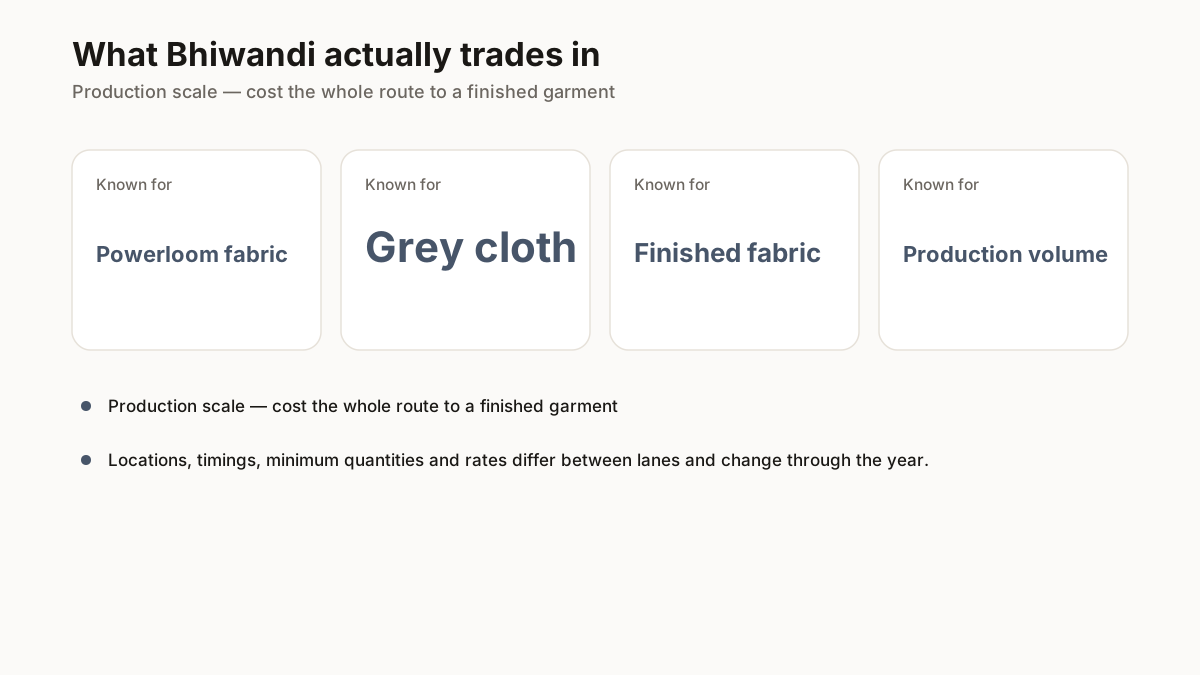
Bhiwandi is a powerloom centre — fabric produced at volume — and it is a production hub rather than a shopping market. That distinction decides whether the trip is worth making.
Who it suits is a buyer working in cloth: somebody getting garments stitched, or supplying others. Buying closer to production usually means better rates and more control over what the fabric is.
Who it does not suit is a reseller wanting to pick ready-made stock off a rack, and that is worth knowing before travelling.
Where do you sell? That decides what you buy
Because the output is fabric, the channel question comes later than it does elsewhere — after stitching, when you have a finished garment to sell.
What buying at this level does allow is a range nobody else has, which is worth more on Instagram and WhatsApp than on a marketplace where the comparison is price.
If the plan is a marketplace basics range, the advantage of production-level buying is cost rather than distinctiveness.
| Meesho | |||
|---|---|---|---|
| Buyer arrives | Searching and comparing on price | Discovering while scrolling | Already knows and trusts you |
| Marketplace commission | Yes — set by category | None | None |
| Return rate | Highest of the three | Middle | Lowest — she knows you |
| Listing rules | Strict QC, primary image must be clean | None | None |
| What sells | Everyday basics at sharp prices | Distinctive, photogenic, occasion wear | Mid to premium, and repeat orders |
| What it needs from you | Volume and price discipline | A look and consistent posting | An audience you already built |
Commission rates differ by category and change — read yours from the channel’s own rate card, and run it through the break-even calculator.
How do you get there and get around?
Bhiwandi is a short road journey from Mumbai and is an industrial area rather than a market district. Visits are to units, which makes an appointment worth far more than turning up.
Go on a weekday morning, and be clear on the phone about what you want and in what quantity before you travel.
First time? Take someone who knows fabric if you can. This is the hardest hub on the list to buy in without knowledge, because the goods are unfinished and the vocabulary is technical.
Transport is routine for fabric out of Bhiwandi. Ask the unit, get the docket, photograph it.
What happens on a first buying trip?
Minimums here are genuinely higher, because production-scale sourcing implies production-scale quantities. Traders holding finished cloth are the route for shorter lengths.
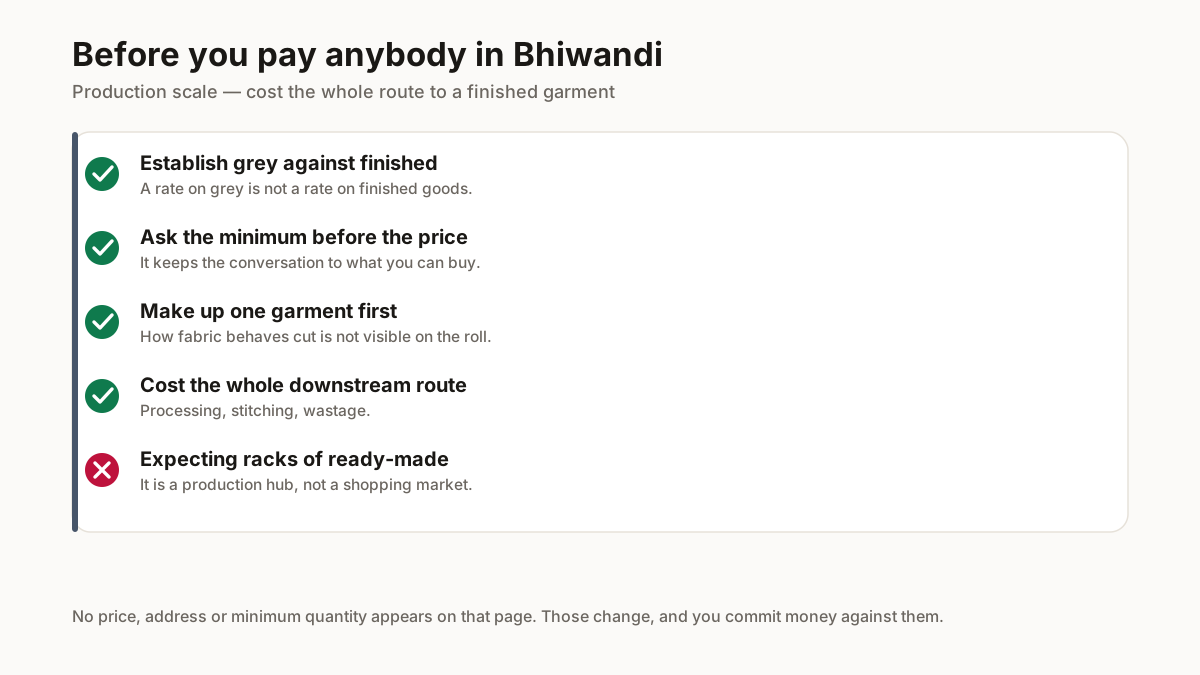
Compare 3 sources on the same specification — and be sure you are comparing grey against grey or finished against finished, because a rate on unprocessed cloth is not comparable to one on finished goods.
Ask the minimum before discussing price. It keeps the conversation to something you can actually buy.
Get a sample length and have 1 garment made before committing to anything larger.
How much do you actually have to buy?
This is the one hub on the list where the honest answer is that small may not be possible at a unit. The tiers start higher, and a line running production has a threshold below which it is not interested. Traders are the way in. They hold finished cloth and will cut shorter lengths, at a rate above the unit price but far below what a small buyer would pay elsewhere.
Who should you actually go and see?
The distinction that matters here is between units and traders, and it decides whether your trip is possible at all at the quantity you want. Search results surface the units, which are the ones least able to help a small buyer, so the useful preparation is finding a trader before you travel rather than after you arrive.
Bhiwandi supplier list
We are building a list of Bhiwandi traders who cut shorter lengths, as distinct from the units, because that distinction decides whether a small buyer can buy here at all. Every number on it comes from a supplier who asked to be listed.
Your number is used to send the list and nothing else.
What should you check before paying?
Wholesale generally has no returns, so once you have paid a bad piece is yours. On unfinished cloth there is an additional question: what state you are buying it in, because that determines what else you still have to pay for.
Grey against finished
Establish which you are being shown. Grey cloth is unprocessed and still needs dyeing or printing, which is a separate cost and often a separate supplier.
The width
It decides how many garments come from a length, and it is the number that makes two rates comparable. Ask for it every time.
Faults down the roll
Ask for a few metres to be run out. A weaving fault repeats, and finding it after cutting is the expensive way to discover it.
Whether the lot can be matched later
If you will need more of the same cloth, ask now. A second batch that differs visibly splits your range in two.
Take this checklist with you
Everything above is easy to remember at home and easy to forget in a crowded lane. Same list, printable, to carry in a bag.
Buying trip checklist — Bhiwandi
Print this and carry it. Tick as you go.
Before you leave
- ☐Confirmed the market is open today (call, do not assume)
- ☐Decided which market — they trade different goods
- ☐Cash split across two places, not one pocket
- ☐Notebook or phone notes ready — six suppliers blur into one
- ☐Someone with me, if this is the first trip
- ☐Plan for getting goods home before buying them
Which market for what
- ☐Powerloom units — grey and finished fabric
- ☐Processing houses — dyeing and printing
- ☐Fabric traders — finished cloth in shorter lengths
Ask at every shop
- ☐What is the rate at the quantity I can actually take?
- ☐Will this design be available again next month?
- ☐What happens if a piece arrives defective?
- ☐What is the smallest lot you will sell me?
Check before paying
- ☐An inside seam — loose threads, skipped stitches, puckering
- ☐Colour across 3 or 4 pieces, in daylight not tube light
- ☐Which sizes are actually in the lot, counted not stated
- ☐Compared the rate against 2 other shops in the same lane
Wholesale generally has no returns. The checks above are the only protection you get.
What margin will this stock leave you?
Buying at production level looks cheap per metre and stops looking cheap once processing, stitching and wastage are counted. The finished cost per garment is the only number worth comparing.
Same garment, three channels
Put your own numbers in. Nothing here is assumed — commission is set by category and changes, so read yours from the channel’s rate card. The return rates are starting points to overwrite with your own.
Return rate on each channel
Ad spend per order
Meesho
₹178
per order after returns · 25% margin
₹276 on a delivered order
commission + returns + ads
₹256
per order after returns · 37% margin
₹306 on a delivered order
no commission, ads to be found
WhatsAppMOST LEFT
₹300
per order after returns · 43% margin
₹321 on a delivered order
no commission, lowest returns
On these numbers the same piece leaves ₹123 more per order on WhatsApp than on the weakest channel — which is the argument for choosing the channel before choosing the stock. For the full picture including GST and a target margin, use the break-even calculator.
Why does listing the stock take longer than buying it?
The timeline here is the longest on this list, because nothing is finished when you buy it.
Processing if the cloth is grey, then 7 to 14 days stitching, then about 2 days to photograph and list 40 finished pieces. None of that appears on the per-metre rate.
Plan the photography for the day the garments are ready rather than a week after, since the whole advantage of buying at this level is cost and delay erodes it.
Then size and list every piece, measured on the stitched garment rather than on the pattern it was cut from, because those two numbers are rarely the same.
You have the stock. Now the listing.
After the trip
Cloth becomes a listing about three weeks after you buy it
Processing, stitching, then photographing and listing 40 finished pieces. The last step is the one you can compress: StitchMagic runs repair, four sizes and renaming in a single pass.
- Repairs and sharpens the photo
- Exports the 4 marketplace sizes from one upload
- Keeps the primary image clean, so QC does not bounce it
- Renames every file to its SKU
- Builds the WhatsApp PDF catalogue
Is it actually free?
Single photos are free. No signup, no watermark, no daily limit.
Do my photos get uploaded?
No. It runs in your browser — the files never leave your phone.
Is it a subscription?
No. The bulk pack is a one-off ₹99, and one photo counts once.
Works from a phone, so listing starts the day the garments arrive.
Where does Bhiwandi stock get listed?
Nothing lists itself. Fabric bought here still needs stitching, photographing and publishing before it earns anything on Meesho, Flipkart or Amazon.
Budget the whole route before committing: processing if needed, stitching, wastage, then 1 photography session for the finished range.
Check the listing rules before the shoot rather than after. All 3 reject primary images carrying text, logos or borders, and reshooting 40 finished garments is the expensive way to learn it.
Why are there no prices on this page?
Because a rate here means nothing without knowing whether the cloth is grey or finished, and what the width and composition are. The same figure covers wildly different goods. Ask for all of it together, and cost the whole route to a finished garment before comparing anybody.
Related free seller tools
Frequently Asked Questions
What does buying fabric here actually cost in time?
Processing if the cloth is grey, then 7 to 14 days stitching, then about 2 days to photograph and list 40 finished pieces. None of that appears on the per-metre rate.
Is Bhiwandi good for a small reseller?
Usually not. It is a powerloom production hub rather than a market of finished goods, so it suits buyers working in fabric at volume. A reseller wanting ready-made stock in small quantities is describing a different kind of market.
What is grey fabric?
Unprocessed woven cloth that still needs dyeing or printing. That is a separate cost and often a separate supplier, so a rate quoted on grey fabric is not comparable to one on finished goods.
No rate, minimum or processing cost appears here. Production-scale sourcing has several downstream costs — get each quoted before committing.