The four things it must do
Everything else is negotiable. These are not.
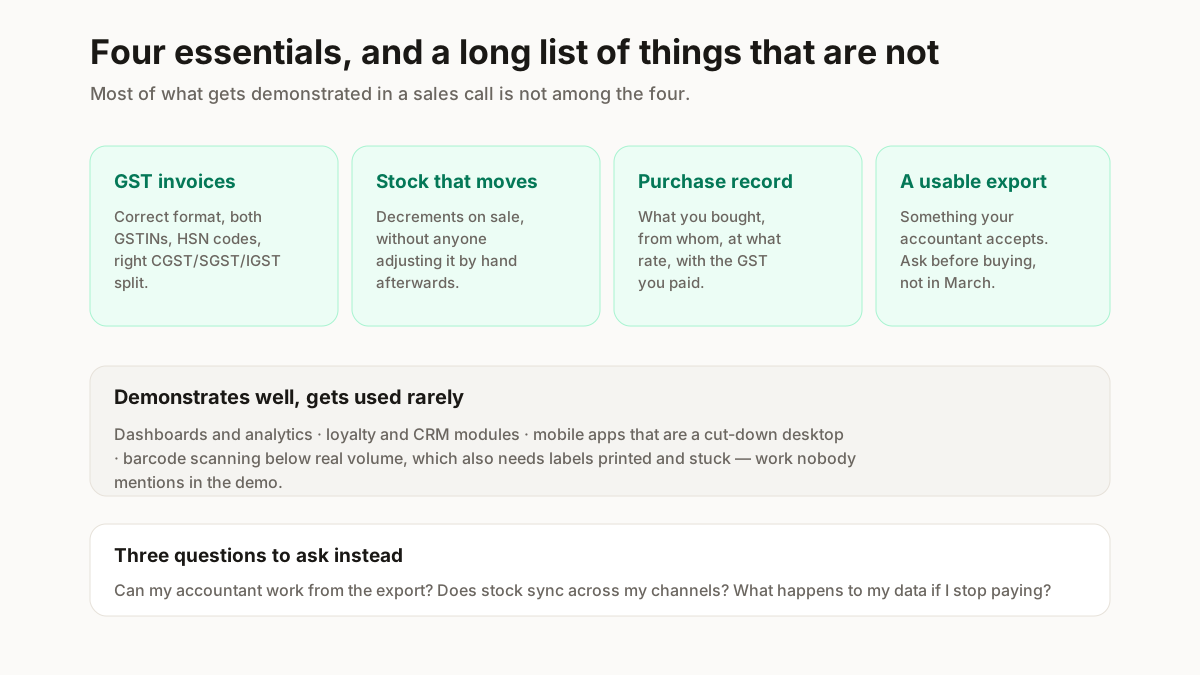
- GST-compliant invoices. Correct format, your GSTIN and the buyer’s, HSN codes, the right tax split between CGST/SGST and IGST depending on the state. Getting this wrong is a compliance problem rather than an inconvenience.
- Stock that decrements on sale. The whole point. If you are still adjusting stock by hand after billing, the software is a printer.
- A purchase record. What you bought, from whom, at what rate, with the GST you paid. Without it there is no input tax credit and no real margin figure.
- An export your accountant accepts. Ask before buying, not at year end. “We have reports” is not the same as “your accountant can work from this”, and the gap between those two is discovered in March.
And one to check if you invoice businesses
E-invoicing, if you are above the turnover threshold for it. The threshold has come down repeatedly, so check the current one — a shop that was exempt two years ago may not be now. The government portal at einvoice.gst.gov.in states the threshold in force, and gst.gov.in covers the rest. Both are free to read and neither is where your software vendor gets their answer from any faster than you can.
The problem actually worth buying to solve
If you sell on more than one channel, this is the one, and it is worth more than every other feature combined.
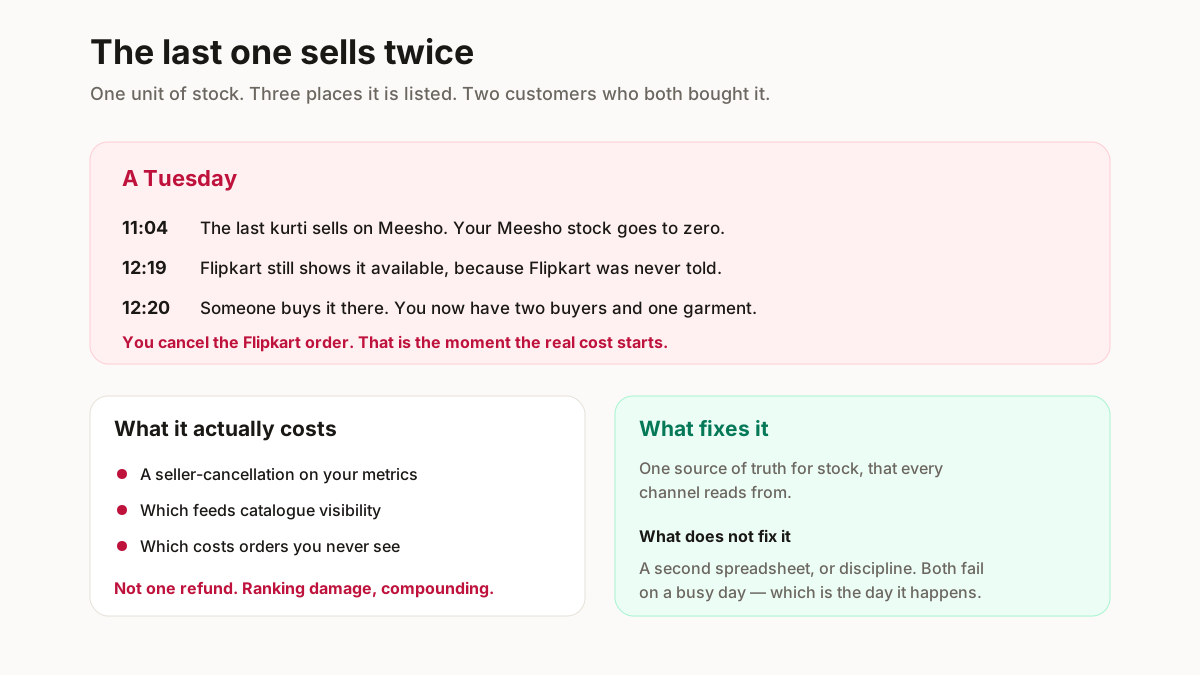
You have forty kurtis. They are listed on Meesho, on Flipkart, and in your shop. Someone buys the last one on Meesho at 11am. Flipkart still shows it available. Someone buys it there at noon.
Now you cancel a Flipkart order. That cancellation hits your seller metrics, which feed catalogue visibility, which costs you orders you never see. The cost is not the one refund — it is the ranking damage, and it compounds quietly.
What fixes it is one source of truth for stock that every channel reads from. That is the feature to evaluate software on if you are multi-channel, and it is worth paying for.
What does not fix it: a second spreadsheet, or discipline. Both fail on a busy day, which is exactly when the double-sale happens.
When a spreadsheet is still enough
Single channel, single location, under a few hundred SKUs. That describes a lot of shops and there is no shame in it.
A workbook with a purchase sheet, a sales sheet and a stock sheet that subtracts one from the other will run a small shop for years. It costs nothing, it never expires, and nobody has to be trained on it.
What it will not do is generate a compliant GST invoice reliably, and that is usually the actual trigger to move — not stock, but billing.
The honest sequence: start on a spreadsheet, move to billing software when GST invoicing becomes a chore, and only look at anything heavier when you are genuinely multi-channel. Skipping straight to the heaviest option is how shops end up paying for software they use ten per cent of.
What gets oversold in the demo
Worth knowing so you can steer the conversation to what you will actually use.
| Demonstrated hard | What you will actually use it for |
|---|---|
| Dashboards and analytics | Opened twice. You need one accurate stock number, not a chart of it |
| Loyalty and CRM | Rarely, if you already know your regulars by name |
| Barcode scanning | Genuinely useful at volume — but the labels still have to be printed and stuck |
| The mobile app | Usually a cut-down desktop. Check what it does before it becomes a reason to buy |
Dashboards and analytics. Demonstrate beautifully, get opened twice. What you need is one accurate stock number, not a chart of it.
Loyalty and CRM modules. Rarely used by a shop that already knows its regulars by name.
Barcode scanning. Genuinely useful at real volume, unnecessary below it — and it needs the labels printed and stuck, which is work nobody mentions in the demo. Our bulk barcode generator handles that half if you go this route.
Mobile apps. Usually a cut-down version of the desktop product. Check what it actually does before it becomes a reason to buy.
The questions to ask instead: can my accountant work from the export, does stock sync across my channels, and what happens to my data if I stop paying.