Photograph the drape, not the fold
The single biggest improvement available to most saree catalogues, and it costs nothing.
A saree folded in its packet is a rectangle of colour. Nobody can tell how it falls, how heavy it is, or what the border does when it moves. Drape it — over a mannequin, a hanger, a chair back, a door. Anything that lets the fabric hang.
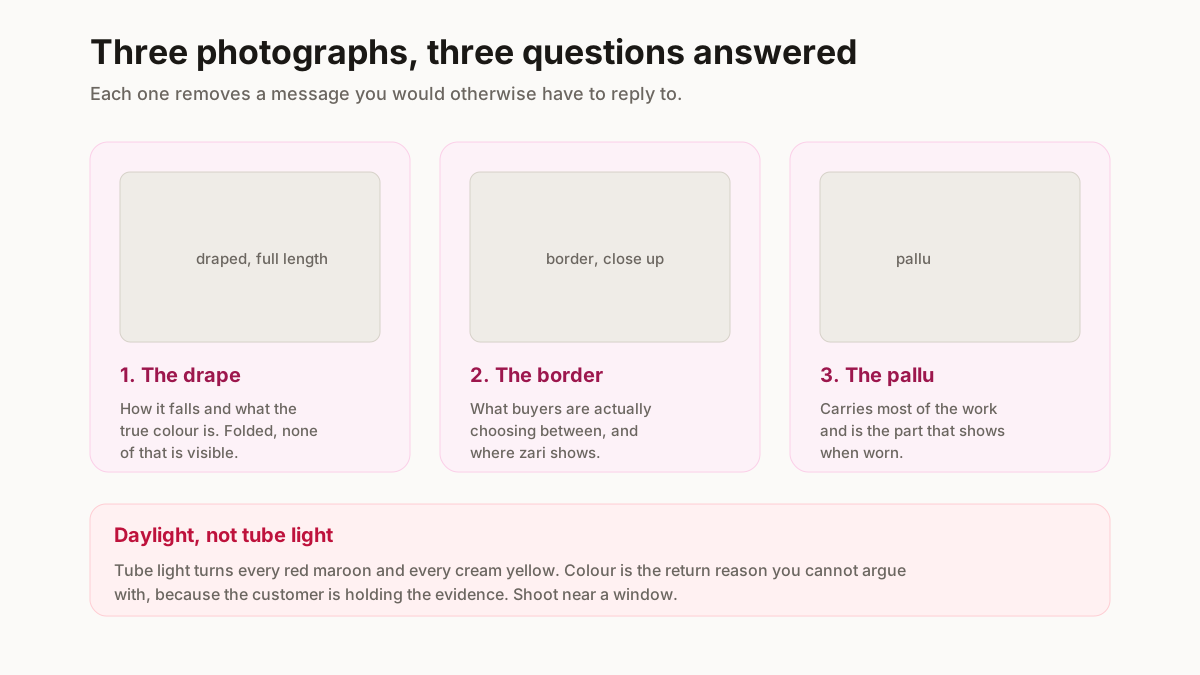
Three photos per saree is the working set:
One draped full-length, showing how it falls and the overall colour. One close-up of the border, because that is what a buyer is actually choosing between. One of the pallu, since it carries most of the work and is what shows when worn.
Shoot near a window in daylight, not under a tube light. Tube light turns every red maroon and every cream yellow, and colour complaints are the return reason you cannot argue with.
The five details every entry needs
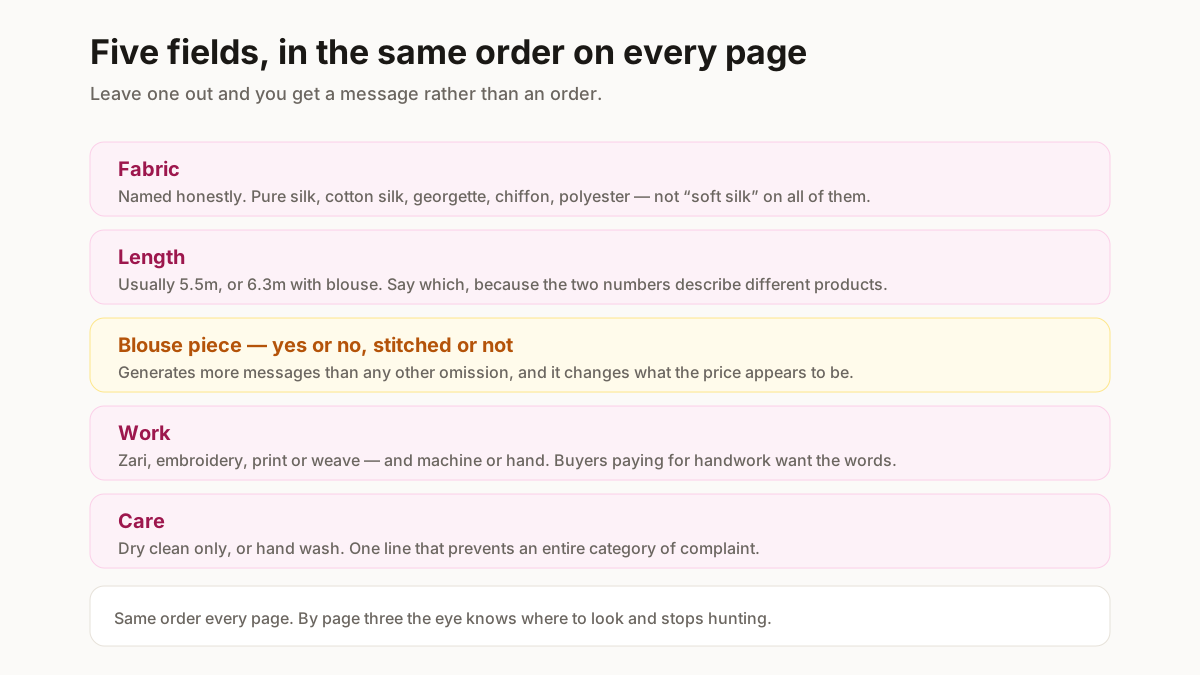
Leave any of these out and you get a message instead of an order.
- Fabric. Named honestly — see the next section. This is the first question.
- Length, and whether that includes the blouse piece. Sarees are usually 5.5m, or 6.3m with blouse.
- Blouse piece: yes or no, and whether stitched or unstitched. This generates more messages than any other omission, and it changes the perceived price.
- Work. Zari, embroidery, print, weave — and machine or hand, if hand. Buyers paying for handwork want to see the words.
- Care. Dry clean only, or hand wash. A one-line answer that prevents a category of complaint.
Put all five in a consistent order on every page so the eye learns where to look, exactly as in catalogue layout.
Describe fabric honestly
The saree trade has a vocabulary problem, and it costs sellers returns.
“Soft silk”, “art silk”, “silk blend” mostly mean polyester or viscose. Buyers know this. Using the phrase on an actual silk saree makes the real thing sound fake, and using it on polyester makes you sound evasive.
The better move is to say what it is: “pure silk”, “cotton silk”, “georgette”, “chiffon”, “polyester”. Polyester sarees sell perfectly well at polyester prices. What does not sell twice is a polyester saree sold as silk.
| Commonly written | What it usually is | Write this instead |
|---|---|---|
| Soft silk | Polyester or viscose | Polyester, or the actual blend |
| Art silk | Viscose | Art silk (viscose) |
| Silk blend | Mostly not silk | The blend, with the ratio if you know it |
| Pure silk | Sometimes genuinely is | Pure silk — and say so, it is worth more |
| Zari | Usually imitation | Imitation zari, or real zari |
Same with zari. Real zari and imitation zari are both legitimate; conflating them is not, and the difference is visible in the photo you already took of the border.
The commercial argument, not just the ethical one: a return costs you the shipping both ways, the packaging, and on a marketplace it costs you seller metrics that feed catalogue visibility. Honest description is the cheapest return-rate reduction available.
Organising a saree catalogue
Sarees are bought by occasion far more than by fabric, and catalogues are almost always organised the other way.
Group by occasion first — daily wear, office, festive, wedding — then by colour within each. That matches how someone shops and how she asks: “something for a wedding, under three thousand”.
Keep price bands together. A ₹12,000 saree next to a ₹800 one makes the first look overpriced and the second look cheap. Neither impression helps.
Split large ranges into separate catalogues by occasion and send the relevant one. Twenty to thirty sarees per file; past forty nobody scrolls.
Watermark before sending. Saree photographs get lifted more than any other category — they are attractive, and the same wholesale stock is listed by hundreds of resellers. A discreet mark in a corner using the watermark tool costs nothing and makes a lifted image trace back to you.