Who actually carries the parcel
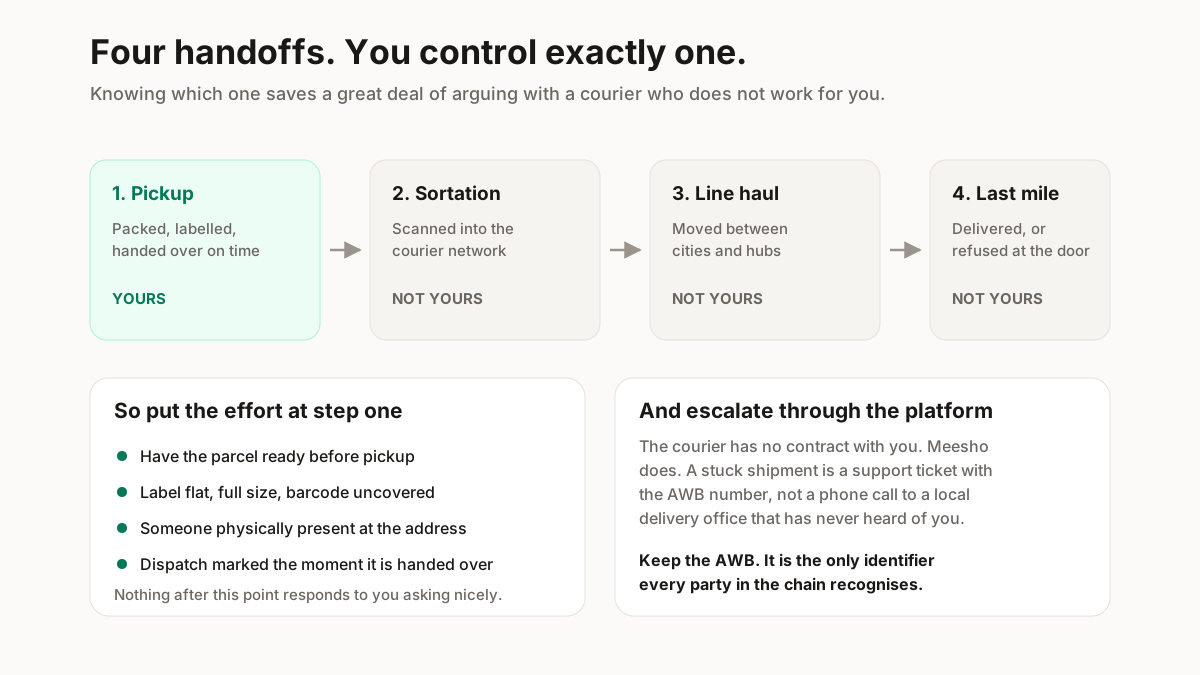
Meesho is a marketplace, not a logistics company. It contracts third-party couriers and assigns one per shipment based on the route, the pincode and current capacity.
Which means the supplier does not pick the courier, and cannot. A parcel to Chennai and a parcel to Guwahati posted the same morning may go with different carriers, and the same route may switch carriers between weeks.
| Stage | Who controls it | What you can do |
|---|---|---|
| Pickup | You | Everything — packed, labelled, someone present |
| Sortation | Courier | Nothing. Keep the handover record |
| Line haul | Courier | Nothing. Escalate in-panel with the AWB |
| Last mile | Courier and customer | Nothing directly. Accurate listings cut refusals |
The practical consequence is that comparing courier performance is not a lever available to you here. On your own channel it would be; on Meesho it is not, and time spent trying to influence it is time better spent on the pickup.
What that means when something goes wrong
A parcel stuck in transit is between Meesho and its courier, not between you and the courier. Raising it directly with the carrier usually goes nowhere, because your name is not on the contract. The route that works is the in-panel ticket, which is attached to the order.
Pickup: the part you control
One handoff in the chain is yours, and it is the one that generates most avoidable problems.
- Be ready before the window. The rider is running a route with dozens of stops and will not wait. A parcel that is not packed and labelled when they arrive is a failed pickup, and a failed pickup delays the order by at least a day.
- Be present. The pickup address in your panel needs someone there during working hours. A home address where the household is out all day generates repeated failed pickups, and repeated failures affect your supplier metrics rather than the courier’s.
- Label before the rider arrives, not during. Print the batch in the morning, crop it to thermal size, stick it, and stack the parcels by pickup. Doing it while a rider waits is how the wrong label ends up on the wrong bag — which becomes two wrong deliveries and two returns.
- Hand over against the manifest. Count what goes and keep the record. A parcel that never scanned at the first hub and has no handover record is a dispute you will lose.
Why pickups fail, and what it costs
In rough order of how often it happens.
Nobody at the address. By far the most common, and entirely within your control. If the registered pickup address is not staffed during the day, change it in the panel to one that is.
Parcel not ready. Marked ready to dispatch in the panel but not physically packed. The order clock is already running when you mark it.
Label missing or unreadable. A rider will not take a parcel they cannot scan. A label printed at “fit to page” rather than 100% is the usual reason it does not scan — the label cropper outputs at true size to remove that failure mode.
Address mismatch. The pickup address in the panel differs from where you actually are.
Each failure costs a day of the delivery promise, and delivery time feeds the metrics Meesho ranks catalogues on. It is a slow, compounding cost rather than a visible one, which is exactly why it gets ignored.