What goes in the parcel, and what goes on it
The distinction that costs suppliers money when they get it backwards.
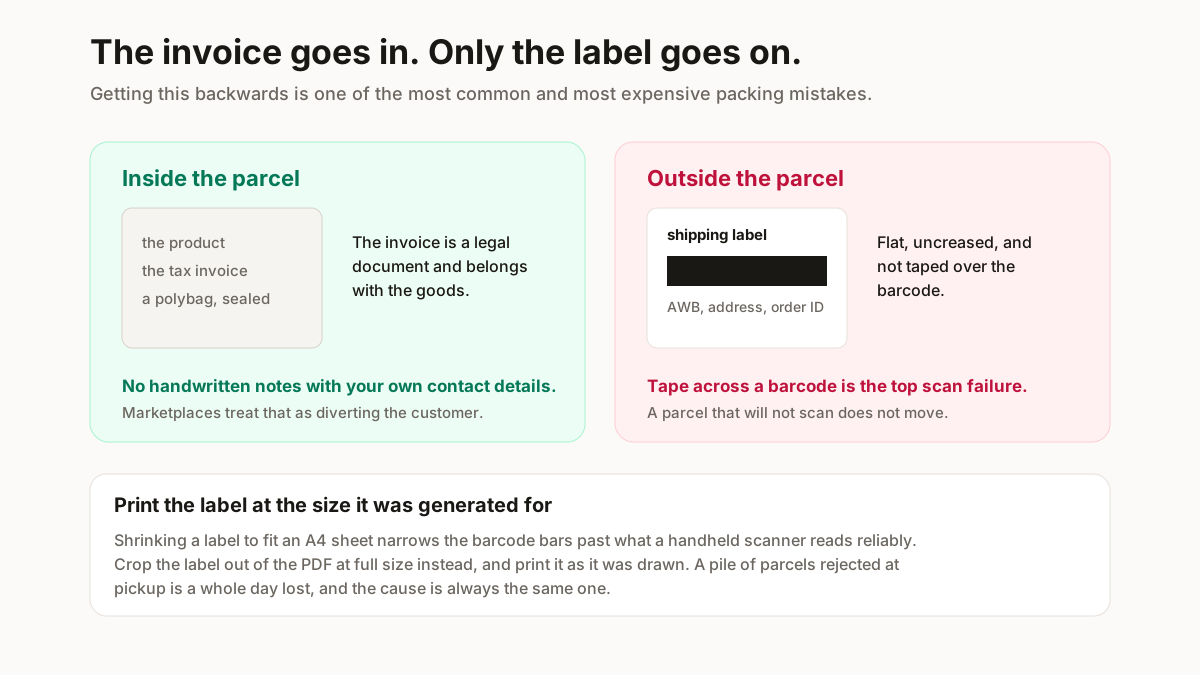
On the outside: the shipping label only. That is the AWB barcode, the delivery address and the routing code. Nothing else belongs there.
Inside: the tax invoice. Meesho generates it on the same PDF as the label, which is why so many suppliers tape the whole sheet to the bag. Do not. The invoice shows the order value, and a parcel advertising its value on the outside is a parcel more likely to disappear — particularly on a COD route where it travels through several hands.
The invoice is a GST document rather than a Meesho one — what has to appear on it is set by the tax rules, not the marketplace, and the current format is published at gst.gov.in.
Crop the sheet so only the label goes on the bag. The Meesho label cropper does it for a whole batch and prints at thermal size.
What not to put in
No marketing inserts pointing the customer to your own WhatsApp or Instagram. It is against marketplace terms on every platform, it is detectable, and the penalty is disproportionate to the handful of customers it wins. If you want direct customers, earn them somewhere the platform is not paying for the acquisition.
Packing so it survives the journey
A Meesho parcel is handled more than most — it is a low-ticket, high-volume network, and the sorting is fast.
- Use a proper courier bag, not a repurposed one. They are tamper-evident, waterproof enough for a monsoon van, and the adhesive strip is what stops a bag opening in a sorting belt. This is the cheapest insurance in the whole operation.
- Size the bag to the goods. A kurti in an oversized bag moves around, arrives creased, and — more expensively — is charged on volumetric weight rather than actual. A light garment in a big bag can cost more to ship than a heavy one packed tight.
- Wrap anything fragile separately before it goes in. The outer bag is not protection; it is a container.
- Do not overfill. A bag stretched to its seal is a bag that opens. If the flap will not fold cleanly over the adhesive, use the next size up.
Quality checks, and why parcels get flagged
Meesho runs quality checks on returned and sampled parcels, and a supplier with a pattern of failures gets restricted.
What fails, in rough order of frequency: the item does not match the listing photo, the size is not what the size chart said, the fabric is visibly different from the description, or the packaging arrived open.
Notice that three of the four are listing problems rather than packing problems. A parcel packed perfectly around a product that does not match its photograph still fails — which is why the size chart and honest photography do more for your quality metrics than any amount of bubble wrap.
The fourth, packaging arriving open, is almost always an overfilled bag or a reused one.
When the parcel comes back
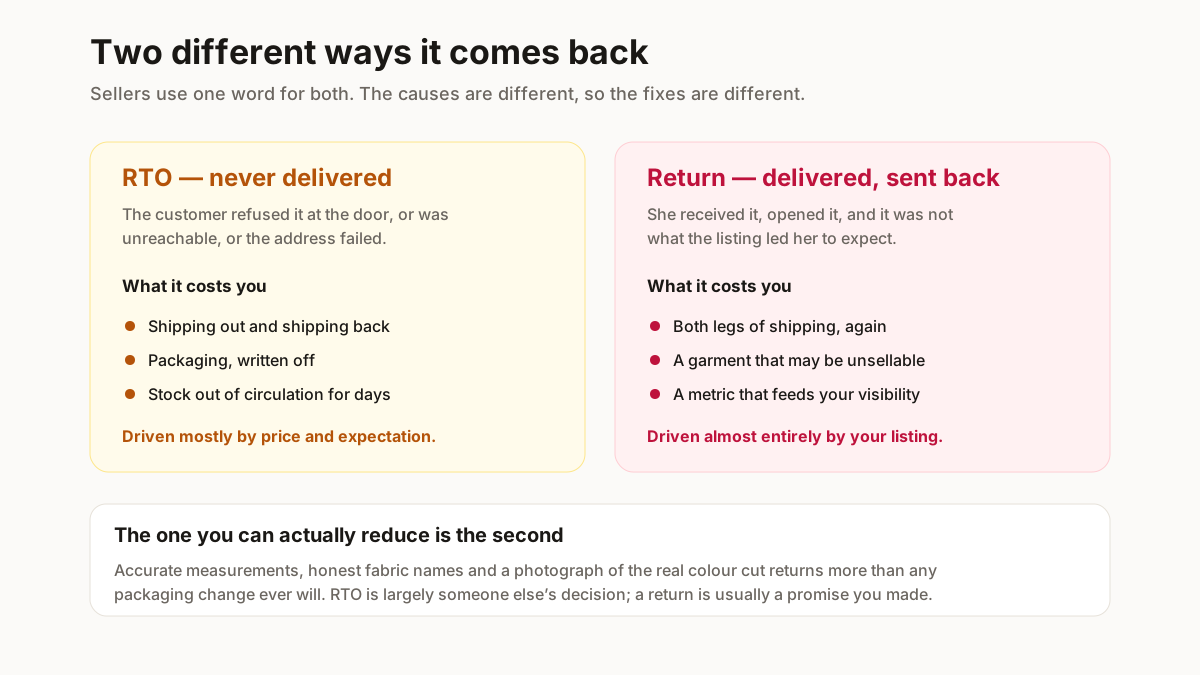
Two different events that suppliers often lump together, with different costs.
RTO — return to origin
The parcel never reached the customer. Refused at the door, address unreachable, or nobody available across the delivery attempts. You pay freight both ways and the goods come back sellable.
RTO is heavily concentrated in COD orders, and the largest single lever on it is an accurate listing — a customer who ordered on an optimistic photograph is the one who refuses at the door.
Customer return
The parcel was delivered and sent back. Reverse freight, plus a piece that has been opened, handled and needs checking before it can be resold. More expensive than RTO in practice, because some of what comes back is no longer sellable.
| RTO | Customer return | |
|---|---|---|
| Reached the customer | No | Yes |
| Freight you pay | Both legs | Both legs |
| Condition it comes back in | Sealed, resellable | Opened, needs checking |
| Concentrated in | COD orders | Apparel, size and colour |
| Biggest lever you hold | Listing accuracy | Listing accuracy |
Both are a cost of the channel rather than an exception. Model them properly — the calculator takes a return rate, and at 0% commission the return rate is the number that actually decides whether Meesho works for your product.