Which Mumbai market should you go to?
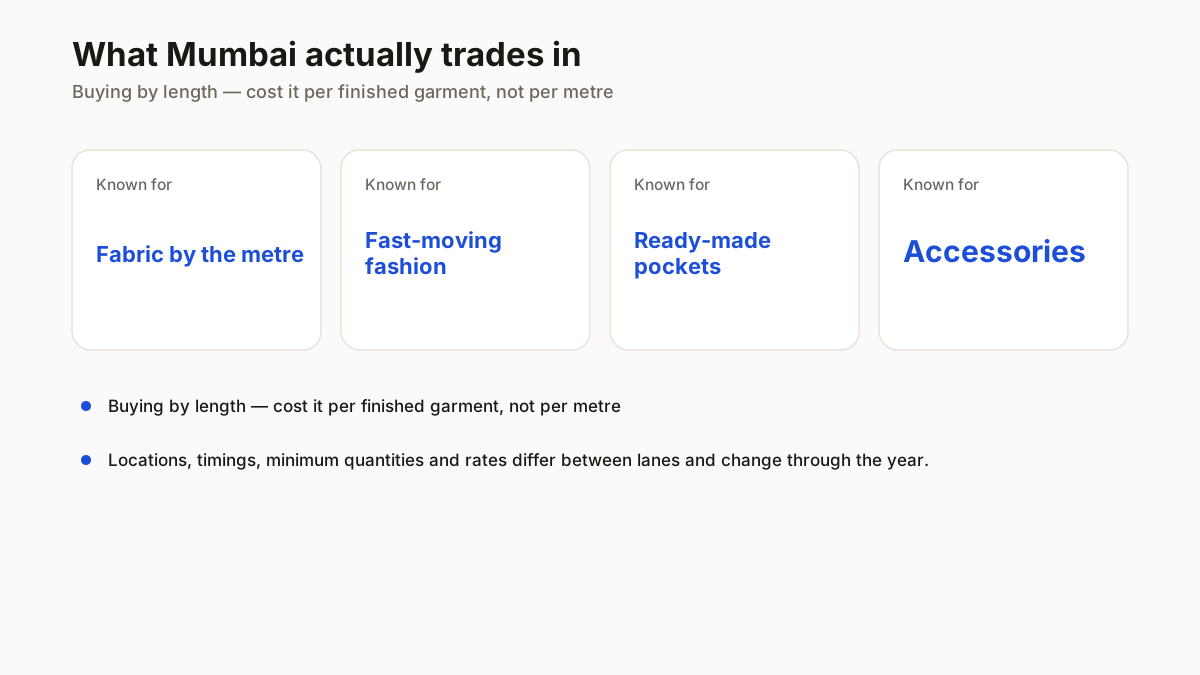
Mumbai is a fabric city more than a garment one, and that single fact decides whether the trip suits you. Mangaldas Market is the best-known wholesale concentration, and it sells cloth by the metre rather than finished pieces.
So the buyer this city rewards is the one who gets things stitched. A straight reseller looking to pick ready-made stock off a rack will find options, but she is not using what Mumbai is best at.
The second thing the city offers is speed. Proximity to the fashion and film trades means new looks appear here early, and a seller who can photograph and publish quickly can be selling a style while it is still current.
Where do you sell? That decides what you buy
Trend-led stock behaves very differently by channel. Instagram rewards it most, because discovery is the whole mechanic there and a look that feels current gets shared.
Meesho rewards it least. By the time a trend is searchable it is widely available, and you are competing on price against people who bought earlier and cheaper.
WhatsApp sits between: your own customers will buy a new look on your recommendation without comparing, which is worth more on a trend piece than on a basic.
| Meesho | |||
|---|---|---|---|
| Buyer arrives | Searching and comparing on price | Discovering while scrolling | Already knows and trusts you |
| Marketplace commission | Yes — set by category | None | None |
| Return rate | Highest of the three | Middle | Lowest — she knows you |
| Listing rules | Strict QC, primary image must be clean | None | None |
| What sells | Everyday basics at sharp prices | Distinctive, photogenic, occasion wear | Mid to premium, and repeat orders |
| What it needs from you | Volume and price discipline | A look and consistent posting | An audience you already built |
Commission rates differ by category and change — read yours from the channel’s own rate card, and run it through the break-even calculator.
How do you get there and get around?
The local train is how Mumbai moves and how you should. The wholesale areas sit near stations, and travelling between them by road in the middle of a working day will cost you hours you needed for buying.
Go early and go on a weekday. These are working trade areas rather than shopping districts, and the useful hours are the morning ones.
First time? Bring someone if you can, keep cash split across 2 places, and accept that the first visit is for learning the geography. The areas are crowded and busy rather than unsafe, and knowing where things are makes the second trip twice as productive.
For getting goods home, ask the shop before you settle the price. Mumbai ships everywhere daily and most dealers have an agent; take the docket and photograph it before you leave the shop.
What happens on a first buying trip?
Small quantities are workable, particularly in fabric. Cloth is sold by length, so buying 10 metres instead of 100 is a normal transaction rather than an awkward request. That makes Mumbai one of the easier hubs to start small in.
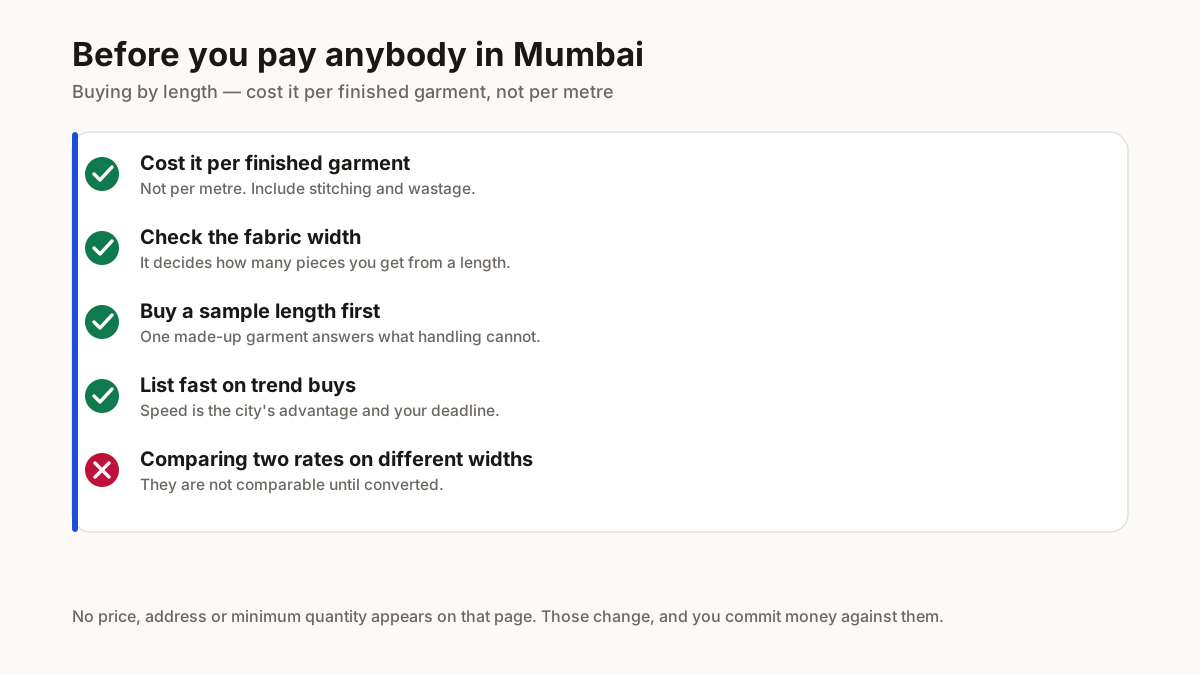
Compare 3 shops before buying, and compare on cost per finished garment rather than per metre. Two quotes on different widths are not comparable until you convert them, which is the mistake that costs new buyers most here.
Buy a sample length before a bulk one when the fabric is new to you. How cloth behaves once cut and stitched is not fully visible on the roll, and 1 made-up garment answers what an hour of handling will not.
Ask what happens if the lot has a flaw running through it. On fabric that matters more than on finished goods, because a fault repeats down the whole length.
How much do you actually have to buy?
Fabric is the friendliest category on this list for buying small, because length is divisible in a way finished pieces are not. Most dealers will cut a shorter length, and the rate improves as the length grows rather than jumping at a threshold.
What to watch is the total: a rate per metre that looks excellent can produce a finished garment costing more than a ready-made equivalent once cutting, stitching and wastage are counted. Do that arithmetic before committing.
Who should you actually go and see?
Mumbai's wholesale trade is spread across areas that each do something different, and knowing which dealer handles which kind of cloth is knowledge that comes from having been.
Search results favour the largest names, which are not usually the ones cutting 10 metres for a new seller.
Mumbai supplier list
We are building a list of Mumbai dealers by what they actually cut and who they will cut short lengths for — which no search result distinguishes. Every number on it comes from a supplier who asked to be listed.
Your number is used to send the list and nothing else.
What should you check before paying?
Wholesale generally has no returns, so once you have paid a bad piece is yours. On fabric a flaw can run the length of the roll, which makes inspection before payment more important here than in ready-made trades.
The width, written down
It decides how many garments you get from a length, and it is the number people forget to ask. Two rates on two widths are not comparable until you convert both to a cost per finished piece.
Flaws down the length
Ask the dealer to run out a few metres rather than judging from the visible end. A weaving fault or a printing skip repeats, and finding it after cutting is expensive.
Shrinkage before stitching
Ask whether the cloth is pre-shrunk. Garments cut from unshrunk fabric change size in the first wash, and a size chart built on them is wrong for every customer.
Colour across the roll
Dye lots vary. If you need more of the same cloth later, ask now whether the lot can be matched, because a second batch that is visibly different splits your range in two.
Take this checklist with you
Everything above is easy to remember at home and easy to forget in a crowded lane. Same list, printable, to carry in a bag.
Buying trip checklist — Mumbai
Print this and carry it. Tick as you go.
Before you leave
- ☐Confirmed the market is open today (call, do not assume)
- ☐Decided which market — they trade different goods
- ☐Cash split across two places, not one pocket
- ☐Notebook or phone notes ready — six suppliers blur into one
- ☐Someone with me, if this is the first trip
- ☐Plan for getting goods home before buying them
Which market for what
- ☐Mangaldas Market — fabric by the metre
- ☐Dadar and surrounding — ready-made and accessories
- ☐Crawford area — general goods and trims
Ask at every shop
- ☐What is the rate at the quantity I can actually take?
- ☐Will this design be available again next month?
- ☐What happens if a piece arrives defective?
- ☐What is the smallest lot you will sell me?
Check before paying
- ☐An inside seam — loose threads, skipped stitches, puckering
- ☐Colour across 3 or 4 pieces, in daylight not tube light
- ☐Which sizes are actually in the lot, counted not stated
- ☐Compared the rate against 2 other shops in the same lane
Wholesale generally has no returns. The checks above are the only protection you get.
What margin will this stock leave you?
Fabric margins hide their costs downstream. The wholesale rate is only the first of four numbers — cloth, stitching, wastage and the trims — and the finished cost is what your price has to cover.
Same garment, three channels
Put your own numbers in. Nothing here is assumed — commission is set by category and changes, so read yours from the channel’s rate card. The return rates are starting points to overwrite with your own.
Return rate on each channel
Ad spend per order
Meesho
₹178
per order after returns · 25% margin
₹276 on a delivered order
commission + returns + ads
₹256
per order after returns · 37% margin
₹306 on a delivered order
no commission, ads to be found
WhatsAppMOST LEFT
₹300
per order after returns · 43% margin
₹321 on a delivered order
no commission, lowest returns
On these numbers the same piece leaves ₹123 more per order on WhatsApp than on the weakest channel — which is the argument for choosing the channel before choosing the stock. For the full picture including GST and a target margin, use the break-even calculator.
Why does listing the stock take longer than buying it?
Stitching is the step that lengthens everything. Cloth bought today becomes garments in 7 to 14 days, which is before the photography has even started.
Plan the shoot for the day the garments arrive rather than a week later, because a trend buy that takes 3 weeks to reach a listing is a trend buy you will discount.
Photograph the finished garment on a form or a hanger. Fabric photographed flat tells a buyer almost nothing about how the piece will sit, which is the whole reason she is looking.
Then budget 2 days for listings and size charts, measured on the stitched garment rather than the pattern.
You have the stock. Now the listing.
After the trip
A stitched range still needs photographing before it earns
The tailoring took a fortnight and the listing work has not started. StitchMagic runs the finished range through repair, four marketplace sizes, renaming and the WhatsApp catalogue in one pass.
- Repairs and sharpens the photo
- Exports the 4 marketplace sizes from one upload
- Keeps the primary image clean, so QC does not bounce it
- Renames every file to its SKU
- Builds the WhatsApp PDF catalogue
Is it actually free?
Single photos are free. No signup, no watermark, no daily limit.
Do my photos get uploaded?
No. It runs in your browser — the files never leave your phone.
Is it a subscription?
No. The bulk pack is a one-off ₹99, and one photo counts once.
Runs in a phone browser, so the shoot and the listing happen the same evening.
Where does Mumbai stock get listed?
Stitched-to-order ranges suit Instagram and WhatsApp, where a buyer will wait a few days for something she cannot get elsewhere. Marketplace buyers want it dispatched now.
If you list on Meesho, Flipkart or Amazon, keep stock ready rather than made to order, because the dispatch clock starts at the order and does not care that your tailor is busy.
All 3 reject primary images carrying text, logos or borders, whatever the garment cost you to make.
Why are there no prices on this page?
Because a per-metre rate without the width, the composition and the finish attached is not information. The same number means different things on 44-inch and 58-inch cloth.
Ask for all of it together and compare suppliers on the set, not the headline figure.
Related free seller tools
Frequently Asked Questions
How long does fabric take to become a live listing?
Between 10 and 17 days in practice: 7 to 14 days stitching, 1 day photographing and about 2 days listing. That is why a 3 week trend window closes before an unplanned seller reaches it.
What is Mangaldas Market known for?
Fabric. Mumbai’s best-known wholesale concentration is in cloth rather than finished garments, which suits a seller who gets things stitched more than a straight reseller.
How do I compare two fabric rates?
Convert both to a cost per finished garment, not per metre. Width determines how many pieces you get from a length, so two quotes on different widths are not comparable until stitching and wastage are included.
No per-metre rate or stitching cost appears here. Both differ by supplier and by fabric, so cost your own finished garment before ordering.