Which Tirupur market should you go to?
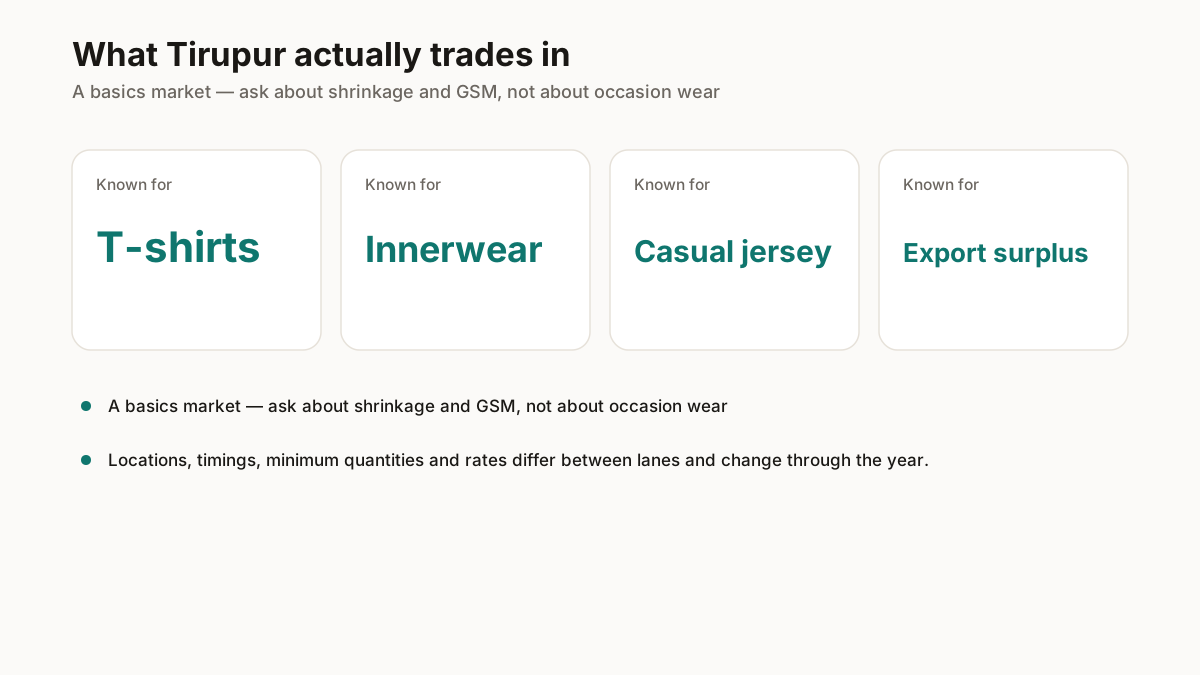
Tirupur is a cotton knitwear town, and knitwear is a different trade from anything woven. T-shirts, innerwear and casual jersey, a large share of it produced to export standards.
What that means for a reseller is consistency. Because so much output is built for export buyers, quality across a run holds up better than in trades where every piece passes through a different small unit, and 40 t-shirts in genuinely the same shade photograph as one product rather than as a jumble.
The limit is just as clear. This is a basics market. A seller whose customers want occasion wear will find the range thin no matter how long she looks, and should be somewhere else.
Where do you sell? That decides what you buy
Basics behave differently across channels than ethnic wear does. On Meesho they compete almost purely on price, which suits Tirupur rates and leaves little room once commission and returns are out.
Instagram is a harder sell for a plain t-shirt, because there is not much to photograph. What works there is a range with a point of view — a colour story, a fit, a print — rather than the same tee in eight shades.
WhatsApp is where basics quietly do best. Repeat orders are natural in this category: a customer who liked the fit buys three more, and there is no commission on any of them.
| Meesho | |||
|---|---|---|---|
| Buyer arrives | Searching and comparing on price | Discovering while scrolling | Already knows and trusts you |
| Marketplace commission | Yes — set by category | None | None |
| Return rate | Highest of the three | Middle | Lowest — she knows you |
| Listing rules | Strict QC, primary image must be clean | None | None |
| What sells | Everyday basics at sharp prices | Distinctive, photogenic, occasion wear | Mid to premium, and repeat orders |
| What it needs from you | Volume and price discipline | A look and consistent posting | An audience you already built |
Commission rates differ by category and change — read yours from the channel’s own rate card, and run it through the break-even calculator.
How do you get there and get around?
Tirupur is reachable by train and road from Coimbatore, and most buyers arrive for a day or two rather than a morning. It is a working industrial town, not a shopping district, which shapes the visit: you visit units and dealers instead of walking a bazaar.
That makes appointments worth more here than elsewhere. Turning up unannounced at a production unit achieves less than a call first, and a supplier expecting you will have samples ready instead of sending someone to find them.
First time? Go on a weekday morning, and be clear on the phone beforehand about the quantity you want, so nobody's time is wasted. Keep cash split, and bring someone if you can.
Transport out of Tirupur is routine because the town ships nationally every day. Ask the supplier which agent they use, get the docket, and photograph it before you leave.
What happens on a first buying trip?
Small quantities are possible here, but say so upfront. This is a production town where volume is assumed, so a buyer who arrives without stating her quantity gets quoted for a lot she cannot take. Saying "I want 2 dozen" at the start saves everybody the second conversation.
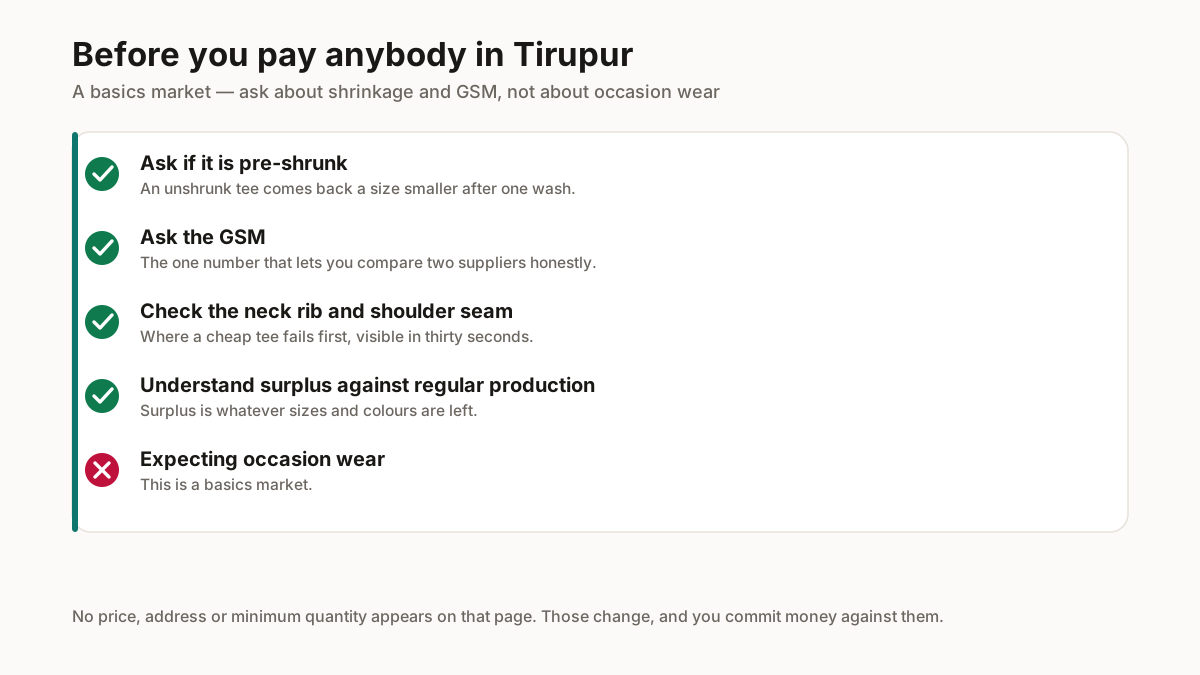
Compare 3 suppliers on the same specification. Never on price alone — on GSM, on whether the fabric is pre-shrunk, and on the neck rib. Two quotes on different specifications are not comparable, and that is the trap in knitwear.
Treat the first visit as learning what you are buying. Knitwear has a vocabulary and a supplier will use it; understanding GSM and shrinkage before you negotiate beats any bargaining technique.
Ask what happens with defects. Some units will replace, most will not, and knowing which before you pay is the difference between a bad lot and a bad month.
How much do you actually have to buy?
Minimums are genuinely higher here than in a general wholesale market, because this is a production town and not a trading one. That is the honest position: a dozen pieces is possible with many dealers, and a unit running a line may have no interest below a certain quantity.
Export surplus is the way around it. Dealers holding leftover sizes and colours will sell small, and the value is excellent, but you take whatever is left and that makes a repeatable listing hard to build.
Who should you actually go and see?
Tirupur splits between production units and surplus dealers, and they suit different buyers entirely. A reseller taking a dozen pieces needs the second; a shop having its own range made needs the first.
Nothing public tells you which is which, and the biggest search results are the exporters least likely to deal with a small seller.
Tirupur supplier list
We are building a list of Tirupur dealers and units, separated by which will actually sell small — the distinction search results never make. Every number on it comes from a supplier who asked to be listed.
Your number is used to send the list and nothing else.
What should you check before paying?
Assume no returns. Once the lot is paid for it is yours, and knitwear hides its faults better than woven cloth — which makes these checks worth the four minutes they take.
Shrinkage
The check that matters most, since it generates returns weeks after the sale. Ask whether the fabric is pre-shrunk or compacted. An unshrunk cotton tee comes back 1 size smaller after 1 wash, and that complaint cannot be argued with.
GSM, asked as a number
The weight of the knitted fabric, and the most useful single figure in this trade. A lighter fabric feels thinner and wears out sooner; a heavier one costs more and sells better in cooler months. Knowing the number lets you compare 2 suppliers honestly instead of by feel.
The neck rib and the shoulder seam
The 2 places a cheap tee fails first, and both are visible in 30 seconds. Stretch the neck gently and watch whether it returns to shape; look at whether the shoulder seam sits straight or twists.
Which sizes are actually in the lot
Count them; do not accept a stated range. A lot sold as covering 6 sizes that is mostly M and L leaves you out of stock in your best sellers within days, which hurts ranking on every marketplace.
Take this checklist with you
Everything above is easy to remember at home and easy to forget in a crowded lane. Same list, printable, to carry in a bag.
Buying trip checklist — Tirupur
Print this and carry it. Tick as you go.
Before you leave
- ☐Confirmed the market is open today (call, do not assume)
- ☐Decided which market — they trade different goods
- ☐Cash split across two places, not one pocket
- ☐Notebook or phone notes ready — six suppliers blur into one
- ☐Someone with me, if this is the first trip
- ☐Plan for getting goods home before buying them
Which market for what
- ☐Knitwear units — t-shirts, innerwear, casual jersey
- ☐Export surplus dealers — leftover sizes and colours at value
- ☐Fabric and processing — if you are getting garments made
Ask at every shop
- ☐What is the rate at the quantity I can actually take?
- ☐Will this design be available again next month?
- ☐What happens if a piece arrives defective?
- ☐What is the smallest lot you will sell me?
Check before paying
- ☐An inside seam — loose threads, skipped stitches, puckering
- ☐Colour across 3 or 4 pieces, in daylight not tube light
- ☐Which sizes are actually in the lot, counted not stated
- ☐Compared the rate against 2 other shops in the same lane
Wholesale generally has no returns. The checks above are the only protection you get.
What margin will this stock leave you?
Basics are a thin-margin category by nature, so the arithmetic matters more here than anywhere else on this list. A rupee of avoidable cost on a t-shirt eats a far larger share of the profit than the same rupee on a lehenga.
Same garment, three channels
Put your own numbers in. Nothing here is assumed — commission is set by category and changes, so read yours from the channel’s rate card. The return rates are starting points to overwrite with your own.
Return rate on each channel
Ad spend per order
Meesho
₹178
per order after returns · 25% margin
₹276 on a delivered order
commission + returns + ads
₹256
per order after returns · 37% margin
₹306 on a delivered order
no commission, ads to be found
WhatsAppMOST LEFT
₹300
per order after returns · 43% margin
₹321 on a delivered order
no commission, lowest returns
On these numbers the same piece leaves ₹123 more per order on WhatsApp than on the weakest channel — which is the argument for choosing the channel before choosing the stock. For the full picture including GST and a target margin, use the break-even calculator.
Why does listing the stock take longer than buying it?
Knitwear photographs quickly and describes slowly, because the size chart does most of the selling.
Plan 2 or 3 images per style instead of 4, since a t-shirt has fewer angles worth showing. What it needs is a chart covering every size you stock, in inches, measured after washing and not off the shelf.
A range of 10 styles across 6 sizes is 60 variants to list, and that is where the real time goes, not the photography.
Budget 1 day shooting and 2 days on listings and charts. Getting the chart wrong costs more than getting a photograph wrong, since a fit return costs 2 freight legs and a weak photograph only costs a scroll.
You have the stock. Now the listing.
After the trip
10 styles across 6 sizes is 60 variants to list
That is where a knitwear range actually costs you time — not the photography, which is quick, but the listings and the size charts behind them. StitchMagic handles the image half in one run.
- Repairs and sharpens the photo
- Exports the 4 marketplace sizes from one upload
- Keeps the primary image clean, so QC does not bounce it
- Renames every file to its SKU
- Builds the WhatsApp PDF catalogue
Is it actually free?
Single photos are free. No signup, no watermark, no daily limit.
Do my photos get uploaded?
No. It runs in your browser — the files never leave your phone.
Is it a subscription?
No. The bulk pack is a one-off ₹99, and one photo counts once.
Works on a phone, and the files never leave it.
Where does Tirupur stock get listed?
Meesho, Flipkart and Amazon all move basics steadily, and t-shirts are one of the few apparel categories where a men's range sells as reliably as a women's.
Size charts matter more than in ethnic wear, because a t-shirt either fits or comes back. State chest and length in inches and measure the garment after washing.
All 3 reject primary images carrying text or logos, which catches knitwear sellers who want to show a brand tag. Put that in a secondary image instead.
Why are there no prices on this page?
A knitwear rate means nothing without its specification. The same t-shirt at two GSMs is two different products at two different prices, and a figure quoted here without the spec attached would mislead more than help.
Ask the supplier for both together — the rate and the GSM — and compare suppliers on the pair. It is the only comparison that means anything in this trade.
Related free seller tools
Frequently Asked Questions
What sizes should a t-shirt listing cover?
Usually 5 or 6 sizes, with chest and length given in inches and measured after washing rather than off the shelf. A chart built on unwashed cotton will be wrong within 30 days of your first orders.
What is Tirupur famous for?
Cotton knitwear — t-shirts, innerwear and casual jersey, a large share of it produced to export standards. It is a basics market rather than an occasion-wear one.
What is GSM in t-shirts?
The weight of the knitted fabric. A lower figure feels thinner and wears out sooner; a higher one costs more and suits cooler months. It is the most useful single number for comparing two suppliers honestly rather than by feel.
Is export surplus worth buying?
It can be excellent value, but you take whatever sizes and colours are left. That makes it hard to build a repeatable listing, so it suits a seller testing demand more than one scaling a proven style.
No price, GSM figure or minimum order appears here. Ask the supplier for the actual numbers and hold them to what they say.