What decides which Delhivery slab your parcel falls in?
Slab boundaries are where the money is on this network, and a 502 grams parcel is billed at the same slab as a 1,000 grams one. So the weight figure matters before the rate does.
Delhivery bills on the greater of two measurements, as every Indian carrier does: what the parcel weighs, and what its dimensions imply at length × width × height in centimetres divided by 5000, read as kilograms. Enter the packed, taped box below, not the garment, because that is what gets measured at the hub.
Delhivery charge calculator
Couriers bill on chargeable weight — the greater of what the parcel weighs and what its size implies. Enter both and the calculator shows which one you are being billed on.
Actual weight
500 g
Volumetric weight
1200 g
Billed on
1200 g
This parcel is billed on its size, not its weight. Packing it smaller and flatter is the cheapest way to cut the bill — nothing about the goods has to change.
Delhivery rate slabs are not loaded yet
The chargeable-weight figure above is correct and is the same for every courier in India. The rupee amount is not shown because we will not publish a rate we have not verified against a current rate card — you would price shipping against it. Check your own Delhivery rate card, or work the margin out with the break-even calculator.
Sitting a few grams above a boundary is common and expensive. Shaving 30 grams off the pack is sometimes worth more than a rate negotiation, and it is entirely in your hands.
The rate itself is not. Delhivery is built around e-commerce, not around counters — most of its volume comes from sellers and marketplaces, its network is optimised for pickup-to-doorstep flows, and its retail walk-in presence is thin next to DTDC’s. That shapes both how you reach it and how it prices.
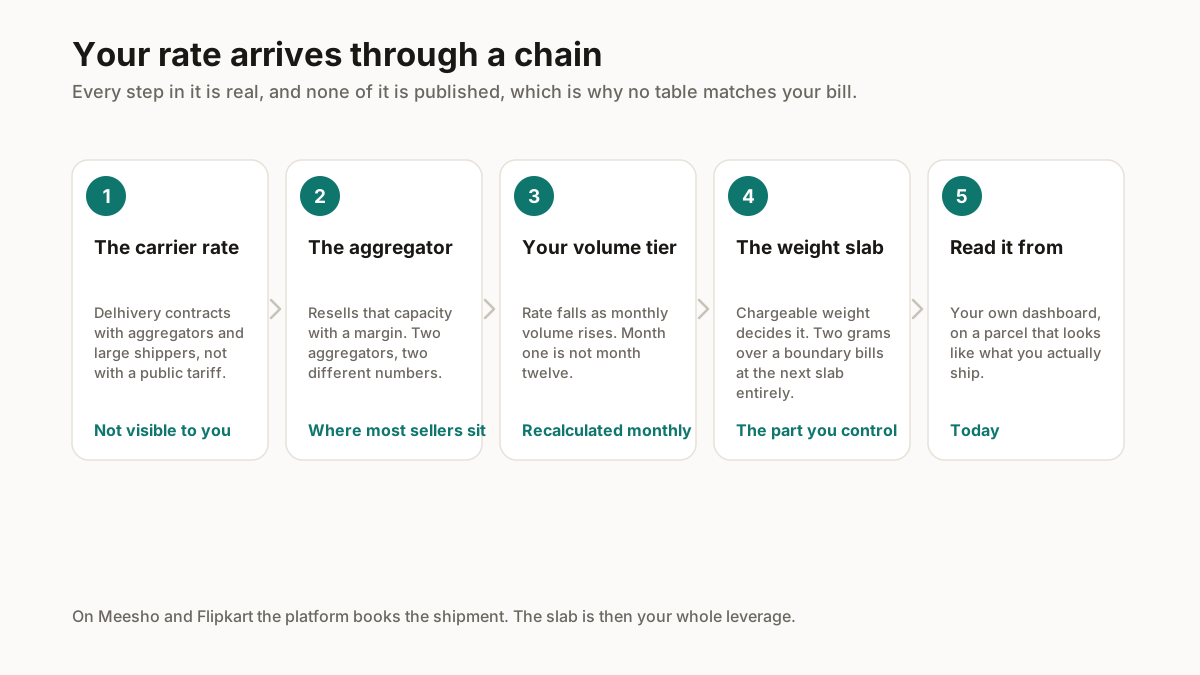
Small sellers usually reach it through an aggregator: a shipping platform holding contracts with several carriers and reselling the capacity. Your rate is then that platform’s negotiated rate with a margin, tiered by how much you ship through them. Two sellers on two aggregators shipping one box to one pincode on one day pay different amounts, and both figures are real Delhivery rates.
An e-commerce focus buys something else worth having. Reverse pickup is a first-class part of the network rather than an afterthought, which matters greatly in apparel, where returns are a running cost, not an exception.
Which sellers does a pickup network suit?
Daily shippers who prefer a scheduled pickup to a walk to the counter. Past roughly 10 orders a day, counter trips stop being a rounding error on your time, and a pickup is worth more than a small per-parcel saving.
Categories that return, second. Apparel bought online comes back at rates that would alarm most trades, and a network handling reverse pickup cleanly saves you the return freight and the much larger cost of a return that goes missing between the buyer and your shelf.
Growing volume, third, because tiering works in your favour as you scale in a way a published tariff never does. The rate quoted in month 1 is not the rate you pay in month 12 if the volume holds.
Genuinely low volume is the poor fit — at 3 orders a day you sit at the bottom of every tier and would often do better at a post office counter. Addresses clustered in thinly served pincodes are the other, where an out-of-delivery-area charge turns a good base rate into a poor delivered one.
How do you find your own Delhivery rate?
Open the dashboard you book through. Enter the packed parcel’s dimensions and weight and the destination pincode, and read what it returns. That figure already carries your tier, and no external source can reproduce it.
Use a parcel representative of what you ship, not a round 500 grams, for the slab-boundary reason above. A test on a number you never send tells you nothing useful.
Selling on Meesho or Flipkart removes the question. The marketplace books the shipment and the rate comes from the platform’s own arrangement, leaving the weight slab as the only variable in your control — which the calculator above gives you, and which is all you hold there.
Delhivery rate slabs
Not published here yet. Rate cards change and differ by contract, so a table assembled from memory would be wrong for most readers within a quarter. Read yours from your Delhivery account or aggregator dashboard.
What does RTO cost beyond the return freight?
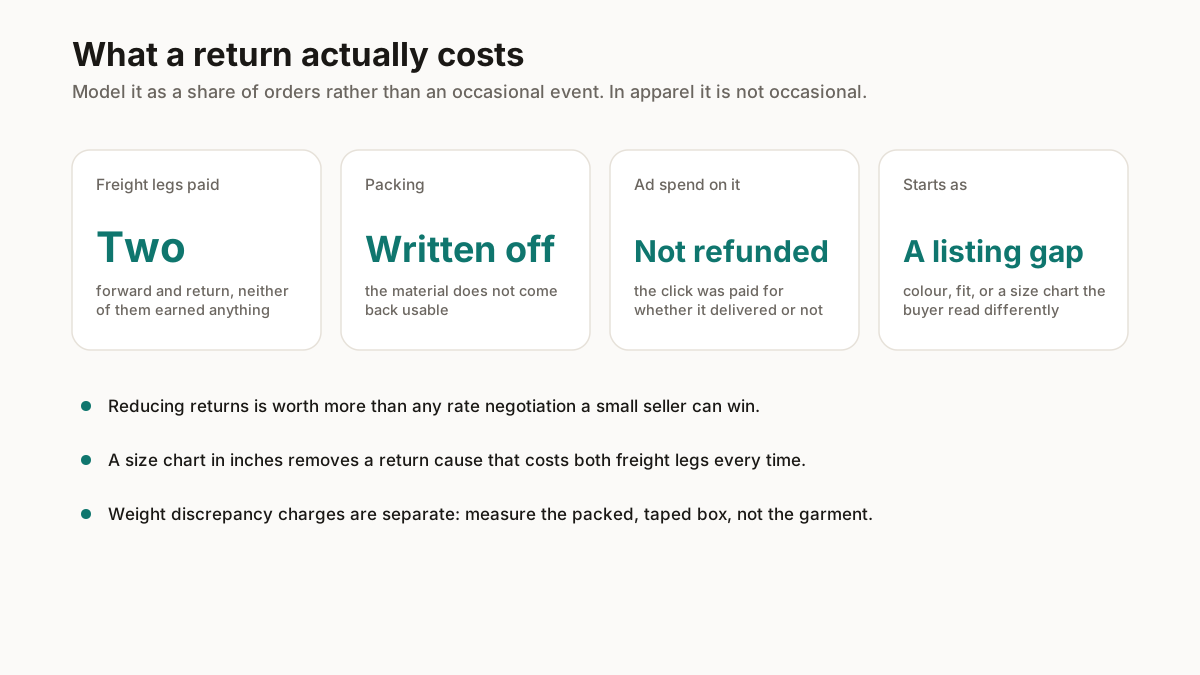
RTO decides apparel margins more than the rate does. When a parcel is refused or cannot be delivered it returns at a return-to-origin charge, so the order has cost 2 freight legs, the packing, and any advertising spent winning it, and has earned nothing. On a ₹500 sale that is the whole margin and more. Model it as a percentage of orders, because in this category it is not an occasional event.
COD handling is charged per shipment, as a flat amount or a percentage of collected value, whichever is greater. COD remittance then arrives on a cycle, not immediately — after delivery is confirmed and settled — which is money spent but not yet received.
Weight discrepancy charges are the one sellers meet by surprise, billed when the courier’s own measurement differs from what you declared at booking. Measuring the packed, taped box is the practical defence, and it is what the calculator above expects.
Out-of-delivery-area charges apply on thinly served pincodes. Put all of it together before setting a shipping charge: the break-even price calculator takes goods, packing, freight, returns and commission at once, and the prepaid vs COD calculator shows what the payment mode alone does.
Photographs, listings, and the work before the parcel
After the trip
Returns are the cost, and the listing is where they start
A large share of apparel returns are expectation gaps — the colour read differently on screen, the fit was not what the photograph implied, the size chart was in centimetres and the buyer thinks in inches. Catalogue problems arriving dressed as logistics problems.
- Repairs and sharpens the photo
- Exports the 4 marketplace sizes from one upload
- Keeps the primary image clean, so QC does not bounce it
- Renames every file to its SKU
- Builds the WhatsApp PDF catalogue
Is it actually free?
Single photos are free. No signup, no watermark, no daily limit.
Do my photos get uploaded?
No. It runs in your browser — the files never leave your phone.
Is it a subscription?
No. The bulk pack is a one-off ₹99, and one photo counts once.
Clean, consistent photographs and a size chart in inches cut the return rate before any courier is involved.
Why can no page publish your Delhivery rate?
Because nobody outside your account knows it. The chain that produces your rate has four links — Delhivery’s contract with an aggregator, the aggregator’s margin, your monthly volume tier, and the slab — and three of them are private to that relationship.
Publishing a figure would therefore mean publishing somebody else’s contract as though it were yours. Sellers price shipping charges off these numbers, so being wrong in the seller’s favour is as damaging as being wrong the other way: it fails later, and at scale.
The fourth link is public, fixed, and on this page. Settle your chargeable weight above, then read your own rupee figure from your dashboard. Together they are a complete answer; separately, neither one is.
Related free seller tools
Frequently Asked Questions
How is the Delhivery rate calculated?
On chargeable weight and destination zone, at whatever rate your contract or aggregator sets. Chargeable weight is the greater of scale weight and volumetric weight (L × W × H in cm ÷ 5000, read as kg). The zone and slab are objective; the rupee figure per slab is not public.
Why is my Delhivery rate different from someone else's?
Most sellers reach Delhivery through an aggregator, and each aggregator has its own negotiated rate plus tiering by monthly volume. Two sellers shipping identical parcels to one pincode on one day can pay different amounts, and both are genuine Delhivery rates.
What is Delhivery RTO charge?
The return-to-origin freight billed when a parcel is refused or cannot be delivered. It matters far more than the rate itself in apparel, because the order then carries two freight legs, the packing and any ad spend with no revenue against it. Model returns as a percentage of orders, not as an exception.
Can a small seller use Delhivery directly?
Directly is possible but rarely the practical route at low volume; most small sellers book through a shipping aggregator holding the carrier contracts. At genuinely low volume you sit at the bottom of every tier, and a post office counter is sometimes cheaper for the same parcel.
How do I lower my Delhivery bill?
Check first whether your parcels bill on volumetric weight — if they do, packing flatter and tighter moves you down a slab with nothing else changing. After that, reducing returns is worth more than any rate negotiation, because a return costs both freight legs and everything else that went into the order.
What is a weight discrepancy charge?
A correction billed when the courier's own measurement of your parcel differs from what you declared at booking. Measuring and weighing the packed, taped box, instead of estimating from the garment, avoids it — which is also what the calculator above expects you to enter.
No Delhivery rate is printed here. Three of the four links that set it — carrier contract, aggregator margin, volume tier — are private to your account. The fourth, the weight slab, is on this page and is exact.