How does a DTDC counter arrive at a price?
Two numbers and nothing else: how far the parcel is going, and what it is billed as weighing. Distance enters as a zone — within the city, within the state, within the region, across the country, and a separate band for the North East, Jammu & Kashmir and the islands. Weight is the part sellers get wrong.
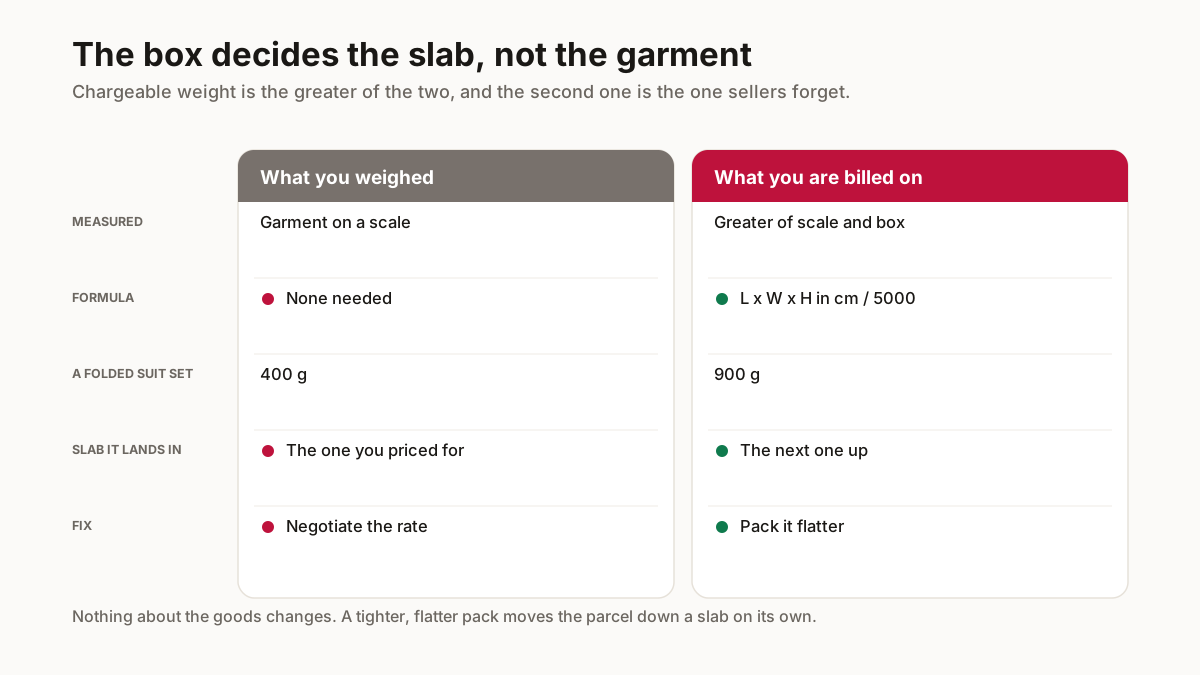
Hand a box across a DTDC counter and it goes on a scale and then against a measuring tape. Whichever produces the larger figure is what you pay on. Volumetric weight is length × width × height in centimetres divided by 5000, read as kilograms, and a folded suit set that weighs 400 grams travels in a box that bills as 900 grams. The invoice is correct; the box was the problem.
DTDC charge calculator
Couriers bill on chargeable weight — the greater of what the parcel weighs and what its size implies. Enter both and the calculator shows which one you are being billed on.
Actual weight
500 g
Volumetric weight
1200 g
Billed on
1200 g
This parcel is billed on its size, not its weight. Packing it smaller and flatter is the cheapest way to cut the bill — nothing about the goods has to change.
DTDC rate slabs are not loaded yet
The chargeable-weight figure above is correct and is the same for every courier in India. The rupee amount is not shown because we will not publish a rate we have not verified against a current rate card — you would price shipping against it. Check your own DTDC rate card, or work the margin out with the break-even calculator.
Bring that figure to the counter, not a guess, because it is fixed by your packing and no amount of negotiating moves it.
Behind the counter sits the thing that surprises people. DTDC operates largely through franchised branches, not company-owned ones, and a franchisee has room to price. Two branches four kilometres apart can quote differently for the same box on the same day, and neither of them is doing anything irregular.
One practical consequence follows, worth more than any published table: get a quote from two nearby counters before settling into a routine of shipping from one. Send 30 orders a week and the difference compounds quietly. It never appears as a line item anywhere — it sits inside every order.
Volume also buys more at a branch than a national rate card implies. Walk in with a realistic monthly parcel count instead of asking what the rate is.
Is a franchise counter network right for your shop?
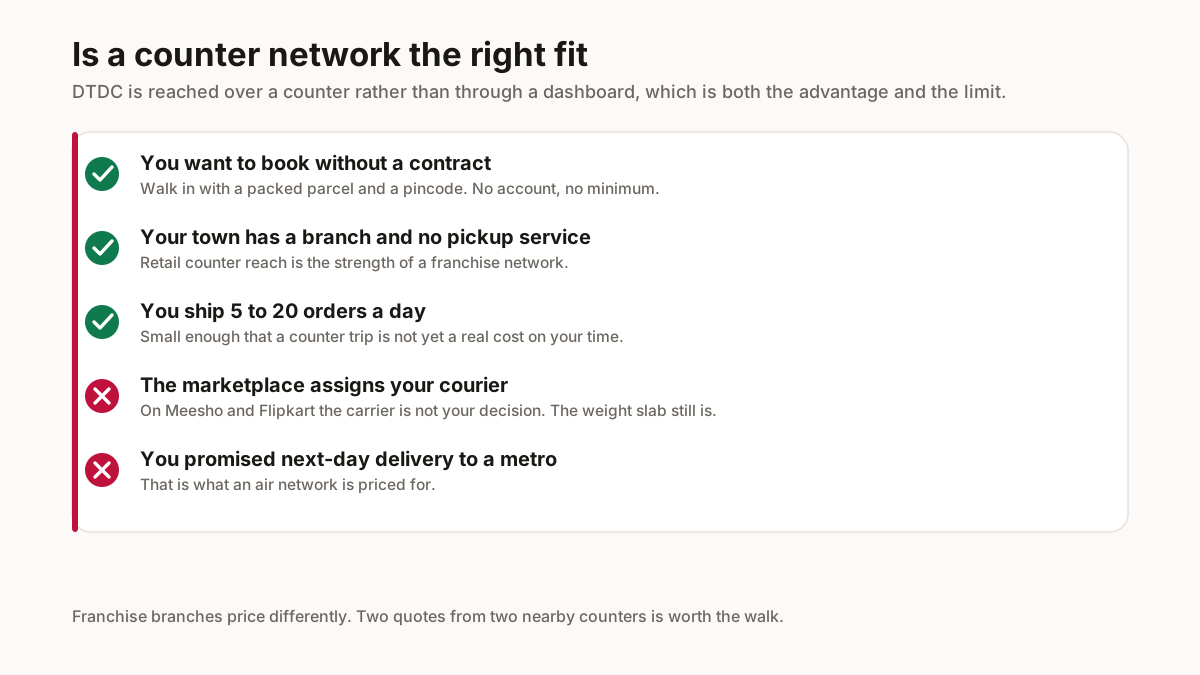
Picture a boutique doing 5 to 20 orders a day out of a shop or a front room, with a DTDC branch on the route to somewhere it already goes. That is the shape this network fits. Retail counter footprint is DTDC’s strength — including in towns where seller-focused aggregators run no pickups of their own — and booking needs no account, no contract and no minimum.
Handing a parcel to a person and walking away with a receipt has a second advantage that shows up only when something goes wrong. A counter receipt is a stronger position on a lost-parcel claim than a pickup scanned somewhere in transit.
Orders arriving off Meesho or Flipkart change the picture completely. Those platforms book the shipment and assign the carrier, so the choice is not yours. What remains yours on those channels is the weight slab, which the calculator above settles, and that is the only lever you hold there.
Time-critical metro deliveries are the other poor fit. Air networks exist for that, and they are priced for it.
How do you get a DTDC quote you can rely on?
Take the packed parcel to the counter and ask. Not the weight you think it is — the taped, labelled box, so the measurement is taken off the thing that will travel. Carry the destination pincode too, because zone is the other half of the answer and a state name will not place it.
Shipping through an aggregator that resells DTDC capacity gives you a different number. Your rate is then the aggregator’s, not the branch’s, and the two differ in both directions. Read it from that dashboard; a counter quote will not predict it.
Whichever number you end up with, write it down with the date beside it. Rate revisions do not arrive as announcements. They arrive as a slightly larger figure on a bill nobody was reading closely. Check yours again every 6 months.
DTDC rate slabs
Not published here yet. Rate cards change and differ by contract, so a table assembled from memory would be wrong for most readers within a quarter. Read yours from your DTDC account or aggregator dashboard.
What does the DTDC weight slab leave out?
Freight is one line on an invoice with several. Fuel surcharge moves with diesel and applies as a percentage of the freight, so it scales with every parcel instead of sitting as a flat cost you can ignore.
COD handling comes next, charged as a flat amount or a percentage of the collected value, whichever is higher. On cheap orders the flat side wins and takes a visible bite; the same fee lands differently against a ₹300 sale and a ₹2,000 one.
Then the address itself. Pincodes outside the regular delivery beat attract an out-of-delivery-area charge, and ship nationally without checking serviceability and you meet this in aggregate at month end instead of at booking. Insurance on declared value is optional and priced separately.
Largest of all is the return, which has been paid for twice in freight and earned nothing. Work an order out end to end before deciding a shipping charge is affordable — goods, packing, forward freight, the return share, commission. The break-even price calculator takes all of them, and the prepaid vs COD calculator isolates what the payment mode alone does.
Photographs, listings, and the work before the parcel
After the trip
The freight is the cheap part of getting an order out
By the time a parcel reaches a DTDC counter the expensive work is done — the piece was photographed, sized for the portal, described and listed. That is the evening per batch, and it decides whether the order existed at all.
- Repairs and sharpens the photo
- Exports the 4 marketplace sizes from one upload
- Keeps the primary image clean, so QC does not bounce it
- Renames every file to its SKU
- Builds the WhatsApp PDF catalogue
Is it actually free?
Single photos are free. No signup, no watermark, no daily limit.
Do my photos get uploaded?
No. It runs in your browser — the files never leave your phone.
Is it a subscription?
No. The bulk pack is a one-off ₹99, and one photo counts once.
Runs on the phone you are already using to book pickups.
Why is no DTDC rate printed on this page?
Because DTDC has no single rate to print. A franchise network prices at the branch, so the honest answer to “what does DTDC charge” is a question back: which branch, at what monthly volume, on whose contract. Any table here would be a snapshot of one counter on one day, presented as though it applied to a country of 19,000 pincodes.
The arithmetic does not move, and it is on this page in full. Chargeable weight is defined identically by every carrier in India, the zone bands are structured the same way, and the charges outside the slab are the same list wherever you ship.
So take the calculator’s figure to a counter and get your own number. A page that quotes a firm per-kilo rate without naming whose contract it came from, and when it was checked, is telling you something about the rest of its content.
Related free seller tools
Frequently Asked Questions
How is DTDC courier charge calculated?
On chargeable weight and destination zone. Chargeable weight is the greater of the scale weight and the volumetric weight, where volumetric is length × width × height in centimetres divided by 5000, read as kilograms. Fuel surcharge, COD handling and any out-of-delivery-area charge are added on top of that freight.
Why do two DTDC branches quote different rates?
DTDC runs largely on a franchise network and franchisees have room to price. Get a quote from two nearby counters before settling on one, particularly if you ship daily — the difference sits inside every order without ever showing up as a line item.
Is DTDC cheaper than Delhivery or Blue Dart?
That depends on your contract, your volume and the zone, so no answer holds for every seller. Blue Dart is priced as a premium air service and is usually the dearest; Delhivery rates through an aggregator move with volume tier. Price your own parcel on all three instead of trusting a comparison.
Can I book DTDC without an account?
Yes. Walking into a branch with a packed parcel and a destination pincode is the normal retail path, and it needs no contract or minimum volume. An account matters once you want scheduled pickups and negotiated rates at volume.
Does DTDC charge extra for COD?
COD handling is charged separately from freight, as a flat amount or a percentage of the collected value, whichever is higher. Low-value orders feel the flat component hardest, which is why the same fee lands differently on a ₹300 order and a ₹2,000 one.
How do I reduce my DTDC bill without changing what I sell?
Pack smaller. If the calculator above shows your parcel billing on volumetric weight, the box is setting the price, and a flatter, tighter pack moves it down a slab with nothing else changing. If it bills on actual weight, packing will not help and only lighter goods will.
No DTDC rate appears on this page. Franchise branches price independently, and this is the number a seller sets her shipping charge against. The chargeable-weight calculator above is exact; take it to your counter.