Why a dress caption works differently from a saree one
Every other garment on this site is sold on the cloth. A saree caption that names Kanjivaram gets asked about; a kurti caption that says pre-shrunk cotton gets bought. Western wear does not work that way.
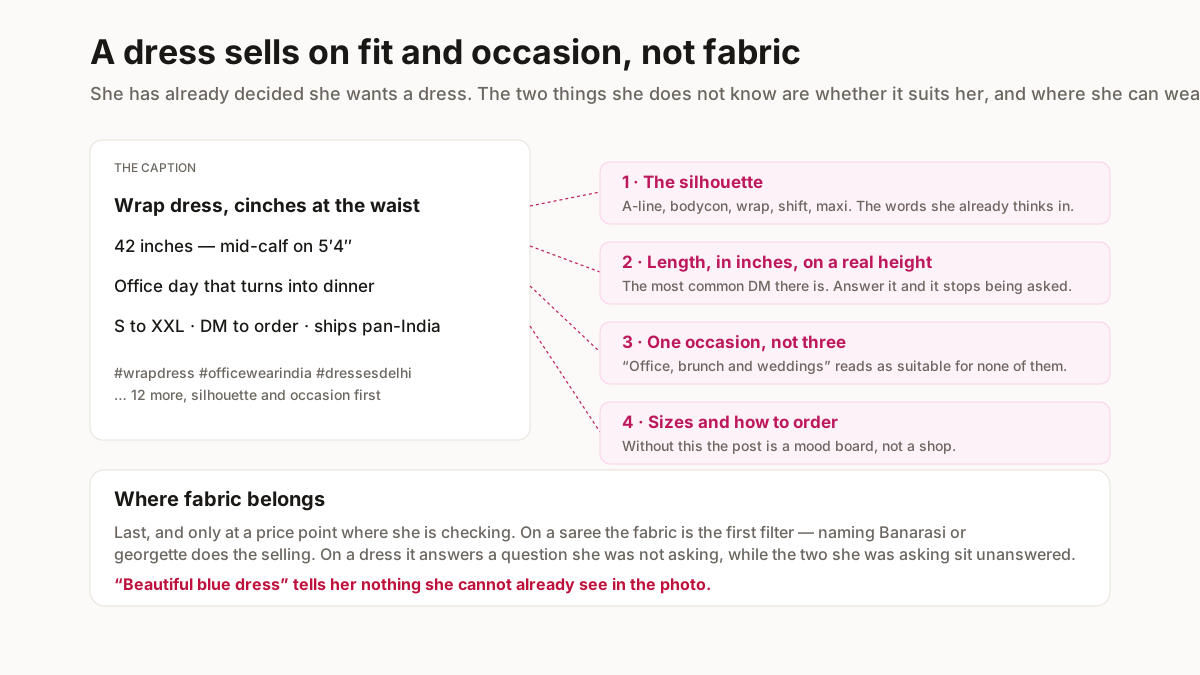
A dress buyer has already decided she wants a dress. What she does not know is whether it will fit her body and whether it is right for where she is going. Those are the two questions, and a caption that answers neither is decoration.
So lead with the silhouette and the occasion. “A-line, hits below the knee, good for an office day that turns into dinner” does more work than three lines about the fabric — and it is the sentence that stops the thumb.
Name the shape, not just the colour
A-line, bodycon, wrap, shift, fit-and-flare, maxi. These are the words a dress buyer already thinks in, and they are the ones she searches. “Beautiful blue dress” tells her nothing she cannot see; “wrap dress, cinches at the waist” tells her whether it is for her.
The length question, answered before it is asked
This is the single most common DM on a dress post, and putting the answer in the caption removes an entire round of messages per enquiry.
Give the length in inches, measured on the garment, and say where it falls on an average height. “42 inches — mid-calf on 5'4”” is a caption line that has already answered three people.
The same applies to sleeves and neckline. A buyer deciding whether something works for her office or her cousin's mehendi needs those, and she will ask if you do not say.
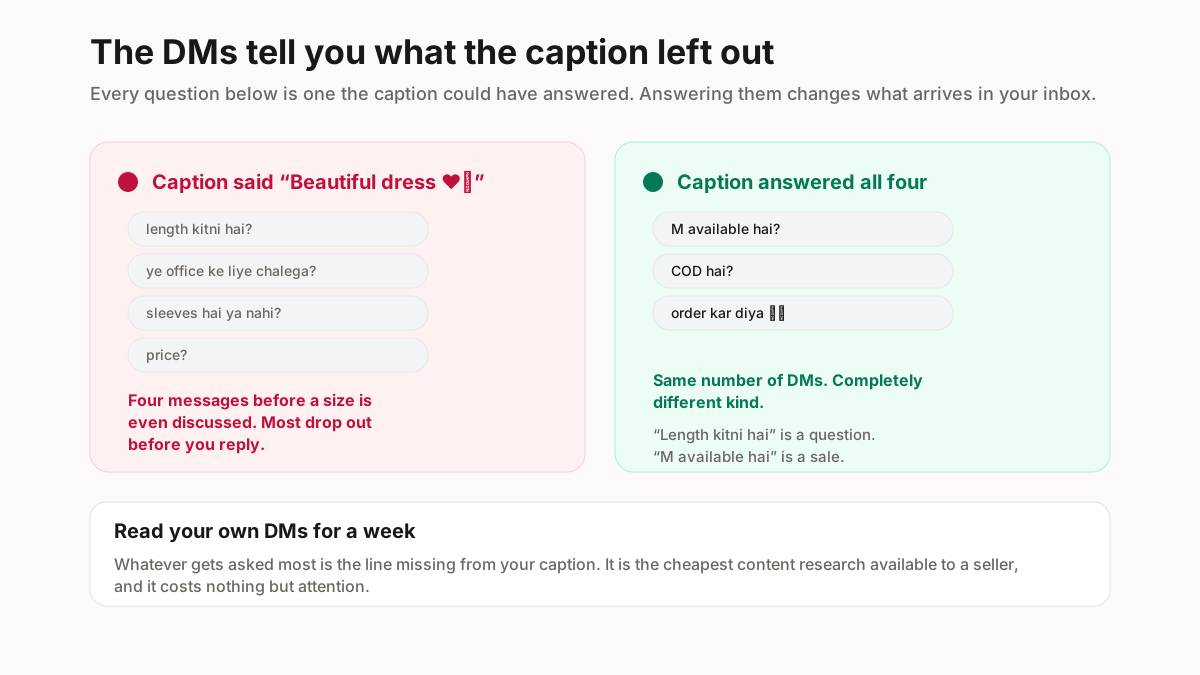
Sellers who do this consistently report a shift in the kind of DM they get: fewer “length kitni hai” and more “M available hai?”. The second one is a buying question.
Occasion is the strongest filter you have
Dresses divide by where they are worn far more cleanly than ethnic wear does, and naming the occasion does most of your targeting for you.
Everyday and office. Comfort, fabric that survives a commute, nothing that needs adjusting. Say it washes well; that is what she is worried about.
Brunch and casual outings. This is where colour and print sell, and where a styling note — “with white sneakers” — earns saves.
Party and evening. Fit and drape matter most, and the photo has to carry it. Mention the fabric here, because at this price point she is checking.
Cocktail and reception. Indian buyers often want sleeves and a length that works for a family event. Saying so explicitly converts far better than a generic “party wear”.
One occasion per post. A dress described as suitable for office, brunch and a wedding reads as suitable for none.
How long should a dress caption be?
Three lines and a call to action. Shorter than a saree caption, because a dress post is carrying less information — there is no weave to explain, no drape to describe, no fabric heritage to sell. The photo does more of the work.
What those three lines must contain is the silhouette, the length, and the occasion. Everything else is optional and most of it is padding. A dress caption that runs to six lines is usually four lines of adjectives around two lines of fact.
Hashtags for dress posts, and how many
Fewer and more specific beats more and broader. Ten to fifteen is the working range, and the ones that earn their place name the silhouette and the occasion rather than the category.
#bodycondress and #officewearindia reach someone deciding what to buy. #fashion and #ootd reach a feed nobody is shopping in. The second kind inflates your reach number and does nothing for your DMs, which is why the number is a bad thing to optimise for.
Keep a city tag if you deliver locally — #dressesdelhi does more than #dresses ever will, because it reaches someone who can receive the parcel this week.