How to sell on Myntra: seller registration steps
Myntra seller registration starts from the REGISTER link on the partner portal, which opens partners.myntrainfo.com/Register; Myntra then reviews your brand papers and, if the brand qualifies, onboards you within 15 business days. The steps come from Myntra’s portal FAQ and disclaimer (read 3 Oct 2026); the form’s own screens returned no readable text to us on 10 and 11 Oct 2026, so we do not describe them.
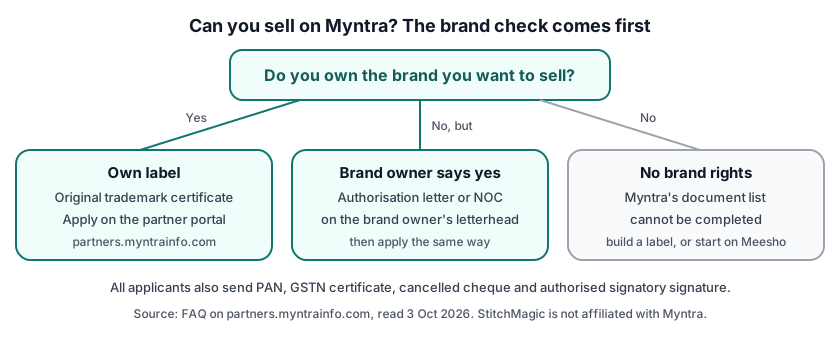
- Check the brand rule first: an original trademark certificate, or an authorisation letter or NOC on the brand owner’s letterhead (next section).
- Scan the other four documents: PAN card, GSTN certificate, a cancelled cheque for the payout account, and the authorised signatory’s signature copy.
- Open the partner portal and click REGISTER, at partners.myntrainfo.com.
- Wait for onboarding: within 15 business days, and up to 45 days during major sale events.
- Log in and set up your catalogue, using Myntra’s free order management system for inventory and orders.
Apply well before a big sale season if you want to be live for it. Myntra states that it “does not charge any onboarding fee or refundable deposit from sellers”, and its disclaimer says genuine Myntra representatives write from an address containing “@myntra.com” (read 3 Oct 2026). Treat a caller or email from any other address that asks for a registration fee as fraud.
Can you sell on Myntra without a brand?
No: Myntra asks every new seller for an original trademark certificate, or an authorisation letter or NOC on the brand owner’s letterhead, so you need brand rights before you apply. The requirement sits in the document list on the partner portal FAQ (read 3 Oct 2026), and no other document on that list stands in for it.
For a reseller, the authorisation letter is the route Myntra’s list leaves open: ask the brand you buy from for a letter or NOC on its letterhead that names your business. An own label needs its trademark certificate, not just a name on the tag.
Small fashion labels have a separate door. Myntra runs a Rising STARS programme for D2C fashion brands and a “Zero Commission Construct” for digital-first made-in-India D2C brands (partner portal, read 3 Oct 2026); the programme contact it lists is MyntraRisingStars@myntra.com.
Myntra seller login: which portal to use
Log in on the Myntra partner portal at partners.myntrainfo.com, titled “Partner at Myntra-Jabong”: press LOGIN and it hands you to accounts.myntra.com, marked “partners_mdirect”, to sign in with email and password or with Google. After sign-in you land on partners.myntrainfo.com/Dashboard (checked 3–4 Oct 2026). Seller portal, seller panel, partner portal and Jabong seller login all mean this one site, and the old partnerportal.myntra.com redirects to it. Myntra seller login, step by step shows each screen.
Some lookalike addresses are dead: partners.myntra.com, seller.myntra.com and brands.myntra.com had no DNS record on 3 Oct 2026, and mdirect.myntrainfo.com returned “Not found” on 10 Oct 2026. The “mdirect” you may have seen is only the label on Myntra’s sign-in page, not a separate login site.
There is no separate seller app on Google Play: Myntra’s developer page lists one app, the fashion shopping app for buyers (checked 11 Oct 2026), so seller work happens in the portal in a browser. The portal pages we could read publish no seller support phone line or public ticket form, so we print none; ignore any “registration contact number” from another site.
Myntra seller fees, payouts and tools
Myntra charges no onboarding fee or refundable deposit, but new sellers pay a one-time growth enablement charge once they start operating, netted off against payouts and returned as product listing ad credits equal to the charge (portal disclaimer, read 3 Oct 2026). That charge comes back to you as advertising on Myntra, not as cash.
Myntra pays sellers on a 15 day payment settlement cycle from the date of delivery (partner portal FAQ, read 3 Oct 2026) — plan working capital for sale-season stock around that gap. Myntra’s commission and per-order fees are not on the portal pages we could read, so this page prints none. Once onboarded, enter your price and the fees Myntra gives you into the Myntra seller calculator.
After onboarding, Myntra gives you its own free order management system, which it says “will handle your inventory and process orders”, and the portal lists these seller tools:
- Partner Insights: real-time data with a reporting dashboard.
- Partner University: videos and courses on Myntra’s processes and policies.
- Myntra Ads Platform: Product List Ads, Display Ads, Search Banners and M-Live.
- Myntra Studio, listed among the seller offerings.
- Marketplace APIs at mmip.myntrainfo.com, for sellers connecting their own software.
For photos, check our Myntra image size guide and Myntra product photography guide against Partner University before you upload. For the tax line on your invoice, find each product’s code in our HSN codes for online sellers.
Myntra vs Meesho vs Flipkart: what each asks of a new seller
Meesho is easier to start on than Myntra for a small seller: Meesho asks for a bank account and a GSTIN or Enrolment ID / UIN, while Myntra asks for a GSTN certificate plus a trademark certificate or brand authorisation. Flipkart publishes its own requirements on Seller Hub.
| Criterion | Myntra | Meesho | Flipkart |
|---|---|---|---|
| Where you apply | partners.myntrainfo.com | supplier.meesho.com | seller.flipkart.com |
| Tax registration | GSTN certificate | GSTIN, or Enrolment ID / UIN for non-GST sellers | See Seller Hub registration |
| Brand papers | Trademark certificate or authorisation letter / NOC | — | — |
| Commission, as the marketplace states it | Zero Commission Construct for made-in-India D2C brands (programme) | 0% commission | — |
Sources: Myntra partner portal FAQ and home page (read 3 Oct 2026); supplier.meesho.com how-it-works (read 3 Oct 2026); Flipkart official domains (SERP 4 Oct 2026). “—” means the marketplace’s page we read does not state it. Last verified: Oct 2026. More hubs: Meesho seller hub, Flipkart seller hub and all guides for marketplace sellers.
Frequently asked questions
Can I sell on Myntra without a brand?
No. The document list on partners.myntrainfo.com needs an original trademark certificate or an authorisation letter / NOC on the brand owner’s letterhead, so a seller with no brand rights cannot list.
How to register as a Myntra seller?
Click REGISTER on the Myntra partner portal at partners.myntrainfo.com. Myntra asks for a PAN card, GSTN certificate, cancelled cheque, signatory signature and the trademark certificate or brand authorisation, and onboards a qualifying brand within 15 business days.
How do I log in to the Myntra seller panel?
Click LOGIN on partners.myntrainfo.com; it opens accounts.myntra.com, where you choose “Use Email And Password” or “Login In With Google”, and then returns you to the partner portal dashboard. See Myntra seller login, step by step.
Is there a Myntra seller app to download?
No separate one: Myntra’s Google Play developer page lists only the Myntra shopping app (checked 11 Oct 2026). Sellers use the partner portal at partners.myntrainfo.com in a browser.
Is there a Myntra seller registration fee?
Myntra says it charges no onboarding fee or refundable deposit; a one-time growth enablement charge applies once you start selling and comes back as ad credits. Myntra representatives write from an “@myntra.com” address, so ignore fee demands from anyone else.
How long does Myntra seller onboarding take?
Myntra says a qualifying brand is onboarded within 15 business days, and up to 45 days during major sale events, so apply early if you want to be live for a sale season.
Selling on Meesho while your Myntra application is in review? ListMagic, a Chrome extension, fills the Meesho Supplier Panel catalog form for you; it does not work on Myntra. Free plan to start; Seller Pass ₹99 a month (StitchMagic pricing, checked 16 Oct 2026).
Try ListMagic for Meesho listingsRelated
Checked by the StitchMagic team on 11 Oct 2026. StitchMagic is a set of free tools and one AI listing agent (ListMagic) for online sellers in India that helps them list faster on Meesho, Flipkart and Amazon.in and sell more. Found an error? Tell us; we correct with a dated note.