What must be on a clothing label in India
This is the section that matters, and it is the one a generic label designer cannot give you.
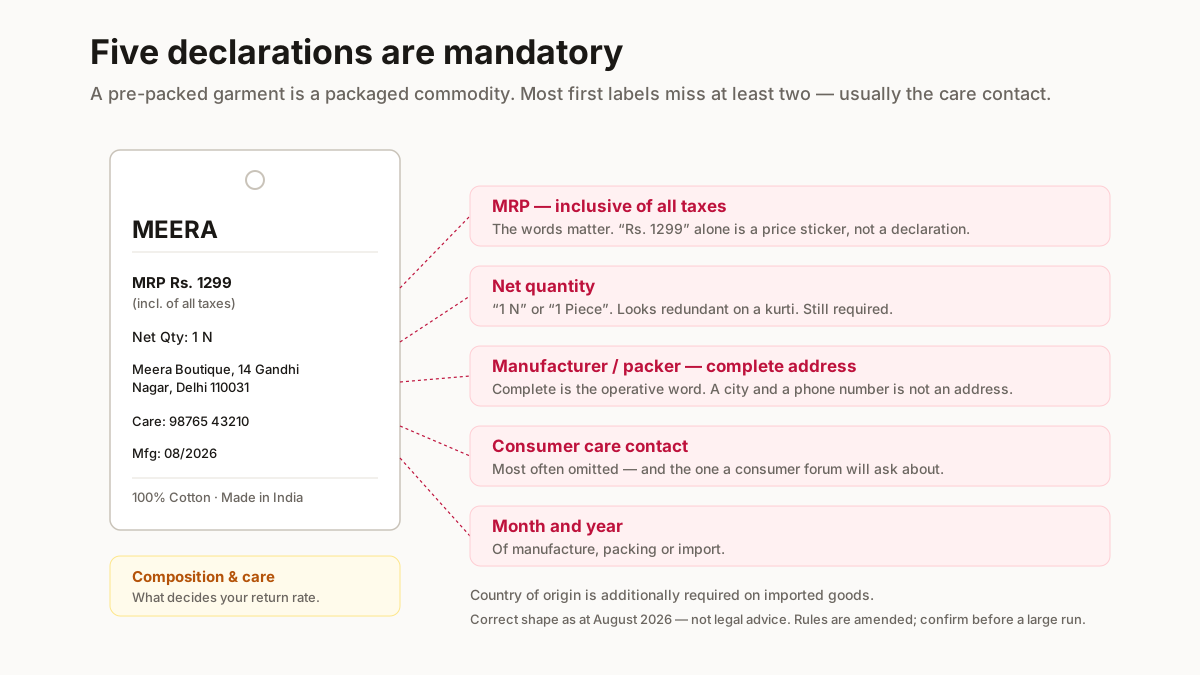
A garment sold pre-packed is treated as a packaged commodity, which brings a set of mandatory declarations under the Legal Metrology packaged-commodities rules. They are not stylistic. A label missing them is a label that can be objected to, and marketplaces increasingly check.
The five that are always required
MRP, inclusive of all taxes. Not just a number — the words matter. “MRP Rs. 1299 (incl. of all taxes)” is a declaration; “Rs. 1299” is a price sticker.
Net quantity. For a garment this is usually “1 N” or “1 Piece”. It looks redundant on a single kurti and it is still required.
Name and complete address of the manufacturer, packer or importer. Complete is the operative word — a city and a phone number is not an address.
A consumer-care contact. A phone number or email a buyer can actually reach. This is the one sellers most often leave off, and it is the one a consumer forum will ask about.
Month and year. Of manufacture, packing or import.
And two that depend
Country of origin is required on imported goods. Fabric composition and care are what your customer actually reads, and what determines whether the garment survives its first wash — required or not, leaving them off is how you generate returns.
This is the correct shape of the requirement as at 26 August 2026, not legal advice. The rules are amended periodically — confirm the current text before a large print run, because a printer will not check it for you.
Label types, and what each costs you
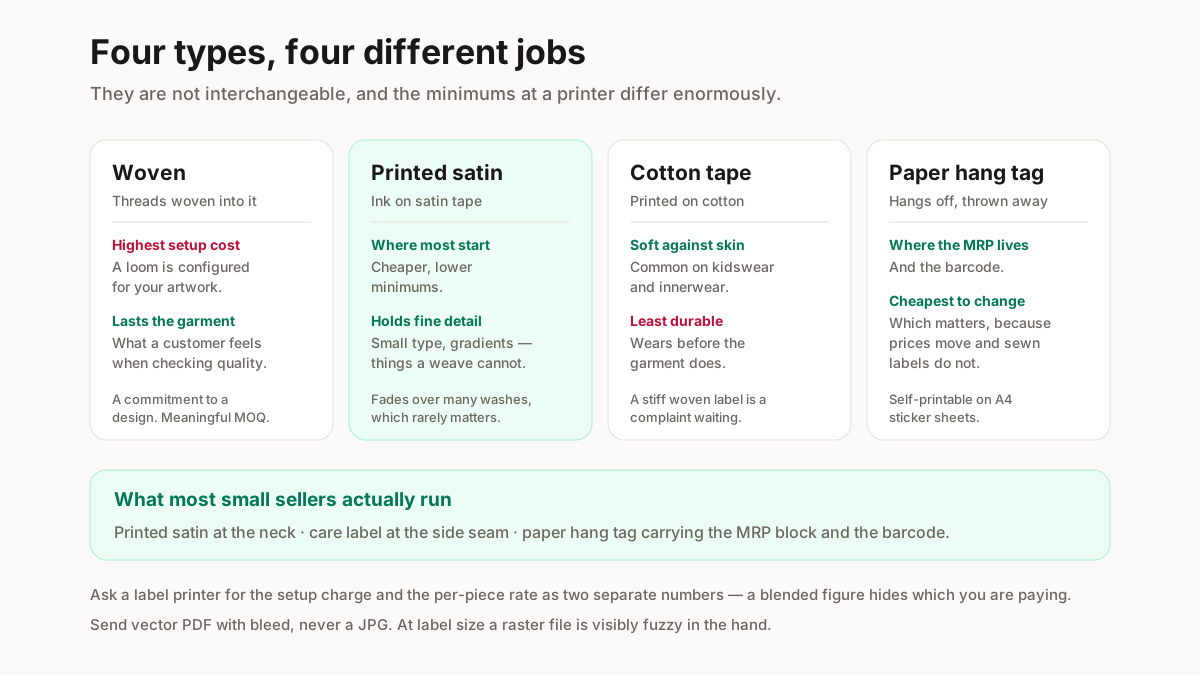
Four ways to put your name in a garment, and they are not interchangeable.
Woven label
Threads woven into the design. The most durable and the most expensive to start, because a loom has to be set up for your artwork. It survives the life of the garment and it is what a customer feels when she checks whether something is well made. Minimums at a label printer are meaningful — this is a commitment to a design.
Printed satin
Ink on satin tape. Cheaper, lower minimums, and it holds fine detail a weave cannot — small type, a logo with gradients. It fades over many washes, which for a fashion garment usually does not matter.
Cotton tape
Printed on cotton. Soft against skin, which is why it is common on kidswear and innerwear where a stiff woven label is a complaint waiting to happen. Least durable of the three.
Paper hang tag
Not sewn in — it hangs off the garment and is thrown away. This is where the MRP declarations and the barcode usually live, and it is the cheapest to change, which matters because prices move and sewn labels do not.
The practical arrangement for most small sellers: a printed satin neck label for the brand, a care label at the side seam, and a hang tag carrying the MRP and the barcode. Generate the barcode for it with the bulk barcode generator.
Care symbols in plain English
Five categories, always in the same order, and each one is a shape whose modifications carry the meaning.
| Category | What the symbol is, and what it tells you |
|---|---|
| Washing | The tub. A number inside is the maximum temperature in °C; a hand means hand wash only; a cross means do not wash. |
| Bleaching | The triangle. Empty means any bleach; two diagonal lines mean non-chlorine only; crossed out means no bleach. |
| Drying | The square. A circle inside is tumble dry, with dots for heat level; lines inside mean line or flat dry. |
| Ironing | The iron. Dots give the maximum temperature — one is coolest, three is hottest; crossed out means do not iron. |
| Professional care | The circle. Letters inside tell a dry cleaner which solvent; crossed out means do not dry clean. |
They always appear in this order, left to right. A label that scrambles them still technically communicates, but it reads as amateur to anyone in the trade.
The shortcut worth knowing: a cross through any symbol means do not, and dots mean temperature — more dots, more heat. Between those two rules you can read most labels without a reference.
One honest warning about getting these wrong. If you print “machine wash warm” on a garment that shrinks, the returns are yours and the review is public. Wash a sample before you commit the care instructions to a print run — the manufacturing guide covers testing a sample properly.
Sizes, placement and what a printer needs
Physical dimensions are conventional rather than regulated, but conventions exist for reasons.
Neck labels run around 30–40 mm wide by 20–25 mm tall. Larger and it shows through a thin fabric; smaller and the type stops being readable.
Care labels are taller than they are wide — around 30×50 mm — because they carry several lines and get folded into a side seam.
MRP stickers need room for five declarations, so 50×30 mm is a realistic floor and 65×40 mm is comfortable. This is the label sellers most often try to make too small, and the result is type nobody can read.
Hang tags run 40×70 to 50×90 mm — enough for branding, the MRP block and a barcode with its quiet zone.
What to send the printer
Three things, and getting them wrong costs a reprint. Vector PDF, not a JPG — a label printed from a raster file at small size looks fuzzy in a way that is obvious in the hand. Bleed, which this tool adds at 3 mm, so trimming never leaves a white edge. And your colour spec — Pantone if you care about matching your brand exactly across runs, CMYK if approximately right is fine.
The single-label export here is built for that. The A4 sheet export is for self-printing on sticker paper, which is where most sellers start and which is perfectly reasonable for MRP labels.
If you meant a label maker machine
Worth answering directly, because roughly half the people searching “label maker” want hardware rather than a design tool.
Dymo and Brother handheld label makers print on adhesive tape. They are excellent for shelf labels, storage bins and asset tags. They are not for garment labels — the tape is not made to be sewn in or washed, and the output does not look like a clothing label.
Thermal label printers are the ones sellers actually need, and for a different job again: shipping labels. A 4×6 inch thermal printer pays for itself quickly if you are dispatching daily, because it removes ink entirely.
For actual garment labels, the route is a label printer — a business, not a device. You send artwork and they weave or print and cut. For MRP stickers specifically you can self-print on A4 sticker sheets, which is what the sheet export here is for.
So: hardware for shipping and shelves, a printing service for anything sewn into a garment.
Related free seller tools
Frequently Asked Questions
Is this clothing label maker free?
Yes, no signup. It runs in your browser and exports print-ready PDF — a single label with 3 mm bleed for a printer, or an A4 sheet for self-printing. Nothing is uploaded.
Is MRP mandatory on a clothing label in India?
On a pre-packed garment, yes — along with net quantity, the manufacturer or packer name and complete address, a consumer-care contact, and the month and year. The MRP must also be stated as inclusive of all taxes; the wording is part of the declaration, not decoration.
Do I need a trademark to put my brand on a label?
No. You can sell under a brand name without registering it. What a registration gives you is the ability to stop someone else using it, and it is required by approval-based platforms like Myntra. Many sellers start unregistered and file once the name is proving itself.
What is the minimum order at a label printer?
It varies by type and it is the main reason to start with printed satin rather than woven. A woven label needs a loom set up for your artwork, so minimums are meaningful; printed satin and cotton tape are lower. Ask for the setup charge and the per-piece rate as two separate numbers.
Can I print clothing labels at home?
MRP and packaging labels, yes — the A4 sheet export is designed for sticker paper. Brand and care labels that get sewn in, no: home printers cannot print on label tape in a way that survives washing. Those go to a label printer.
What size should a neck label be?
Around 30 to 40 mm wide by 20 to 25 mm tall. Larger shows through thin fabric, smaller stops being readable. Care labels are taller than wide — about 30 by 50 mm — because they carry several lines and fold into a seam.
What file does a label printer want?
A vector PDF with bleed, not a JPG. At label size a raster file looks visibly fuzzy in the hand. This tool exports vector PDF with 3 mm bleed so trimming never leaves a white edge. Specify Pantone if you need exact brand colour across runs, CMYK if close is fine.
Is a Dymo or Brother label maker any use for clothing labels?
No. Those print on adhesive tape for shelves, bins and asset tags — the tape is not made to be sewn in or washed. What sellers genuinely benefit from is a thermal printer for shipping labels, which is a different job again. Garment labels come from a label printing service.
Not legal advice. The declarations here reflect the Legal Metrology packaged-commodities requirements as at 26 August 2026, and those rules are amended periodically. Confirm the current text before a large print run — a label printer will reproduce whatever you send them without checking it.