Do you actually need a manufacturer?
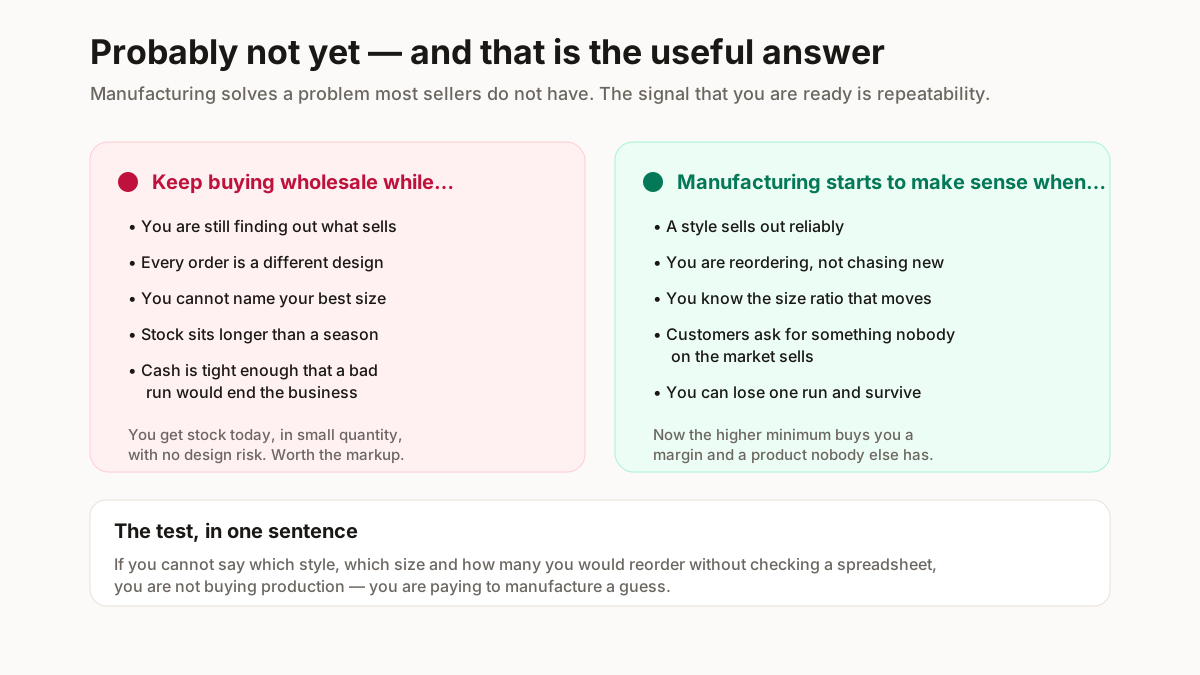
Probably not yet, and that is the most useful thing this page can tell you. Manufacturing solves a problem most sellers do not have: it gives you a garment nobody else is selling, in your own label, at a cost that improves with volume. It costs you higher minimums, weeks of lead time, money tied up in sampling, and the risk of a run coming back wrong.
Buying wholesale solves the opposite set. You get stock today, in small quantities, with no design risk, and you pay more per piece for the privilege. For a seller still learning what her customers buy, that trade is overwhelmingly the right one.
The signal that you are ready is repeatability. When a style sells out reliably, when you know the sizes that move, and when you are reordering the same thing rather than chasing new designs — that is when your own production starts to make sense. Before that, you are paying to manufacture a guess.
If you are not there yet, buying from a wholesale market is the faster route, and this page will still be here.
How is a manufacturer different from a wholesaler?
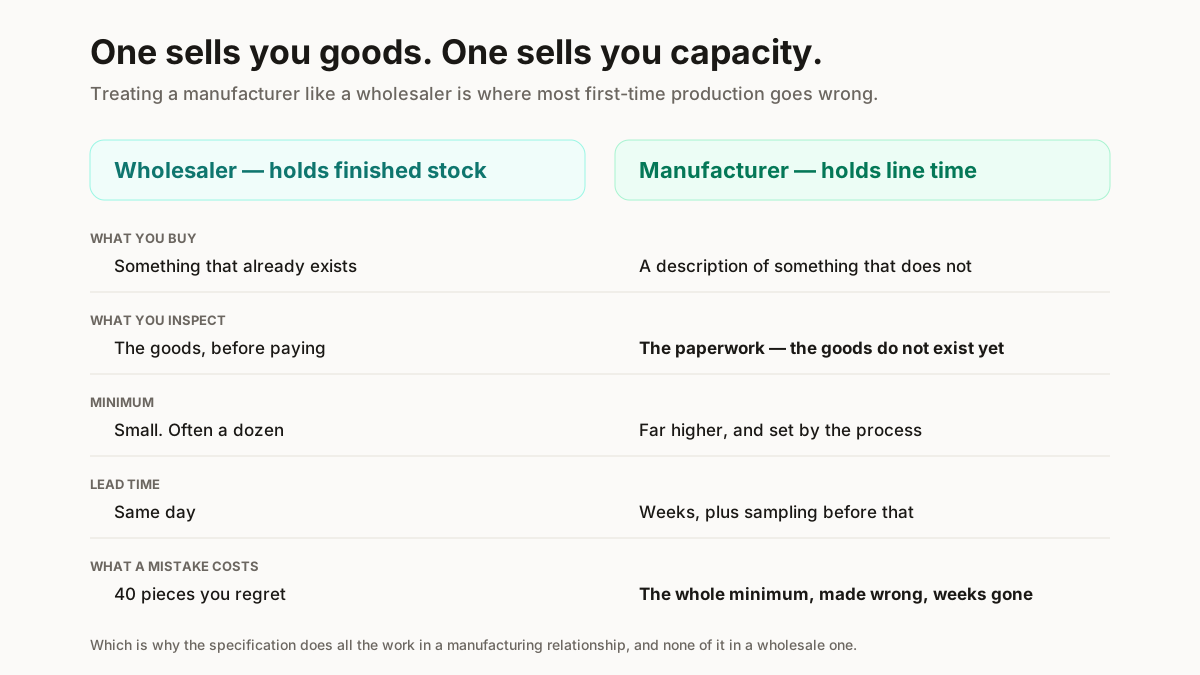
They are different businesses that happen to both supply garments, and treating one like the other is where most first-time manufacturing goes wrong.
A wholesaler holds finished stock. You see it, you handle it, you buy it, you take it away the same day. What you get is exactly what you inspected. A manufacturer holds capacity. You describe something that does not exist yet, agree a price for making it, and find out in several weeks whether the description was good enough.
That gap is why the specification does all the work in a manufacturing relationship. With a wholesaler you check the goods; with a manufacturer you check the paperwork, because the goods do not exist to check.
It also changes what a mistake costs. A bad wholesale lot is 40 pieces you regret. A bad production run is the minimum quantity, made wrong, paid for in stages, with weeks gone.
Where are garments manufactured in India?
Production concentrates by category, in the same way wholesale trading does, and usually in the same regions.
Knitwear — t-shirts, innerwear, casual jersey — centres on Tirupur, much of it built to export standards. Woven fabric comes out of powerloom centres including Bhiwandi. Woollens and hosiery are Ludhiana. Synthetic sarees and dress material are Surat.
Hand block print and traditional craft sit around Jaipur, where the units are frequently outside the city itself. Denim and cotton run through Ahmedabad, and general ready-made through Delhi.
Those pages cover buying existing stock in each place. What is worth knowing here is that a region strong in trading a category is usually strong in making it, so the geography you already know applies.
What does the process actually look like?
Six stages, and each one has a way of going wrong that costs money later.
| Stage | What happens | What goes wrong |
|---|---|---|
| Enquiry | You describe the garment, quantity and fabric | Being vague, and getting a quote you cannot compare |
| Costing | The unit prices it against your specification | No tech pack, so the quote is for a different garment |
| Sampling | One piece made to your spec, paid for separately | Approving a sample you have not worn or washed |
| Bulk | The run is produced against the approved sample | Fabric substituted, sizes drifting from the sample |
| Inspection | You check before the balance is paid | Paying in full before seeing the goods |
| Dispatch | Goods ship, usually by transport agent | No docket, and no record if a bundle is short |
Lead times, minimum quantities and payment terms vary by unit and by season. Agree all three in writing before sampling, not after.
The stage sellers skip is sampling, because it costs money and adds weeks. Skipping it means the first time you see the garment is when the full run arrives, and at that point your options are to accept it or to argue.
Wear the sample. Wash the sample. A garment that looks right on a table and fails after 1 wash is a garment you are about to order in quantity.
What should you have ready before you enquire?
A specification the unit can price
Fabric and its weight, the measurements at every size, the construction, the trims, and the finish. Vague enquiries get vague quotes, and two vague quotes cannot be compared with each other, which is how sellers end up choosing on price alone.
A reference garment
The single most useful thing you can carry. A physical piece that is close to what you want removes more ambiguity in 5 minutes than an hour of description, and it gives you something to hold the sample against.
Your actual quantity
Stated at the start rather than discovered at the end. A unit quoting for a run 5 times larger than yours has quoted a different price, and finding that out after sampling wastes both sides’ time.
The size ratio you want
Not just the range. How many of each size, because a run weighted wrongly leaves you out of stock in the sizes that sell and holding the ones that do not.
What should you agree in writing?
Everything that will be disputed later, which in practice is four things: the specification, the quantity and size ratio, the lead time, and the payment stages.
Payment in manufacturing is usually staged rather than paid in full up front, and the stage that protects you is the one after inspection. Agreeing that you see the goods before the balance clears is normal, and a unit that refuses is telling you something worth hearing.
Get the lead time as a date rather than a duration. Weeks from when is a question that turns into an argument, and a date does not.
And agree what happens if the run does not match the sample, before it happens. That conversation is easy in advance and very hard afterwards.
Who should you approach?
Units that already make something close to what you want. A unit set up for knitwear will quote for a woven shirt and will make it worse and slower than a unit that makes shirts every day.
Ask what they currently produce and for whom, in general terms. A manufacturer who talks fluently about the category is a manufacturer who will catch problems in your specification before they become garments.
Manufacturing supplier list
We are building a list of units by category and by the smallest run each will take, because the difference between a unit that needs hundreds and one that will do a short run is the difference between possible and not. Every number on it comes from a supplier who asked to be listed.
Your number is used to send the list and nothing else.
Until that list is worth sending, the reliable route is the same one the market pages describe: ask several, compare on specification rather than on price, and treat the quality of their questions as information about the quality of their work.
What margin does manufacturing actually give you?
Better per piece and worse per rupee of risk, which is the trade nobody states plainly. Your cost per garment falls with volume, but the capital tied up rises, and stock that does not sell is now stock nobody else was going to buy either — because it is your design.
Model it on what you actually expect to sell rather than on the run you are being quoted for. A lower unit cost across a quantity you cannot move is a worse outcome than a higher unit cost on stock that turns.
Same garment, three channels
Put your own numbers in. Nothing here is assumed — commission is set by category and changes, so read yours from the channel’s rate card. The return rates are starting points to overwrite with your own.
Return rate on each channel
Ad spend per order
Meesho
₹178
per order after returns · 25% margin
₹276 on a delivered order
commission + returns + ads
₹256
per order after returns · 37% margin
₹306 on a delivered order
no commission, ads to be found
WhatsAppMOST LEFT
₹300
per order after returns · 43% margin
₹321 on a delivered order
no commission, lowest returns
On these numbers the same piece leaves ₹123 more per order on WhatsApp than on the weakest channel — which is the argument for choosing the channel before choosing the stock. For the full picture including GST and a target margin, use the break-even calculator.
Then add the sampling cost and the weeks of lead time to the picture. Neither appears in a per-piece quote, and both are real money.
What does the listing work look like afterwards?
The same as any other stock, with one advantage: because the garments are yours, nobody else has the photographs, and a listing nobody can copy is worth more over time than one competing against twenty identical ones.
Which makes the photography worth doing properly rather than quickly. Plan a session for the day the run arrives, shoot every size you will list, and measure the finished garments for the size chart rather than using the specification you sent.
Those two numbers differ more often than sellers expect, and a chart built on the spec instead of the goods produces fit returns on a range you paid to create.
After the trip
Your own range means your own photographs, and nobody else has them
Which is the advantage of manufacturing and also the work: every piece shot, sized to each marketplace and named before any of it earns. StitchMagic runs the whole run through repair, four marketplace sizes, renaming and the WhatsApp catalogue in one pass.
- Repairs and sharpens the photo
- Exports the 4 marketplace sizes from one upload
- Keeps the primary image clean, so QC does not bounce it
- Renames every file to its SKU
- Builds the WhatsApp PDF catalogue
Is it actually free?
Single photos are free. No signup, no watermark, no daily limit.
Do my photos get uploaded?
No. It runs in your browser — the files never leave your phone.
Is it a subscription?
No. The bulk pack is a one-off ₹99, and one photo counts once.
Works from a phone, so the shoot and the listings happen the same week the run arrives.
Why are there no prices or manufacturer names on this page?
Because a manufacturing quote depends on the fabric, the construction, the quantity and the season, and no single figure survives contact with any of those. A per-piece number published here would be wrong for almost everybody reading it, and you would be committing capital against it.
Named units are a separate problem. A recommendation is only worth something if it is current, and a list assembled once goes stale quietly while readers keep acting on it. The directory above fills from units that ask to be listed, which at least means every entry agreed to be contacted.
Related free seller tools
Frequently Asked Questions
What is the difference between a garment manufacturer and a wholesaler?
A wholesaler sells finished stock that already exists, in small quantities, today. A manufacturer makes to your design, which means higher minimums, lead times in weeks, a paid sample before any bulk, and the risk that the run comes back wrong. They are different businesses.
Should a small reseller use a manufacturer?
Usually not at first. Manufacturing pays off once a style sells reliably and you are reordering rather than testing. Before that you are paying higher minimums and weeks of lead time to produce a guess, and buying wholesale answers the same question faster and cheaper.
Where are garments manufactured in India?
By category, in the same regions that trade it: knitwear around Tirupur, woollens in Ludhiana, synthetic sarees and dress material in Surat, hand block work around Jaipur, denim and cotton through Ahmedabad, and general ready-made via Delhi.
What is a tech pack and do I need one?
A specification the unit can price: fabric and weight, measurements at every size, construction, trims and finish. You need something like it, because vague enquiries produce vague quotes and two vague quotes cannot be compared against each other.
Should I approve a sample before bulk production?
Always, and wear it and wash it before approving. Skipping sampling means the first time you see the garment is when the full run arrives, and at that point your only options are to accept it or to argue.
How should payment be structured with a manufacturer?
In stages rather than in full up front, with a stage after inspection. Agreeing that you see the goods before the balance clears is normal practice, and a unit that refuses that has told you something worth hearing.
What is the minimum order quantity for garment manufacturing?
It varies enormously by unit, by category and by season, so any published figure would be wrong for most readers. Ask the minimum at the start of the conversation rather than after sampling, because it decides whether the rest of the discussion is worth having.
No price, minimum quantity or manufacturer name appears on this page. Those are exactly the figures a seller commits capital against, and they vary by unit, by season and by what you are asking for. For indicative rate bands on ready-made stock, see buying apparel in bulk.